
Siberian vs Norwegian Forest Cat: Comparing Two Cold-Climate Breeds
 Norwegian Forest Cat: Comparing Two Cold-Climate Breeds” loading=”lazy”>
Quick Summary
While both the Siberian and the Norwegian Forest Cat are massive, cold-climate breeds with heavy double and triple coats, they differ significantly in head shape, genetic health risks, and temperament. The Siberian features a rounded silhouette and a dog-like personality, while the Norwegian Forest Cat has a distinct triangular head shape and a more independent, calm demeanor.
As an Amazon Associate, we earn from qualifying purchases.
Popular with cat owners: Kitten Food · Slicker Brush · Cat Tree
In my years running a feline-focused veterinary practice, I have noticed a massive rise in the popularity of large, majestic “forest” cats. Clients often walk into my exam room struggling to tell the difference between the Russian Siberian and the Norwegian Forest Cat.
While they look like twin winter warriors, these breeds have distinct differences in anatomy, health profiles, and temperament that every prospective owner must understand.
Key Takeaways
- Siberians have a rounded, barrel-shaped body and a modified wedge head, whereas Norwegian Forest Cats have a distinct triangular head and a straight profile.
- Siberians possess a unique triple coat, while Norwegian Forest Cats feature a water-shedding double coat.
- While Siberians produce lower levels of the Fel d 1 allergen, neither breed is entirely hypoallergenic.
- Both breeds are slow-growing and can take up to five years to reach full physical skeletal maturity.
- Specific genetic health screening is vital, particularly for heart conditions like Hypertrophic Cardiomyopathy (HCM) and metabolic disorders.
In This Article
- Origins and Genetic History: Cold Weather Ancestry
- Physical Differences: Head Shapes and Profiles
- Coat Characteristics and Grooming Realities
- The Hypoallergenic Question: Separating Fact from Fiction
- Health Profiles and Breed-Specific Risks
- Temperament and Household Dynamics
- Dietary and Nutritional Needs for Slow-Growing Giants
- Environmental Enrichment and Vertical Space
Origins and Genetic History: Cold Weather Ancestry
Both the Siberian and the Norwegian Forest Cat (often called the ‘Wegie’) evolved in brutally cold climates. This natural selection shaped their massive bodies and heavy insulating coats.
In my clinical experience, understanding where a breed comes from explains so much about their daily behavior. The Siberian emerged from the harsh sub-arctic forests of Russia, while the Wegie served as a farm and ship cat in Norway.
Because they developed in isolated environments, they retained distinct physiological traits. When you bring one of these cats into your home, you are living with a piece of evolutionary history.
- Siberian origin: First documented in Russian folklore around 1000 AD, prized for rodent control.
- Norwegian Forest Cat origin: Linked to Norse mythology as the ‘Skogkatt’ or fairy cat that climbed rocky cliffs.
- Natural selection: Both developed thick, water-repellent coats and heavy bone structures to survive sub-zero winters.
Purina ONE Healthy Kitten Dry Food
- ✓Real chicken is the #1 ingredient
- ✓DHA for vision and brain development
- ✓Easily digestible
- Higher protein and calories support a kitten’s rapid growth in the first year
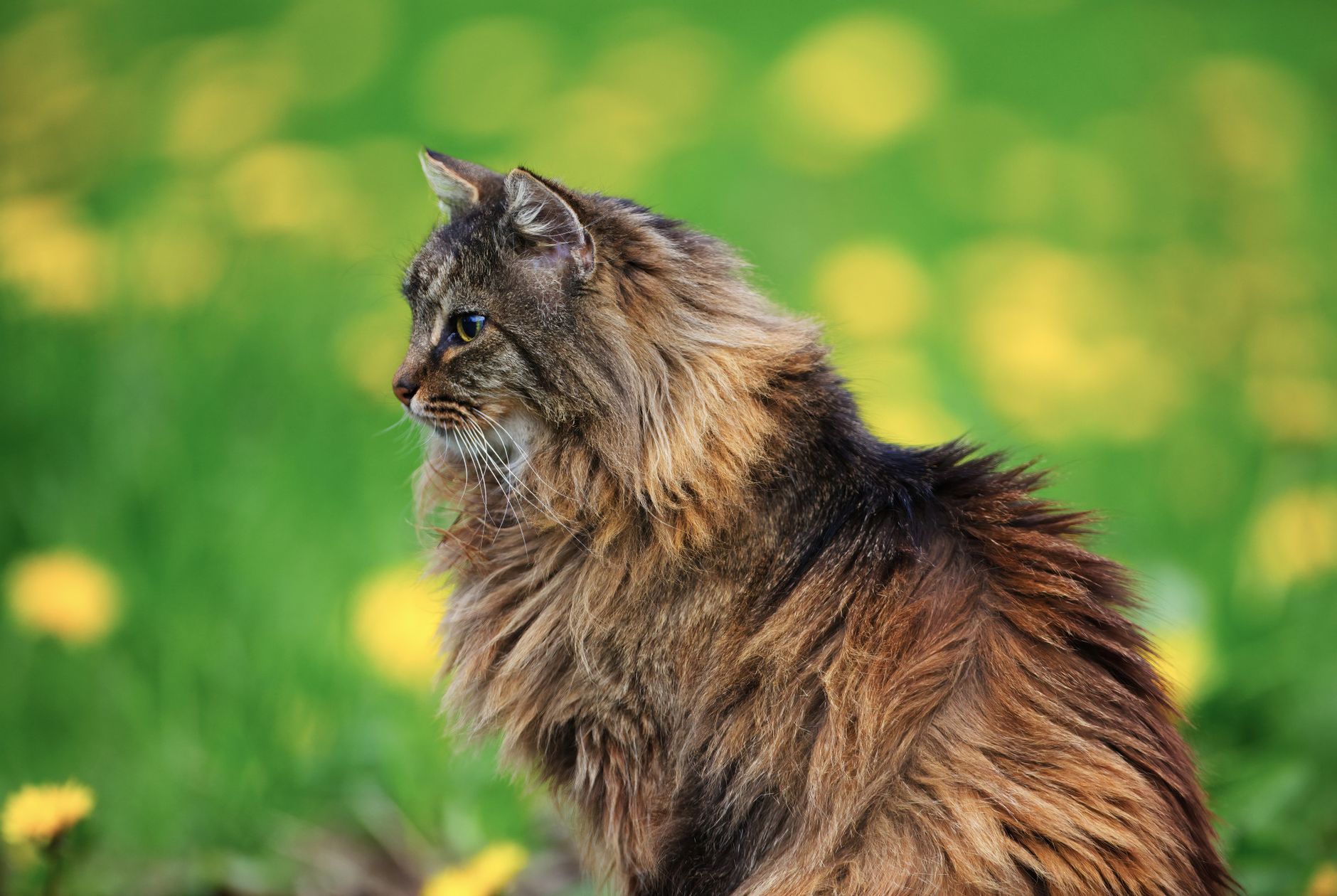
Physical Differences: Head Shapes and Profiles
When I examine these cats on the table, the structural differences are immediately apparent if you know what to look for. The easiest way to tell them apart is by looking directly at their faces and skull structures.
A Siberian has a soft, rounded appearance with a modified wedge head and slightly curved contours. In contrast, the Norwegian Forest Cat is all about sharp, geometric angles.
The Norwegian Triangle
The Wegie features a distinct head shape that forms a perfect equilateral triangle from the outer ears down to the chin. Their profile is completely straight from the forehead to the tip of the nose, with no stop or break.
The Rounded Siberian
Siberians have rounded, barrel-shaped bodies and a softer, sweeter facial structure. Their profile features a gentle concave slope, and their eyes are large, nearly round, and set slightly oblique.

Coat Characteristics and Grooming Realities
The sheer volume of fur on these breeds is a marvel of evolutionary engineering. However, as a vet, I frequently have to treat severe matting when owners underestimate the grooming commitment required for these cold-climate coats.
Siberians possess a unique triple coat, which is incredibly dense and plush to protect against Siberian blizzards. Norwegian Forest Cats have a heavy double coat with a woolly undercoat and long, glossy, water-repellent guard hairs.
- Siberian Triple Coat: Consists of a tight undercoat, a dense middle coat, and heavy outer guard hairs that feel remarkably soft.
- Wegie Double Coat: Features a highly water-shedding, slightly coarse topcoat that feels distinct from the softer Siberian fur.
- Seasonal Shedding: Both breeds undergo massive ‘blowouts’ in the spring and fall where they shed their entire undercoat.
- Grooming Frequency: Require thorough combing at least three times a week, increasing to daily sessions during shedding season.

The Hypoallergenic Question: Separating Fact from Fiction
I frequently consult with clients who purchased a Siberian hoping for a miracle cure for their cat allergies. Let me clarify this clinically: no cat is 100% hypoallergenic, but the Siberian does have a unique biological advantage.
The primary culprit behind cat allergies is the Fel d 1 protein, which is secreted in feline saliva, skin glands, and tears. Studies show that some Siberians produce significantly lower levels of this protein than average domestic cats.
Depets Self-Cleaning Slicker Brush
- ✓Removes loose hair, mats and tangles
- ✓Bead-tipped pins massage without scratching
- ✓One-click button releases the hair
- Fine wire pins lift loose undercoat and work out small tangles before they turn into mats
- Fel d 1 levels: Siberians produce less of this specific allergen, but individual levels vary wildly from cat to cat.
- Wegie allergen profile: Norwegian Forest Cats produce normal levels of Fel d 1 and are not considered low-allergen.
- Clinical recommendation: Always spend time with a breeder’s adult Siberians before adopting to test your specific immune response.
- The Saliva Factor: Remember that when cats groom, they transfer the allergen-heavy saliva directly onto their dense fur.

Health Profiles and Breed-Specific Risks
Both of these giant breeds are generally robust, but they carry specific genetic predispositions that I actively screen for in my clinic. Because they are large-breed cats, their joints and hearts bear a significant physical load.
Hypertrophic Cardiomyopathy (HCM) is the most common heart disease in cats, and both of these breeds are susceptible. It causes the heart muscle to thicken, potentially leading to heart failure or sudden blood clots.
- HCM Screening: Annual echocardiograms are highly recommended for breeding cats in both lineages.
- Glycogen Storage Disease IV (GSD IV): A fatal inherited metabolic disorder unique to the Norwegian Forest Cat; genetic testing is mandatory for ethical breeders.
- Pyruvate Kinase (PK) Deficiency: An inherited hemolytic anemia that can affect both breeds, causing lethargy and pale gums.
- Hip Dysplasia: Because of their massive size, both breeds can suffer from malformed hip joints, leading to early-onset arthritis.

Temperament and Household Dynamics
In my practice, I find that Siberians and Wegies have very distinct ‘vibes’ in the exam room. Siberians are often described as ‘dog-like’ because of their highly social, intense, and interactive nature.
Norwegian Forest Cats are incredibly loving but tend to possess a more independent, calm, and laid-back attitude. They are content to watch the household from a high perch rather than insisting on being in the middle of your paperwork.
The Siberian Athlete
Siberians are exceptionally powerful jumpers with longer hind legs. They love active play, fetch, and will actively follow you from room to room demanding interaction.
The Norwegian Climber
Wegies are famous for their unique ability to climb down trees head-first. They love vertical space and will seek out the absolute highest point in any room to observe their kingdom.

Dietary and Nutritional Needs for Slow-Growing Giants
A common mistake I see owners make is overfeeding these cats during their first two years of life. Both the Siberian and the Norwegian Forest Cat are slow-maturing breeds that do not reach full physical skeletal maturity until they are 4 to 5 years old.
Feeding them high-calorie kitten food for too long can cause them to gain unhealthy fat rather than developing solid muscle and bone. We must carefully balance their caloric intake to protect their developing joints.
- Transition Timeline: Keep them on high-quality kitten or growth-formulated food until at least 12 to 18 months of age, under veterinary guidance.
- L-Carnitine and Protein: Opt for diets rich in animal protein and supplemented with L-carnitine to support lean muscle mass.
- Joint Support: Look for diets containing glucosamine, chondroitin, and Omega-3 fatty acids (EPA/DHA) to safeguard their heavy-duty joints.
- Portion Control: Avoid ‘free-feeding’ kibble; use measured, scheduled meals to prevent obesity, which is devastating to a large-framed cat.
Environmental Enrichment and Vertical Space
To keep these intelligent, wild-hearted cats happy, your home environment must adapt to their natural instincts. In my clinical experience, bored forest cats often develop stress-induced behaviors like over-grooming or destructive scratching.
Because of their massive size, standard cat furniture simply will not suffice. They require heavy-duty, stable structures that can support a 15-to-20-pound cat launching off them at full speed.
- Heavy-Duty Cat Trees: Invest in solid wood trees with extra-thick scratching posts and large, reinforced sleeping platforms.
- Vertical Walkways: Install sturdy wall shelves or cat walks near high windows to satisfy the Wegie’s innate climbing instincts.
- Water Play: Both breeds are fascinated by water; provide dripping fountains or let them play with a dripping tap under supervision.
- Puzzle Feeders: Use interactive food puzzles to keep their highly active brains stimulated and mimic natural hunting behaviors.
-
Globlazer XXL Cat Tower for Multiple CatsGives cats vertical space to climb, scratch and nap, which reduces stress and keeps them off your shelves
-
Sheldamy S-Shaped 2-Way Cat TunnelA crinkly play tunnel gives cats somewhere to hide, pounce and race through
-
PetHonesty Cat Hairball Remedy ChewsHairball formulas help swallowed fur pass through, so long-haired cats cough up fewer hairballs
Related Cat Guides
Frequently Asked Questions
Are Siberian cats completely hypoallergenic?
No, they are not completely hypoallergenic. While some Siberians produce less Fel d 1 protein in their saliva, they still produce some. I always recommend spending time with the specific cat or breeder’s cats to test your allergies beforehand.
How big do Norwegian Forest Cats and Siberians get?
Both are exceptionally large breeds. Male Siberians typically weigh 15 to 20 pounds, while females weigh 10 to 15 pounds. Norwegian Forest Cats are comparable, with males often reaching 12 to 20 pounds and females 8 to 14 pounds.
Do these breeds shed a lot of fur?
Yes, they shed heavily, especially during the seasonal ‘blowout’ in spring and autumn. During these times, they lose their thick winter undercoats. Regular grooming is essential to prevent painful matting and hairballs.
Which breed is better for a household with dogs?
In my experience, both breeds do exceptionally well with dogs due to their confident, bold natures. However, the Siberian’s high-energy, dog-like curiosity often makes them slightly more eager to interact and play with canine companions.
Can forest cats be kept strictly indoors?
Absolutely, and as a vet, I strongly recommend keeping them indoors to protect them from infectious diseases and trauma. You must, however, provide extensive vertical space, scratching posts, and interactive toys to satisfy their high intelligence and athletic needs.
What is the life expectancy of these breeds?
Both the Siberian and the Norwegian Forest Cat are generally long-lived, hardy breeds. With excellent veterinary care, high-quality nutrition, and an indoor lifestyle, they typically live between 12 to 15 years, and often even longer.
Sources & Further Reading
Final Thoughts
Choosing between a Siberian and a Norwegian Forest Cat ultimately comes down to your household dynamic and personal aesthetic preference. If you want a highly interactive, playful partner that will follow you everywhere, the Siberian is an outstanding choice.
If you prefer a calmer, self-assured companion who enjoys climbing to the highest peaks of your living room, the Wegie will fit right in. Whichever magnificent forest cat you choose, remember that committing to their coat care and physical joint health is the key to a long, happy life together.
I always love seeing these gentle giants in my clinic, and with the right care, they make truly extraordinary family members.