
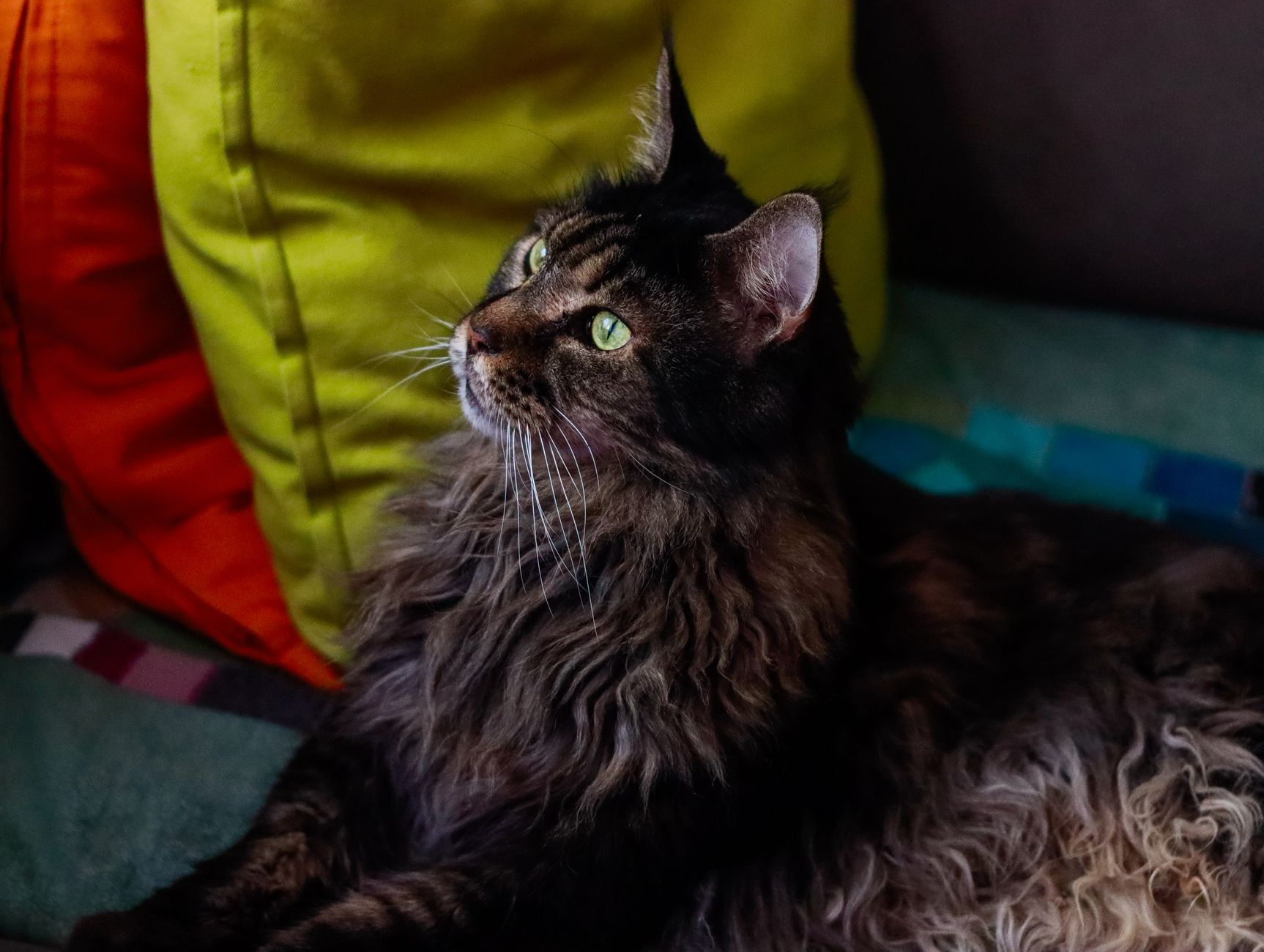
 Maine Coon vs Norwegian Forest Cat: Comparing Two Gentle Giants” loading=”lazy”>
Quick Summary
While Maine Coons and Norwegian Forest Cats look remarkably similar, they are structurally, genetically, and historically distinct. Maine Coons feature a rugged, rectangular build with a square muzzle and a curved facial profile, whereas Norwegian Forest Cats boast a compact, square frame with a triangular face and longer hind legs. Knowing these key physical and genetic differences is critical for ensuring they receive proper veterinary care and breed-specific health screenings.
In my twenty years of veterinary practice, few things bring me as much joy as seeing a giant, fluffy cat walk through my clinic doors. Clients often bring in these magnificent beasts, proudly identifying them as Maine Coons, only for me to suspect they might actually be Norwegian Forest Cats, or vice versa.
While they look remarkably similar to the untrained eye, these two natural breeds have distinct genetic profiles, structural blueprints, and clinical needs.
Understanding these differences is crucial for providing them with the highly specialized veterinary care they require throughout their long, vibrant lives.
Key Takeaways
- Maine Coons have a distinct, square muzzle with a curved nasal profile, while Norwegian Forest Cats have a triangular face with a completely straight profile.
- Norwegian Forest Cats have longer hind legs than front legs, making them built for vertical climbing, whereas Maine Coons have a longer, rectangular body.
- Their coats are texturally distinct: Maine Coons have soft, uneven, shaggy fur, while Norwegian Forest Cats have a dense, woolly undercoat and glossy, water-resistant guard hairs.
- Maine Coons are highly prone to hip dysplasia and carry a specific genetic mutation for Hypertrophic Cardiomyopathy (HCM).
- Norwegian Forest Cats are uniquely affected by Glycogen Storage Disease Type IV (GSD IV) and Pyruvate Kinase (PK) Deficiency.
- Both breeds are slow-growing giants that require up to five full years to reach physical maturity and complete skeletal development.
In This Article
- Origin and Evolutionary History
- Facial Architecture and Head Shapes
- Coat Texture and Grooming Requirements
- Size, Skeletal Structure, and Growth Rates
- Cardiovascular Health and Genetic Risks
- Orthopedic Challenges and Joint Care
- Pyruvate Kinase (PK) Deficiency
- Temperament, Enrichment, and Household Compatibility
Origin and Evolutionary History
To understand why these cats are built the way they are, we have to look at where they came from. The Maine Coon is America’s native longhaired cat, bred naturally in the harsh, snowy climate of New England to hunt farm rodents.
Their coats evolved to be shaggy and water-resistant to survive brutal winters.
Conversely, the Norwegian Forest Cat—affectionately known as the ‘Wegie’—hails from the rugged woodlands of Scandinavia. Norse mythology even mentions giant, long-haired ‘fairy cats’ pulling the goddess Freya’s chariot.
Both breeds adapted to freezing temperatures, but their differing environments shaped unique physical traits that I analyze in my clinic daily.
- Maine Coon: Developed as working barn cats in 19th-century New England, emphasizing a rugged, all-weather build.
- Norwegian Forest Cat: An ancient breed of the Scandinavian forests, prized by Vikings for their exceptional climbing and hunting skills.
- Natural Adaptation: Both developed dense double coats and large, tufted paws that act as natural snowshoes.
Facial Architecture and Head Shapes
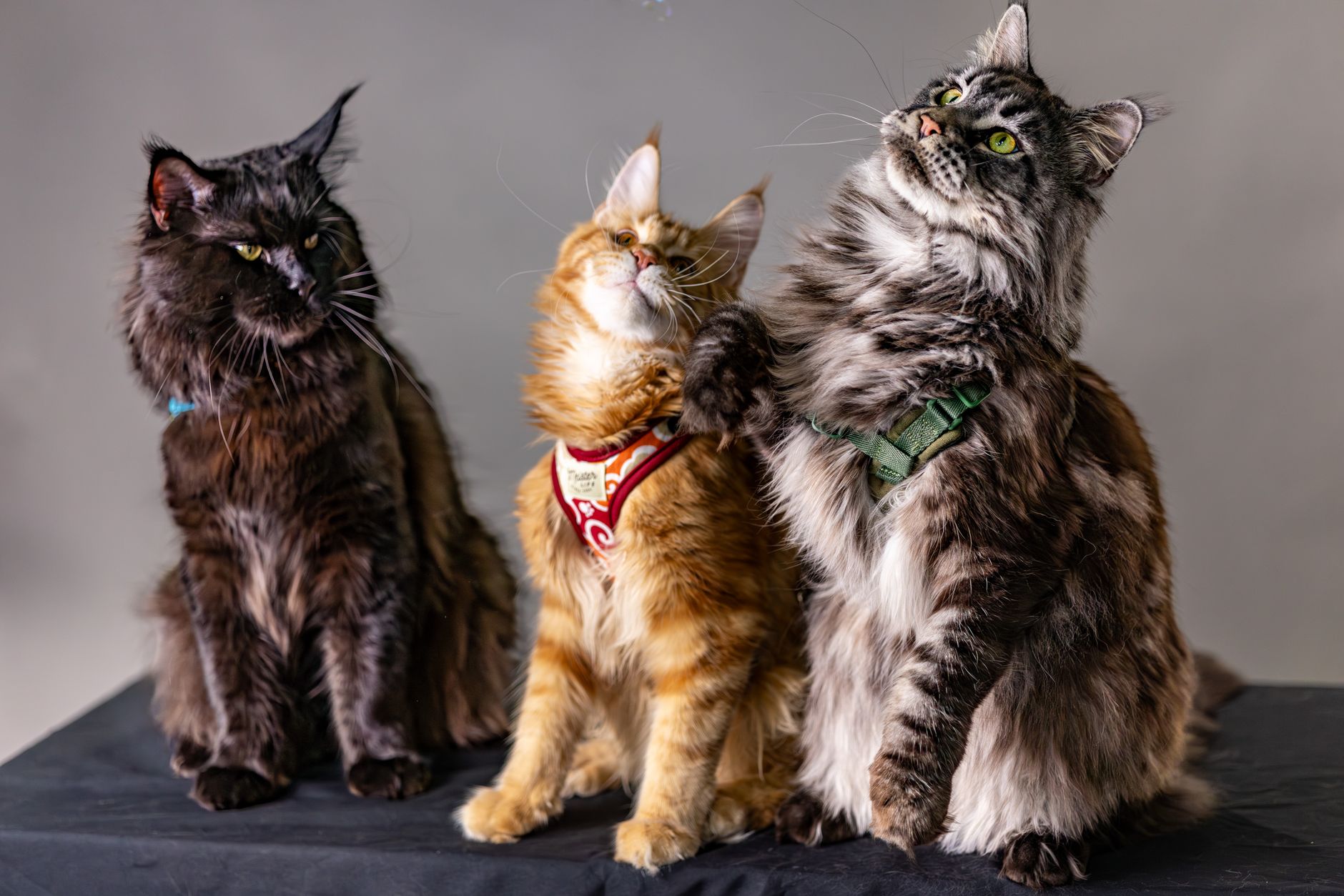
If you are struggling to tell these breeds apart, look directly at their faces. In my practice, I always teach owners to look for the ‘wedge’ versus the ‘triangle’ to make an instant identification.
Maine Coons have a very distinct, square muzzle with a gentle concave slope when viewed in profile. Their cheekbones are high, and their eyes are large and expressive, set at a slightly oblique angle.
Norwegian Forest Cats present an equilateral triangle when you look at their heads from the front. Their profile is completely straight from the forehead down to the tip of the nose, with no dip or stop.
Their eyes are almond-shaped and tilted upward, giving them a wild, intense expression.
- Maine Coon Head: Large, square muzzle, high cheekbones, and a distinct curve or ‘stop’ in the nasal profile.
- Norwegian Forest Cat Head: Equilateral triangular shape, completely straight nose profile from brow to nose tip.
- Ear Differences: Maine Coons have enormous, high-set ears with prominent lynx tips; Wegies have medium-sized ears that continue the outer lines of their triangular head.
- Eye Shapes: Large, round-to-oval eyes for the Maine Coon; almond-shaped, expressive, slanted eyes for the Wegie.
Coat Texture and Grooming Requirements
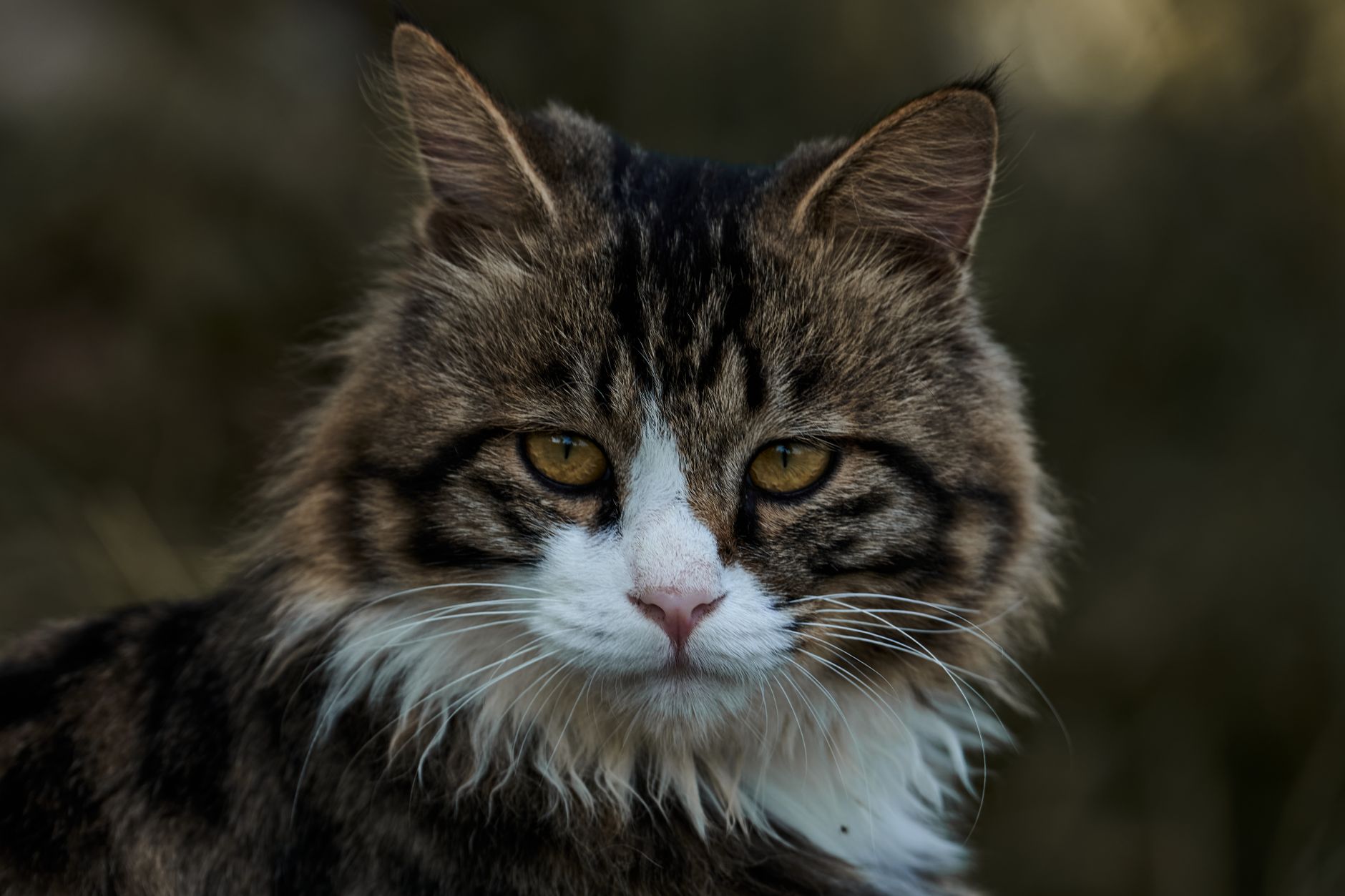
Do not let their fluffy appearances fool you; their coats feel entirely different to a trained touch. I always tell my clients that a Maine Coon’s coat is soft, silky, and uneven, with shorter hair on the shoulders and longer shags on the belly and hindquarters.
The Norwegian Forest Cat possesses an incredibly dense, water-repellent double coat designed for Scandinavian blizzards. It consists of a thick, woolly undercoat topped by long, glossy, coarse guard hairs.
This outer coat is almost oily to the touch, which naturally sheds water and prevents matting far better than the Maine Coon’s coat.
- Maine Coon Coat: Silky, uneven length, requiring brushing at least two to three times a week to prevent mats in the friction areas.
- Norwegian Forest Cat Coat: Thick, woolly undercoat with a coarse, oily outer layer that requires daily combing during the heavy spring shed.
- Essential Grooming Tools: I recommend a high-quality slicker brush, a stainless-steel greyhound comb, and an undercoat rake for both breeds.
- Matting Hotspots: Always check the armpits, groin, and behind the ears, where mats tend to form quickly and pull painfully on the skin.

Size, Skeletal Structure, and Growth Rates
Both of these breeds are classified as slow-maturing gentle giants, often taking up to five full years to reach their adult size and skeletal density. As a vet, I have to monitor their growth plates closely, as they remain open much longer than those of domestic shorthairs.
Maine Coons are typically longer and have a heavy-boned, rectangular body shape. They are generally the heavier of the two, with males routinely weighing between 15 and 25 pounds.
Norwegian Forest Cats have a more compact, square torso with a unique skeletal feature: their hind legs are noticeably longer than their front legs. This gives them a slightly sloping posture and incredible jumping power, making them natural vertical climbers.
- Maine Coon Males: 15 to 25 pounds; Females: 10 to 15 pounds, with a long, rectangular frame.
- Norwegian Forest Cat Males: 12 to 20 pounds; Females: 9 to 14 pounds, with a square, compact silhouette.
- The Hind Leg Angle: Wegies have longer back legs, giving them an advantage when climbing down trees head-first.
- Growth Plate Safety: Avoid strenuous high-impact activities or jumps during their first two years to protect their developing joints.

Cardiovascular Health and Genetic Risks
In my clinical experience, the most critical differences between these breeds lie in their genetic predispositions to specific diseases. Both breeds are prone to hypertrophic cardiomyopathy (HCM), a serious disease that causes thickening of the heart walls.
For Maine Coons, we have a specific genetic test for the MYBPC3 gene mutation associated with HCM. However, testing negative does not guarantee they won’t develop it, so annual echocardiograms remain the gold standard.
Norwegian Forest Cats can also develop HCM, but they do not share the same genetic mutation as Maine Coons, making routine veterinary screening and cardiac ultrasounds vital for their early detection and management.
Glycogen Storage Disease Type IV (GSD IV)
GSD IV is a severe, inherited metabolic disorder unique to the Norwegian Forest Cat. It affects glycogen metabolism, leading to progressive neuromuscular degeneration and organ failure.
- Caused by an inherited recessive gene mutation.
- Affected kittens rarely survive past their first year of life.
- Responsible breeders can easily screen for this carrier state using reliable DNA testing.
Orthopedic Challenges and Joint Care
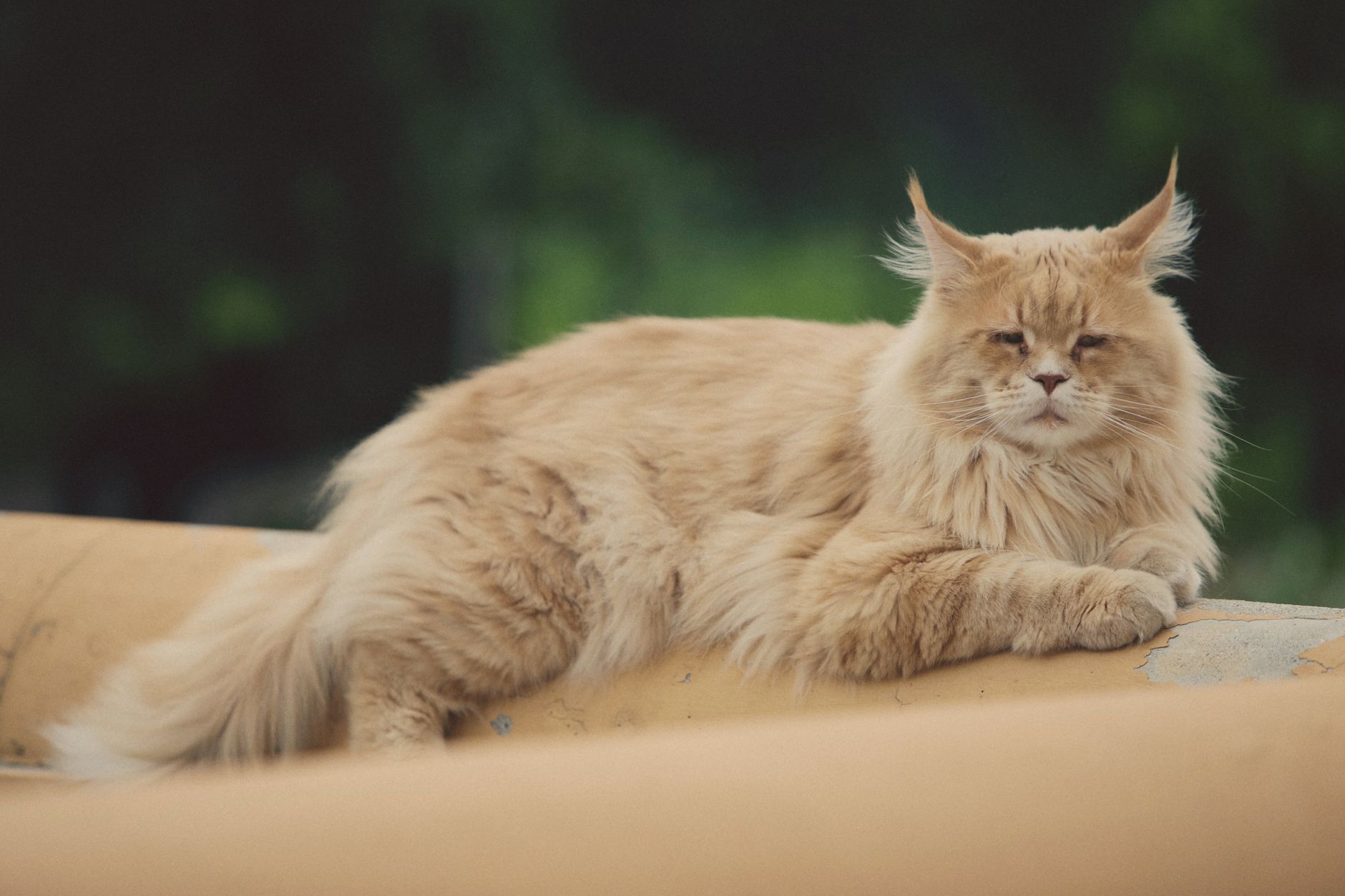
Because of their massive size and heavy skeletons, both breeds face unique orthopedic challenges that I frequently treat in my practice. Hip dysplasia is surprisingly common in Maine Coons, with studies showing up to 20 percent of the breed having some degree of hip joint laxity.
Norwegian Forest Cats are also susceptible to joint wear, but their lighter, more compact build offers some protection. For both breeds, maintaining a lean body condition is the single most important thing you can do to protect their joints from early-onset osteoarthritis.
- Hip Dysplasia: A malformation of the hip joint that causes painful rubbing, lameness, and eventual arthritis.
- Weight Management: I advise keeping these cats on the leaner side of their body condition score to reduce mechanical stress on their joints.
- Joint Supplements: Start high-quality omega-3 fatty acids, glucosamine, and chondroitin early in life, around two to three years of age.
- Mobility Clues: Watch for reluctance to jump, difficulty standing up, or sudden changes in litter box habits as early signs of joint pain.
Pyruvate Kinase (PK) Deficiency
Pyruvate Kinase (PK) Deficiency is an inherited hemolytic anemia that affects both Maine Coons and Norwegian Forest Cats. This condition causes a lack of the pyruvate kinase enzyme, leading to the premature destruction of red blood cells.
Cats with PK deficiency can suffer from intermittent pale gums, lethargy, and a poor appetite as their bodies struggle to circulate enough oxygen. Fortunately, we can perform a simple DNA swab test to identify carriers and affected cats before they exhibit severe clinical symptoms.
- Genetic Cause: An autosomal recessive mutation that impairs red blood cell metabolism.
- Clinical Signs: Chronic or intermittent anemia, lethargy, weakness, pale mucous membranes, and splenomegaly (enlarged spleen).
- Management Protocol: While there is no cure, supportive care, avoiding stress, and monitoring blood counts can help affected cats live comfortable lives.
Temperament, Enrichment, and Household Compatibility
While their physical and medical profiles differ, their temperaments are both delightfully dog-like, though they express this in distinct ways. Maine Coons are often the class clowns of the cat world, highly outgoing, incredibly vocal with chirps and trills, and very attached to their human families.
Norwegian Forest Cats are equally loving but tend to be slightly more independent and quieter. They love being near you but do not demand constant attention, often preferring to watch the household from the highest vantage point in the room.
Environmental Enrichment Needs
To keep these giant cats happy and healthy, you must tailor your home environment to their natural behaviors. Wegies need serious vertical height, whereas Maine Coons often prefer horizontal play and heavy-duty scratching posts.
- Install heavy-duty, floor-to-ceiling cat trees that can support a 20-pound cat jumping at high speed.
- Provide interactive puzzle feeders to satisfy their sharp hunting instincts and prevent obesity.
- Ensure litter boxes are extra-large or custom-made to comfortably accommodate their long bodies.
Frequently Asked Questions
Which breed is larger, the Maine Coon or the Norwegian Forest Cat?
Maine Coons are generally larger and heavier than Norwegian Forest Cats. Male Maine Coons typically weigh between 15 and 25 pounds and have a longer, rectangular frame, whereas male Norwegian Forest Cats usually top out around 12 to 20 pounds with a more compact, square build.
How can I tell the difference between their faces?
Look at their profile and head shape. A Maine Coon has a square muzzle, high cheekbones, and a curved nasal profile (a ‘stop’). A Norwegian Forest Cat has a triangular head, slanted almond-shaped eyes, and a completely straight nasal profile from the forehead to the tip of the nose.
Do Maine Coons and Norwegian Forest Cats get along with dogs?
Yes, both breeds are highly social, confident, and frequently referred to as ‘dog-like.’ Because of their large size and relaxed temperaments, they tend to adapt very well to living with dogs, provided they are introduced gradually and respectfully.
What are the most common genetic health issues in these breeds?
Maine Coons are genetically prone to Hypertrophic Cardiomyopathy (HCM), hip dysplasia, and Spinal Muscular Atrophy. Norwegian Forest Cats are susceptible to HCM, Pyruvate Kinase (PK) Deficiency, and Glycogen Storage Disease Type IV (GSD IV).
Do these cats require professional grooming?
While they do not necessarily require professional grooming, they do require dedicated home grooming. Maine Coons need brushing two to three times a week, while Norwegian Forest Cats need daily combing during their heavy spring shedding season to prevent painful skin matting.
Sources & Further Reading
- American Veterinary Medical Association (AVMA)
- The Cat Fanciers’ Association (CFA)
- International Cat Care
Final Thoughts
Whether you find yourself charmed by the square-jawed, clownish Maine Coon or the elegant, triangular-faced Norwegian Forest Cat, you are welcoming a truly magnificent companion into your life. As a veterinarian, my ultimate goal is to ensure these heavy-bodied cats remain lean, active, and free of joint or cardiac pain.
Partnering with a breeder who performs rigorous DNA screening is the vital first step. From there, routine veterinary checkups, tailored joint support, and weight management will ensure your gentle giant enjoys a long, comfortable life by your side.
If you are ever in doubt about your cat’s specific structural or genetic health, do not hesitate to schedule a comprehensive evaluation with your family veterinarian.