
Mekong Bobtail Breed Guide

Quick Summary
In my clinical practice, I describe the Mekong Bobtail as a loyal dog in a sleek cat’s body, distinguished by its unique kinked tail and striking colorpoint coat. This highly interactive, affectionate feline thrives on human companionship and is perfect for active households wanting a deeply involved, intelligent pet. Their long lifespan and robust health make them a rewarding, long-term addition to the right home.
Quick Facts
- origin countrySoutheast Asia (developed in Russia)
- breed groupShorthair
- sizeMedium
- weight range8 – 12 lbs (3.6 – 5.4 kg)
- height range7 – 9 inches (18 – 23 cm)
- lifespan15 – 18 years
- coat typeShort, glossy, close-lying with minimal undercoat
- common colorsColorpoint (Seal, Blue, Chocolate, Lilac, Red, Cream, and Tortie points)
- other namesThai Bobtail
- recognized byWCF, LOOF
Caring for a Mekong Bobtail
Living with a Mekong Bobtail is closer to sharing your home with a clever puppy than an independent cat. In my practice, I find these cats constantly underfoot, eager to assist with chores, ride on shoulders, or greet guests at the front door. They require substantial daily mental stimulation, so expect to invest in puzzle toys, active play sessions, and harness training. Their short coats make physical grooming a breeze, but their highly social nature means they cannot be left isolated for long stretches without becoming distressed.
Is a Mekong Bobtail a good family pet?
Yes, they make exceptional family pets due to their patient, outgoing, and deeply affectionate nature. They bond strongly with children and prefer to join in on playtime rather than hiding. However, I always advise parents to supervise young children to ensure they do not pull on the cat’s highly sensitive, genetically unique tail.
Do Mekong Bobtails shed a lot?
No, they shed very minimally compared to other breeds. Because they possess a short, sleek coat with almost no undercoat, they lose very little hair throughout the year. A quick weekly brushing with a rubber grooming glove is usually more than enough to manage dead hairs.
Is a Mekong Bobtail good for first-time owners?
They can be a wonderful match for first-time owners, provided you are looking for an incredibly interactive, attention-demanding pet. If you expect a low-maintenance cat that sleeps all day, this breed will overwhelm you. But if you want a highly trainable, dog-like companion, they are incredibly rewarding.
Temperament & Personality
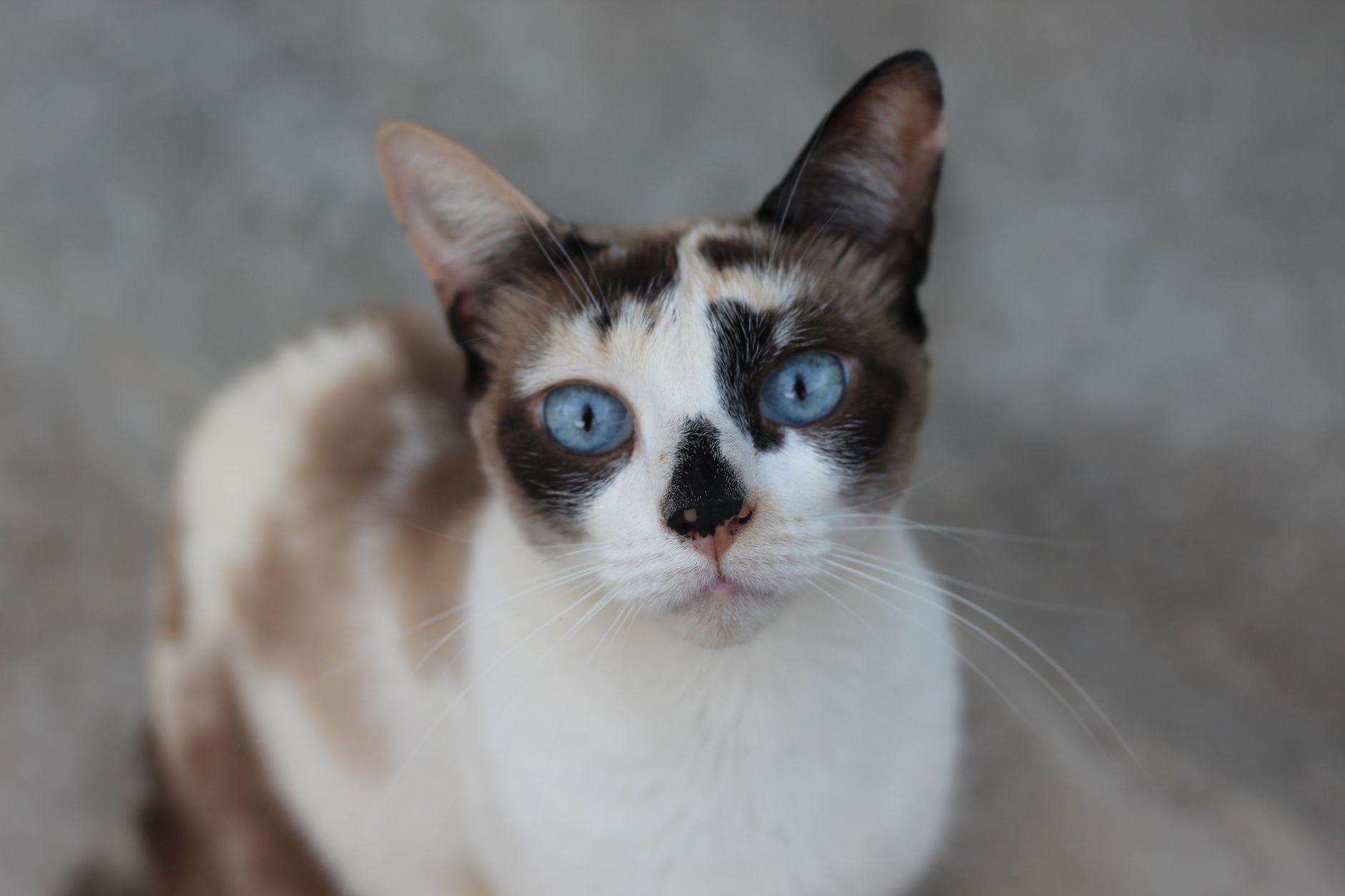
The Mekong Bobtail’s personality is defined by intense loyalty, vibrant curiosity, and a surprisingly quiet, gentle voice compared to their Siamese ancestors. What I see most often in practice is their absolute refusal to be ignored; they will follow you from room to room and sit on your lap the second you sit down. They are bold, confident explorers who handle novel situations and strangers with calm, curious poise. Their social needs are exceptionally high, making them prone to separation anxiety if left alone.
Is a Mekong Bobtail good with other pets?
Absolutely, they thrive in multi-pet households and adapt wonderfully. I frequently see them forming tight bonds with friendly dogs, often engaging in games of tag or sleeping curled up together. They also enjoy the company of other high-energy cats to help keep them stimulated.
How much attention does a Mekong Bobtail need?
They require a significant amount of daily interaction and do not tolerate isolation well. I tell my clients to expect a shadow that wants to participate in everything you do. If left alone for long workdays without a companion or stimulating toys, they can quickly develop behavioral issues like destructive scratching or excessive calling.
Training & Behavior
With their sharp intellect and cooperative drive, Mekong Bobtails are among the easiest felines to train. I have seen clients successfully teach them to walk on a harness, fetch small toys, and respond to basic verbal commands like ‘come’ and ‘sit’. Because they are highly food-motivated and eager to please, clicker training works wonders with this breed.
Training Tips
- Use high-value treats and a clicker to immediately reward target behaviors.
- Keep training sessions short, under 5 minutes, to prevent mental fatigue.
- Start harness and leash acclimation early, ideally under 6 months of age.
- Redirect inappropriate chewing immediately onto sturdy chew toys.
- Incorporate puzzle feeders to satisfy their natural problem-solving drives.
Fun Activities
- Playing fetch with soft crinkle balls
- Navigating home agility courses
- Leash-guided walks in quiet parks
- Interactive puzzle-toy solving
- Learning novel tricks like ‘shake’ and ‘high-five’
Is a Mekong Bobtail easy to train?
Yes, they are exceptionally easy to train compared to most cat breeds. Their dog-like intelligence and desire for human engagement make them prime candidates for clicker training, trick training, and leash walking. They respond best to positive reinforcement and gentle persistence.
Mekong Bobtail Health Issues

The Mekong Bobtail is generally a robust and exceptionally long-lived breed, frequently crossing the 15-year mark in excellent health. However, because of their Siamese heritage and unique bobbed tail structure, there are specific genetic and physiological conditions we must monitor closely in clinical practice.
Tail-Fold Dermatitis (Intertrigo)
The signature kinked, curled tail of the Mekong Bobtail can sometimes create tight skin folds at the base or along the kinks. Moisture and bacteria can become trapped in these folds, leading to painful friction rub, yeast infections, or bacterial dermatitis.
Amyloidosis
A genetic condition inherited from their Siamese ancestry where abnormal amyloid proteins deposit in organs, most commonly the liver or kidneys. Over time, this buildup leads to organ dysfunction and eventual organ failure.
Hypertrophic Cardiomyopathy (HCM)
This is the most common cardiac disease in cats, characterized by an abnormal thickening of the left ventricular heart muscle. Over time, it can lead to congestive heart failure or arterial thromboembolism.
Progressive Retinal Atrophy (PRA)
An inherited ocular disease causing gradual degeneration of the photoreceptors in the retina, eventually leading to complete blindness. While painless, there is currently no cure, though affected cats adapt remarkably well to indoor life.
Strabismus and Nystagmus
Commonly known as crossed eyes (strabismus) or involuntary rapid eye movement (nystagmus), these neurological-ocular conditions are linked to the colorpoint gene. In most cases, it is a benign cosmetic issue that does not severely impair their quality of life.
How long do Mekong Bobtails typically live?
Mekong Bobtails are remarkably long-lived, routinely living between 15 and 18 years, and occasionally even reaching 20 years with excellent care. To maximize their lifespan, I emphasize weight management, routine dental cleanings, and bi-annual senior wellness exams starting at age seven.
What to Feed a Mekong Bobtail
Proper nutrition is vital for keeping this high-energy, athletic breed in peak physical condition. Given their active lifestyle, they require a diet rich in high-quality animal proteins to support muscle maintenance while avoiding excessive carbohydrates.
Best Diet
I highly recommend a diet consisting primarily of high-quality, meat-first wet food, which provides essential hydration to protect their kidneys and lower urinary tract. Ensure the formula is life-stage appropriate and meets AAFCO nutritional standards.
How to Feed
Establish a strict twice-daily feeding schedule rather than free-feeding dry kibble, which easily leads to overeating. Using puzzle feeders or interactive food-dispensing toys is an excellent way to slow down fast eaters and provide mental stimulation.
How Much to Feed
Portion sizes should be tailored to your cat’s specific target weight, age, and activity level. As a general starting point, an active 10-pound adult Mekong Bobtail needs roughly 220 to 250 calories per day, but you should consult your veterinarian to calculate an exact daily caloric target.
Nutritional Tips
Incorporate omega-3 fatty acid supplements, such as wild-caught salmon oil, to support their skin health, coat shine, and joint function. Always provide multiple sources of fresh, filtered water, ideally using a pet water fountain to encourage drinking.
Mekong Bobtail Grooming Guide
The grooming requirements for a Mekong Bobtail are minimal, making them an excellent choice for owners who want a low-maintenance coat. However, their unique physical features require focused attention on specialized areas like their ears and tail folds.
Coat Care
Brush their short, glossy coat once a week with a soft-bristled brush or rubber grooming mitt to remove loose hairs and distribute natural skin oils. They rarely require bathing unless they get into something exceptionally messy.
Skin Care
Regularly inspect the skin folds around their unique kinked tail for signs of moisture buildup, redness, or irritation. If tight folds are present, gently wipe them weekly with a vet-approved, unscented antiseptic wipe.
Eye Care
Gently wipe the inner corners of their eyes with a damp, soft cloth to remove any mild discharge, using a clean section of the cloth for each eye to prevent spreading potential infections.
Ear Care
Inspect their ears weekly for dirt, wax accumulation, or redness. Clean them only when necessary using a cotton ball moistened with a pH-balanced veterinary ear cleaner, never inserting cotton swabs into the ear canal.
Nail & Dental Care
Trim their nails every two to three weeks to prevent snagging, and brush their teeth daily using feline-safe enzyme toothpaste to ward off periodontal disease, which is common in colorpoint breeds.
Considerations for Pet Parents
Pros
- Extremely loyal and dog-like companion
- Highly intelligent and easily trained
- Very affectionate and family-oriented
- Minimal shedding and low-maintenance coat
- Thrives in multi-pet households
- Fascinating, unique physical appearance
Cons
- Prone to separation anxiety if left alone
- Demands high levels of daily attention
- Can be vocal (though quieter than Siamese)
- Tail folds require regular monitoring
- Rare breed that can be difficult to source
Best For
Active families, work-from-home professionals, or multi-pet households who want a highly interactive, dog-like cat that will actively participate in daily life and family routines.
Not Recommended For
Busy individuals who spend long hours away from home, those looking for an independent, low-maintenance pet, or anyone unable to commit to daily play and mental stimulation.
Cost
- purchase price$1,000 – $2,000 USD
- monthly cost$80 – $150 USD
- initial setupExpect to spend $500 to $800 initially on veterinary vaccinations, spay/neuter surgery, microchipping, high-quality scratchers, a carrier, and a cat tree.
Similar Breeds

Mekong Bobtail FAQs
Why do Mekong Bobtails have short tails?
Their short, kinked tails are the result of a naturally occurring genetic mutation that affects the development of the caudal vertebrae. This gene is dominant or co-dominant, and no two tails are exactly alike, featuring unique curves, kinks, and angles.
Do Mekong Bobtails talk a lot?
Yes, they are moderately vocal due to their Siamese ancestry, but they are generally much quieter and have a softer, sweeter voice. They prefer to chirp, trill, and hold quiet ‘conversations’ with their owners rather than emit the loud, raspy yowls typical of traditional Siamese.
Can Mekong Bobtails go outside?
I strongly recommend keeping your Mekong Bobtail strictly indoors or allowing outdoor access only via a secure outdoor enclosure (catio) or on a harness and leash. Their trusting, dog-like nature and high monetary value make them highly vulnerable to theft, traffic, and predators.
Are Mekong Bobtails hypoallergenic?
No, they are not hypoallergenic. While they have short coats with minimal undercoat and shed very little, they still produce the Fel d 1 protein in their saliva, dander, and urine, which is the primary trigger for cat allergies.
How do they handle cold weather?
Because they have a very thin undercoat, Mekong Bobtails do not tolerate extreme cold well. They are indoor cats who will actively seek out warm sunny spots, cozy blankets, or your lap when temperatures drop.
Are Mekong Bobtails prone to obesity?
While they are naturally active and athletic, they can easily become overweight if free-fed dry food or if they do not receive enough daily exercise. In my clinic, I emphasize strict portion control and active play to protect their joints and heart.
Do their short tails cause them pain?
The tail mutation itself is not inherently painful, unlike the Manx gene which can cause spinal issues. However, severe kinks can sometimes have fused vertebrae that shouldn’t be forcefully manipulated, and the skin folds around the kinks must be kept clean to prevent painful dermatitis.
How do Mekong Bobtails behave with dogs?
They typically behave beautifully with dogs, often acting more like dogs themselves. Provided the dog is cat-friendly, you can expect them to play together, share sleeping spots, and chase each other around the house.
At what age do Mekong Bobtails reach full maturity?
They reach physical maturity and their full adult size around 12 to 18 months of age. However, their playful, energetic, kitten-like behavioral traits often persist well into their senior years.
Do they like water?
Many Mekong Bobtails are fascinated by water, a trait common in bobtailed breeds. Do not be surprised if they try to join you in the shower, play with running tap water, or splash water out of their drinking bowls.
Why does their coat color change over time?
Like all colorpoint breeds, Mekong Bobtails carry a temperature-sensitive gene that limits pigment production to the cooler parts of their body (face, ears, legs, and tail). As they age, or during colder months, their body coat color may gradually darken.
What kind of toys do they prefer?
They love interactive toys that challenge their intelligence, such as puzzle feeders, feather wands that mimic prey, and small toys they can carry in their mouths to play fetch. They also benefit greatly from tall cat trees to satisfy their climbing instincts.
How often should I take my Mekong Bobtail to the vet?
Up to age seven, an annual wellness exam is sufficient for vaccinations, dental checks, and weight monitoring. For seniors aged seven and older, I highly recommend transitioning to bi-annual exams with baseline bloodwork to catch age-related issues early.