
Beagle Breed Guide

Quick Summary
The Beagle is a merry, highly social scent hound packed with energy, curiosity, and an unmatched sense of smell. Ideal for active families who don’t mind a vocal companion, this breed thrives on companionship and requires secure boundaries to manage its instinct to wander.
Quick Facts
- origin countryUnited Kingdom
- breed groupHound
- sizeCompact and sturdy
- weight range20 to 30 pounds (depending on variety)
- height rangeUnder 13 inches, or 13 to 15 inches
- lifespan10 to 15 years
- coat typeShort, dense, weather-resistant double coat
- common colorsTri-color (black, white, and tan), lemon and white, red and white, chocolate tri
- other namesEnglish Beagle
- recognized byAKC, UKC, KC, FCI
Caring for a Beagle
In my experience, living with a Beagle is an exercise in secure containment and sensory enrichment. Their powerful noses dictate their entire day, meaning you must secure your yard like Fort Knox because they will dig under or climb over fences to follow a scent. Daily physical exercise must be paired with mental tracking games, or they will channel their frustration into loud howling and destructive chewing. I always tell owners to treat every walk as an active scent exploration rather than a quick, straight-line march.
Is a Beagle a good family pet?
Absolutely, they are exceptionally tolerant, friendly, and thrive in the chaotic energy of a busy household. Their pack-oriented nature makes them great companions for children, provided the kids are taught to respect the dog’s space during meals.
Do Beagles shed a lot?
Yes, they are moderate but constant shedders due to their dense double coat, with heavier shedding episodes in the spring. Weekly brushing is essential to keep the loose hairs from coating your furniture.
Is a Beagle good for first-time owners?
They can be a challenge for novices due to their independent, stubborn streak and voice. However, if a first-time owner is patient, commits to positive reinforcement, and accepts that off-leash walks are rarely possible, they make wonderful, loving companions.
Temperament & Personality

Beagles are famously ‘merry’ dogs, displaying an outgoing, friendly, and gentle disposition that makes them terrible guard dogs but wonderful family members. They are pack animals to their core, which means they love being around people and other dogs, but it also makes them highly prone to distress when left alone. Their temperament is a unique mix of sweet affection and hound independence—they love you, but if they smell a rabbit, you temporarily cease to exist.
Is a Beagle good with other pets?
Generally, yes, especially with other dogs since they were bred to hunt in packs. They can live peacefully with cats if socialized early, though their high prey drive means small pocket pets like rabbits or hamsters must be kept strictly separated.
How much attention does a Beagle need?
They need a high amount of daily interaction and do not tolerate being left alone in an empty house for long workdays. Without companionship, they often develop severe separation anxiety, manifesting as continuous baying and destructive behavior.
Training & Behavior
Training a Beagle requires you to accept that you are working with a dog bred to ignore human commands in favor of following a scent trail. I’ve found that traditional obedience training can feel like a battle of wills, but shifting to reward-based motivation completely changes the dynamic. They are highly intelligent, but they ask ‘what’s in it for me?’ before every cue, making high-value food rewards absolute currency.
Training Tips
- Use extremely high-value treats like freeze-dried liver or cheese.
- Keep training sessions short, fast-paced, and highly rewarding to combat boredom.
- Never practice off-leash training in an unsecured, open area.
- Begin crate training on day one to manage separation anxiety and aid housebreaking.
- Incorporate scent work directly into your obedience rewards to leverage their natural instincts.
Fun Activities
- K9 Nose Work and scent tracking games
- Fenced-in playgroups with other dogs
- Long-line hiking in wooded areas
- Interactive puzzle toys and snuffle mats
- Agility trials modified for scent distractions
Is a Beagle easy to train?
They are simple to motivate with food, but difficult to train for reliable, off-leash obedience. Their instinctual drive to follow their nose will always override your voice command once they pick up an interesting scent trail.
Beagle Health Issues

Beagles are generally a hardy and structurally sound breed, but their long ears, deep chests, and insatiable appetites make them prone to specific health challenges. Keeping them lean is the single most important thing you can do for their long-term orthopedic and metabolic health.
Otitis Externa (Ear Infections)
Their long, floppy ears trap moisture, debris, and yeast, creating a perfect storm for painful chronic ear infections.
Intervertebral Disc Disease (IVDD)
A spinal condition where the cushioning discs between the vertebrae herniate or rupture, causing pain or paralysis.
Cherry Eye
A prolapse of the gland of the third eyelid, causing a unsightly but treatable red mass to protrude from the corner of the eye.
Hypothyroidism
An underactive thyroid gland that slows the dog’s metabolism, leading to poor skin health and energy loss.
Epilepsy
An inherited neurological disorder causing seizures, which typically manifests between one and five years of age.
How long do Beagles typically live?
A healthy Beagle routinely lives between 10 and 15 years, with many reaching 12 or 13 years when maintained at a lean body weight and provided regular veterinary checkups.
What to Feed a Beagle
I cannot overemphasize this: Beagles are absolute opportunists who will eat until they literally burst if given the chance. Left to their own devices, they will rapidly become obese, which puts terrible strain on their backs and joints.
Best Diet
A high-quality kibble formulated for medium-sized breeds with moderate energy levels is ideal. Look for formulas with higher fiber content to help them feel full without packing on excess calories.
How to Feed
Split their daily food allowance into two strictly measured meals, and never free-feed. Use slow-feed bowls, puzzle toys, or snuffle mats to slow down their eating and turn mealtime into a mental workout.
How Much to Feed
Generally, an adult Beagle needs between 3/4 and 1.5 cups of food per day, but this varies dramatically based on age, weight, and activity level. Always consult your veterinarian to establish a precise caloric target for your individual dog.
Nutritional Tips
Keep all garbage cans, pantries, and countertops strictly secured, as Beagles are masterful food thieves. Deduct any training treats from their daily kibble allowance to prevent gradual weight gain.
Beagle Grooming Guide
Grooming a Beagle is relatively straightforward, but it must be done consistently to manage shedding and protect their ears. Because they love to roll in foul-smelling organic matter, prepare for occasional emergency baths.
Coat Care
Brush their short coat two to three times a week using a rubber grooming mitt or hound glove to pull away loose hairs. Bathe them every four to six weeks using a gentle dog shampoo, or whenever they find something smelly to roll in.
Skin Care
Inspect their skin regularly during grooming sessions for hot spots, dry patches, or signs of flea activity, especially around the base of the tail.
Eye Care
Wipe away daily tear discharge with a soft, damp cloth to keep the eye area clean and monitor for any sudden redness or cloudiness.
Ear Care
Inspect their ears weekly. Use a veterinarian-recommended ear-cleaning solution to wipe out excess wax and moisture, ensuring you never insert cotton swabs deep into the ear canal.
Nail & Dental Care
Trim their nails every three to four weeks to prevent splaying and discomfort, and brush their teeth at least three times a week to ward off periodontal disease.
Considerations for Pet Parents
Pros
- Incredibly gentle and patient with children
- Highly social and great in multi-dog homes
- Sturdy, portable, and durable physical build
- Low-maintenance coat and minimal professional grooming needs
- Cheerful, optimistic, and highly amusing personality
- Relatively long lifespan and general hardiness
Cons
- Extremely vocal with a loud, carrying baying howl
- Very difficult to train for reliable off-leash recall
- Prone to severe separation anxiety if left alone
- Genetic predisposition to obesity and food theft
- Slow to housebreak compared to working breeds
Best For
Active families with a securely fenced yard, households where someone is home most of the day, and owners who enjoy outdoor adventures on a long leash.
Not Recommended For
Apartment dwellers with noise-sensitive neighbors, busy professionals who work long hours away from home, or owners who demand instant, precision obedience.
Cost
- purchase price$1,000 to $2,500
- monthly cost$120 to $220
- initial setupPlan to spend $600 to $1,200 initially on high-quality escape-proof harnesses, crates, obedience classes, and secure fencing upgrades.
Similar Breeds
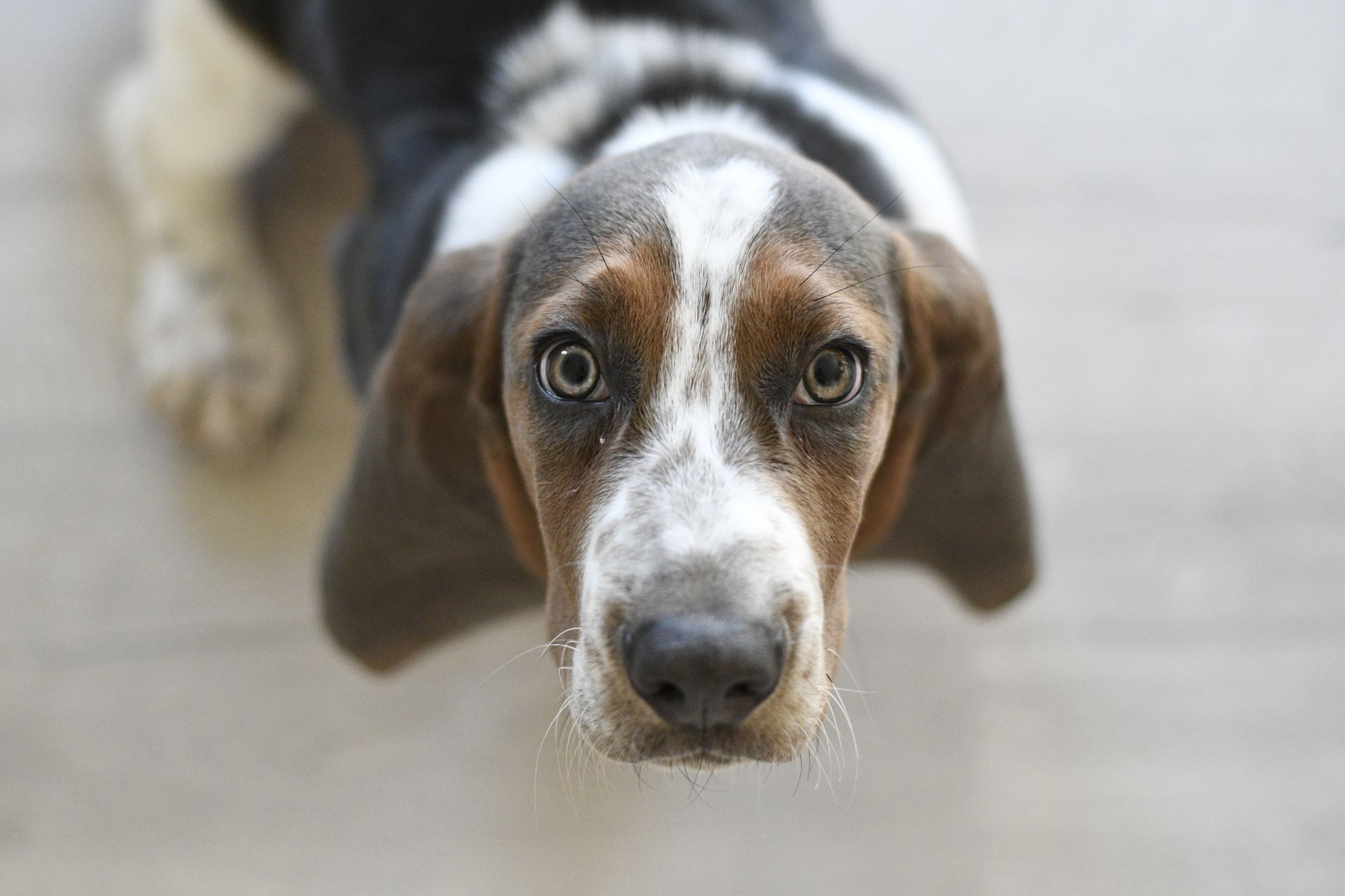
Basset Hound

Harrier
Beagle FAQs
Do Beagles bark and howl a lot?
Yes, they possess three distinct vocalizations: a standard bark, a deep melodic bay, and a mournful half-howl. They will use these to express excitement, boredom, or to alert you to a scent, making them poorly suited for apartments.
Why can’t Beagles be let off-leash?
They are scent hounds bred for independent tracking. Once their nose locks onto a scent trail, their brain effectively shuts out external auditory input, meaning they will run off after a smell and completely ignore your calls.
How long does it take to housebreak a Beagle?
They are notoriously slow to housebreak, sometimes taking six to eight months of consistent training. Their independent nature and excellent sense of smell mean you must use a high-quality enzymatic cleaner to eliminate all scent markers indoors.
Are Beagles high-energy dogs?
Yes, they have surprising stamina. While they love to cuddle on the couch, they require at least 60 to 90 minutes of active exercise daily to prevent frustration and destructive behavior.
What is a ‘Pocket Beagle’?
Historically, these were miniature Beagles under 10 inches tall. Today, the term is used by backyard breeders to market undersized dogs, which often suffer from severe genetic defects; the AKC only recognizes two official sizes (under 13 inches, and 13 to 15 inches).
Do Beagles have a strong smell?
They have a distinct ‘hound odor’ caused by natural, protective oils in their skin and coat. Regular bathing, keeping their ears clean, and washing their bedding weekly will help keep this musty scent to a minimum.
Are Beagles destructive chewers?
Only if they are bored or suffering from separation anxiety. When physically tired and mentally stimulated, they are generally well-behaved, but an under-stimulated Beagle will chew furniture and dig carpets.
How do I stop my Beagle from escaping?
You need a physical fence at least five feet tall, and ideally, concrete or chicken wire buried at the base to prevent digging underneath. Never rely on electronic or invisible fences, as a Beagle will happily take the shock to chase a rabbit.
Can Beagles live with cats?
Yes, many live peacefully with cats if they are introduced properly at a young age. However, expect some playful chasing, and never leave them unsupervised with small pocket pets like rabbits.
Do Beagles swim?
Most Beagles dislike deep water and are not natural swimmers due to their dense bones and heavy, compact musculature. Always supervise them near pools and use a dog life jacket for safety.
Why is my Beagle constantly eating grass?
While grass eating can sometimes indicate an upset stomach, in Beagles it is often just another expression of their intense culinary curiosity. Consult your vet if the behavior is accompanied by vomiting or lethargy.
At what age do Beagles calm down?
They typically start to transition out of their high-energy puppy phase and settle into a more predictable routine around two years of age, though they remain active and playful well into their senior years.