
 Border Collie Mental Stimulation: Keeping a Genius Breed Happy” loading=”lazy”>
Quick Summary
Border Collies are highly intelligent working dogs that require intensive mental stimulation alongside physical exercise to prevent behavioral issues. Without targeted cognitive challenges like puzzle toys, nose work, and structured jobs, their advanced processing power can manifest as severe anxiety and compulsive behaviors. A balanced routine prioritizing mental fatigue over pure physical endurance is essential for their clinical well-being.
In my fifteen years as a veterinarian, I have treated thousands of dogs, but none present quite like a bored Border Collie. These dogs do not just want to please you; they possess an intense, almost human-like need to solve complex problems.
When a Border Collie does not get enough mental stimulation, their brilliant minds turn inward, often resulting in severe behavioral or physical health issues.
In my practice, I always tell clients that keeping this breed happy requires thinking less like a pet owner and more like a manager of an elite cognitive athlete.
Key Takeaways
- Border Collies possess advanced cognitive processing speeds that require targeted mental workouts.
- Physical exercise alone is insufficient and can build an over-conditioned, hyper-arousal state.
- Boredom often manifests clinically as self-mutilation, obsessive-compulsive licking, or reactive herding.
- Sequential level 3 or 4 puzzle toys are necessary to challenge their problem-solving capabilities.
- Giving a Border Collie a daily ‘job’ builds confidence and channels their natural herding instincts safely.
- Scent games and nose work are highly effective tools to trigger mental fatigue and calm their nervous system.
- A structured schedule must balance intense cognitive activity with enforced, calm rest periods.
In This Article
- collie-brain”>The Neurology of the Border Collie Brain
- The Clinical Signs of Chronic Boredom
- The Stamina Trap: Why Running Isn’t Enough
- Advanced Puzzle Toys: Beyond the Standard Chew
- The Power of Job-Based Training
- Nose Work and Scent Games: Engaging the Olfactory Brain
- Implementing a Structured Cognitive Schedule
The Neurology of the Border Collie Brain
To understand a Border Collie, you must first understand their evolutionary history as elite working dogs. In my clinic, I often explain to owners that these dogs have a highly developed cerebral cortex compared to other breeds.
They process visual and auditory cues at a rapid rate that can easily overwhelm an unprepared household.
This genetic wiring means they do not view the world the way a companion breed does. They are constantly scanning for patterns, movements, and tasks to complete.
If you do not provide these patterns, they will invent their own, often to the detriment of your furniture.
Through specialized breeding, they have been selected for an extreme level of focus known as ‘the eye.’ This intense focus requires a massive amount of glucose and mental energy to sustain, which is why mental fatigue is actually more exhausting for them than a five-mile run.
- High density of receptors sensitive to subtle motion and sound cues.
- An innate instinct to control and organize moving objects or family members.
- A rapid cognitive processing speed that requires constant novel inputs.
- A biological need for a ‘flow state’ achieved through structured tasks.
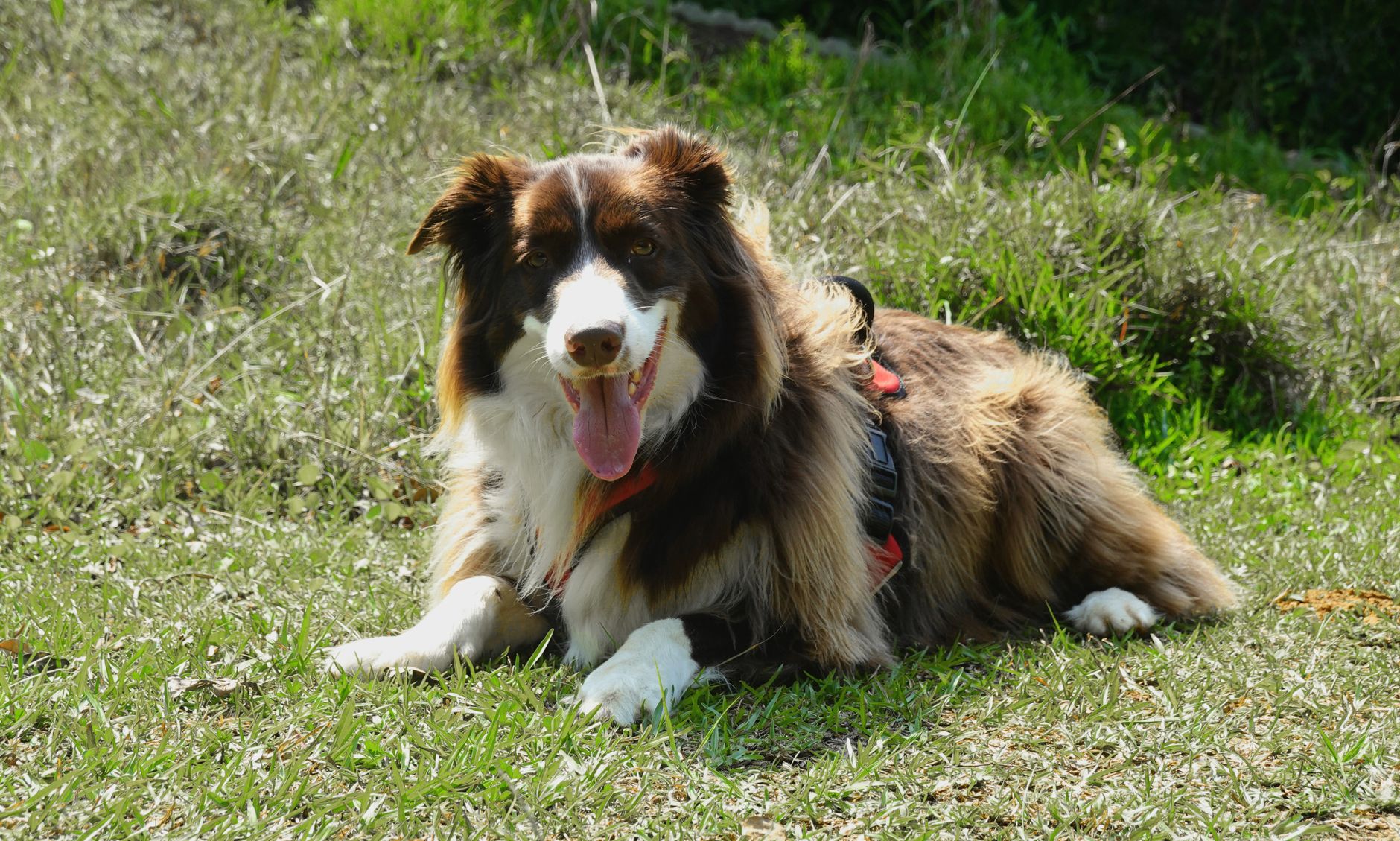
The Clinical Signs of Chronic Boredom
What I see most often in practice is not a ‘bad’ Border Collie, but a profoundly bored one. When clients bring their collies to me for sudden-onset behavioral issues, my first question is always about their daily mental routine.
Without proper stimulation, these dogs develop clinical anxiety, obsessive-compulsive behaviors, and high stress-hormone levels.
I routinely diagnose self-mutilation injuries, such as acral lick dermatitis, where a bored collie will lick their wrists raw out of sheer frustration. They also develop hyper-vigilance, reacting to shadows, dust motes, or the hum of the refrigerator.
If your Border Collie is exhibiting any of the following behaviors, it is not a discipline issue. It is a desperate cry for mental engagement.
- Repetitive tail chasing, shadow snapping, or light chasing.
- Compulsive licking of paws, legs, or household surfaces until raw.
- Herding behavior directed at children, cats, or vacuum cleaners.
- High-pitched, repetitive whining that does not stop with physical exercise.
- Destructive chewing focused specifically on exit points like doors and windows.
The Stamina Trap: Why Running Isn’t Enough
I always tell my clients: you cannot out-exercise a Border Collie. I have seen owners who run ten miles a day with their collies, only to find the dog is still bouncing off the walls.
All this does is build an elite, highly conditioned canine athlete with the same bored mind.
Physical exercise is vital, but without a mental component, it merely increases their stamina. A physically exhausted but mentally under-stimulated collie is a recipe for hyper-arousal.
They become stuck in a state of high adrenaline, unable to settle down because their brain has not been switched off.
To truly tire out a Border Collie, you must target their cognitive reserves. Ten minutes of intensive brainwork will exhaust them far more thoroughly than an hour of mindless fetch.
- Mindless fetch increases cortisol and adrenaline levels without satisfying cognitive needs.
- An over-conditioned dog requires increasingly more exercise to reach physical fatigue.
- Mental stimulation lowers heart rate and activates the parasympathetic nervous system.
- True rest is only achieved when the brain has processed challenging problem-solving tasks.

Advanced Puzzle Toys: Beyond the Standard Chew
In my years treating this breed, I have learned that standard chew toys are solved in seconds by a Border Collie. To keep them occupied, you must invest in or build multi-step, interactive puzzle toys.
These are puzzles that require a sequence of distinct actions to unlock a reward.
I recommend looking for level 3 or level 4 interactive games that require the dog to slide a panel, lift a peg, and spin a wheel all in a specific order. If the toy is too easy, they will bypass the puzzle entirely through brute force or lose interest immediately.
To keep these toys effective, you must implement a strict rotation system. A puzzle is only a puzzle the first few times; after that, it is just a dispensing machine.
- Use sequential puzzles that require multiple steps to access food.
- Rotate toys daily so the dog never solves the same puzzle twice in a week.
- Incorporate frozen elements to slow down their problem-solving speed.
- Utilize DIY puzzles, like hiding treats inside nested cardboard boxes.
The Frozen Layering Technique
One clinical trick I share with clients is layering frozen treats. Fill a durable toy with layers of kibble, wet food, pumpkin, and green beans, freezing each layer before adding the next.
This creates a sensory and cognitive challenge that can keep a Collie focused for up to an hour.

The Power of Job-Based Training
Border Collies are happiest when they have a clearly defined job to perform. In a family home, this ‘job’ can be simple household chores that utilize their natural intelligence.
I have trained my own dogs to clean up their toys, fetch my slippers, and even assist with the laundry.
Giving them a job builds their confidence and channels their herding instincts into safe, productive outlets. It teaches them to focus on your cues and wait for permission, which naturally improves their overall impulse control.
Start by breaking down complex tasks into tiny, rewardable steps. This process of learning the steps is actually more beneficial to their brain than the completed task itself.
- Teach them to identify their toys by name and put them into a designated basket.
- Train them to close open cabinets or doors on a specific verbal cue.
- Incorporate a ‘go to place’ command with varying levels of distraction.
- Have them carry a small dog backpack with lightweight items during walks.
Nose Work and Scent Games: Engaging the Olfactory Brain
A dog’s sense of smell is their primary window into the world, and scent work is an incredible mental workout. For a Border Collie, scent games tap into their deep processing power without putting physical strain on their joints.
This is particularly useful for aging collies or those recovering from orthopedic injuries.
In my practice, I highly recommend scent work for anxious or reactive Border Collies. The act of sniffing actually triggers a release of dopamine and lowers their heart rate, helping them self-soothe.
You do not need professional search-and-rescue equipment to start this at home. Simple kitchen spices or specialized target scents like birch oil work beautifully.
- Hide highly aromatic treats around the house and use the command ‘find it’.
- Use essential oils safe for dogs (like diluted birch or anise) for formal scent discrimination.
- Play the ‘shell game’ using three plastic cups, hiding a treat under one.
- Create a ‘snuffle mat’ filled with dry kibble for their daily meals.

Implementing a Structured Cognitive Schedule
A common mistake I see is owners trying to stimulate their Border Collie constantly throughout the day. This actually backfires by creating a dog that never learns how to switch off and rest.
In my clinical view, a structured schedule with clear boundaries is essential for their mental health.
You should aim for distinct blocks of active brainwork, followed by enforced rest periods. This teaches their highly active nervous system how to transition from high arousal to a calm, restorative state.
Here is a sample framework that I have found works wonders for my clients’ high-drive herding breeds.
- Morning: 15 minutes of training (new tricks or precision obedience) before breakfast.
- Midday: A sniffari walk where the dog dictates the pace and smells everything.
- Afternoon: A high-level puzzle toy or frozen enrichment activity in their crate.
- Evening: A cooperative job (like cleaning up toys) followed by calm relaxation time.
- Ensure at least 12-14 hours of total sleep per day to prevent chronic stress build-up.
Frequently Asked Questions
How many hours of mental stimulation does a Border Collie need daily?
A healthy adult Border Collie needs at least 1.5 to 2 hours of targeted mental stimulation daily. This should be broken up into shorter, focused sessions of 15-30 minutes rather than one long, exhausting block. Combining this with physical exercise ensures they remain balanced and calm.
Can a Border Collie live happily in an apartment if given enough mental stimulation?
Yes, they can live in apartments, but only if their mental and physical needs are met with high dedication. A backyard is secondary to a working dog’s need for cognitive engagement. If you provide consistent puzzle work, training, and scent games, they can adapt well to smaller spaces.
Why does my Border Collie stare at me or herd my children?
This is a manifestation of their natural herding instinct, driven by their intense focus called ‘the eye.’ If they are not given a structured job or training tasks, they will direct this energy toward moving objects inside the home. This behavior is a clear clinical sign that their mental energy is underutilized.
What are the best toys to keep a Border Collie busy when I am at work?
The most effective toys are durable, multi-step puzzle feeders and frozen chew toys. Standard rubber toys are often solved too quickly to keep their focus. Look for complex dispenser toys that require the dog to roll, slide, and tip the toy in specific ways to access their dry kibble.
How do I teach my Border Collie to calm down and relax?
You must actively train a relaxation protocol, as many Border Collies do not possess a natural ‘off switch.’ Reward calm behaviors on a designated mat or place bed, gradually increasing the duration of the stay. Enforcing crate rest or quiet time after high-energy activities helps regulate their nervous system.
Can lack of mental stimulation cause aggression in Border Collies?
Yes, chronic mental under-stimulation can lead to severe frustration, anxiety, and barrier reactivity, which can easily escalate into defensive aggression. When their brilliant minds are underused, their threshold for stress lowers dramatically, making them highly reactive to minor environmental triggers.
Sources & Further Reading
Final Thoughts
Caring for a Border Collie is both a profound privilege and a significant therapeutic commitment. As a veterinarian, I cannot emphasize enough that their physical health is inextricably linked to their cognitive fulfillment.
When we neglect their brilliant minds, we neglect their entire well-being. By implementing structured puzzle work, scent games, and clear household tasks, you will not only prevent a host of clinical behavioral issues, but you will also unlock the true, joyful potential of this extraordinary breed.