
Lagotto Romagnolo Breed Guide

Quick Summary
The Lagotto Romagnolo is an ancient Italian breed famed for its dense, curly coat and peerless truffle-hunting nose. As a veterinarian, I find they are ideal for active families and dedicated owners who can provide the structured mental stimulation and rigorous coat maintenance this highly intelligent, low-shedding sporting dog requires.
Quick Facts
- origin countryItaly
- breed groupSporting (AKC), Retriever/Water Dogs (FCI)
- sizeMedium
- weight range24 to 35 lbs (11 to 16 kg)
- height range16 to 19 inches (41 to 48 cm)
- lifespan15 to 17 years
- coat typeDense, woolly, water-resistant curly double coat
- common colorsOff-white, solid orange, solid brown, brown roan, white with brown or orange patches
- other namesRomagna Water Dog, Italian Truffle Dog
- recognized byAKC, FCI, UKC, KC (UK)
Caring for a Lagotto Romagnolo
Living with a Lagotto means managing an energetic working dog wrapped in a curly, low-shedding coat. In my years treating this breed, I emphasize that they are not low-maintenance ‘poodle-mix’ substitutes; they require substantial daily mental exercises to prevent boredom-induced behaviors. Their waterproof coats pick up debris like organic magnets, meaning post-walk inspections are a daily necessity. Consistent physical activity combined with puzzle toys and scent games will keep their active minds settled.
Is a Lagotto Romagnolo a good family pet?
Yes, they make exceptional family pets for active households because of their loyal and affectionate nature. However, they can be reserved with strangers and require early socialization to ensure they do not become overly protective or anxious around visitors.
Do Lagotto Romagnolos shed a lot?
No, they are practically non-shedding because their hair-like coat holds onto loose strands rather than dropping them on your furniture. This trapped dead hair will, however, form painful mats close to the skin if they are not thoroughly combed and clipped regularly.
Is a Lagotto Romagnolo good for first-time owners?
Generally, I do not recommend them for novice owners because their high intelligence, working drive, and specialized grooming requirements can easily overwhelm someone unprepared. They require structured leadership, early socialization, and a commitment to mental enrichment to thrive.
Temperament & Personality
The Lagotto Romagnolo is an incredibly sharp, keen-nosed worker with a affectionate and devoted family temperament. Unlike many retrieving breeds, they have had their wild-game hunting drive largely bred out over generations of truffle hunting, replacing it with a focused search-and-find drive. What I see most often in practice is a dog that is deeply attached to its immediate family but naturally analytical and observant of its surroundings.
Is a Lagotto Romagnolo good with other pets?
In my clinical experience, Lagottos generally cohabitate wonderfully with other dogs and cats, especially when raised together. Because their historical focus was shifted from retrieving live game to truffle hunting, their prey drive is typically lower than that of other sporting breeds, though early exposure is still vital.
How much attention does a Lagotto Romagnolo need?
They are a highly companionable breed that thrives on human presence and can develop separation anxiety if left alone for long periods. They need to be integrated into daily household activities and will happily shadow you from room to room.
Training & Behavior
Lagottos are highly trainable thanks to their stellar work ethic and intelligence, but they possess a sensitive side that requires positive reinforcement. Traditional, harsh training methods will cause them to shut down completely. Because they were bred to dig for truffles, you must proactively manage their natural urge to dig by directing it to acceptable outlets like sandboxes or scent work games.
Training Tips
- Use positive, reward-based training with high-value treats to leverage their food motivation.
- Keep training sessions short, dynamic, and intellectually challenging to prevent boredom.
- Incorporate scent-work games early to channel their powerful instinctual search behaviors.
- Expose them to novel sights, sounds, and people during the critical socialization window before 16 weeks.
- Provide a designated digging zone in your yard to satisfy their natural truffle-hunting instincts safely.
Fun Activities
- Scent Work and Nosework Trials
- Agility Training
- Dock Diving and Swimming
- Canine Freestyle Dance
- Hide-and-Seek with highly scented toys
Is a Lagotto Romagnolo easy to train?
Yes, they are highly trainable and love to work closely with their handlers. Their intelligence means they pick up commands quickly, but it also means they will learn how to bypass rules if you are inconsistent with your boundaries.
Lagotto Romagnolo Health Issues
The Lagotto Romagnolo is generally a robust and long-lived breed, but their gene pool carries several distinct, inheritable conditions. Responsible breeders screen for these conditions, and I advise all prospective owners to ask for official DNA clearances before bringing a puppy home.
Benign Familial Juvenile Epilepsy (BFJE)
A genetic, breed-specific seizure disorder that typically manifests in puppies around 5 to 9 weeks of age and often resolves spontaneously by 4 months.
Lagotto Storage Disease (LSD)
A severe, progressive neurodegenerative disorder caused by an inherited enzyme deficiency that leads to cellular waste accumulation in the brain.
Hip Dysplasia
A malformation of the hip joint where the ball and socket do not fit together smoothly, eventually leading to painful osteoarthritis.
Otitis Externa (Ear Infections)
Because their curly hair grows deep inside their narrow, moist ear canals, Lagottos are highly prone to painful yeast and bacterial ear infections.
Cerebellar Ataxia
A neurological condition caused by the progressive degeneration of cells in the cerebellum, which is the brain’s coordination center.
How long do Lagotto Romagnolos typically live?
With appropriate preventative veterinary care, a high-quality diet, and regular exercise, Lagottos frequently live between 15 and 17 years, making them one of the longer-lived medium-sized breeds.
What to Feed a Lagotto Romagnolo
Lagottos are highly active dogs that require a nutrient-dense, high-quality diet to sustain their energy levels. I always tell owners to monitor their caloric intake closely, as their thick coats can easily mask weight gain.
Best Diet
An age-appropriate, premium commercial kibble formulation or a balanced, vet-formulated home diet rich in animal proteins. Puppies must be fed a medium-breed puppy formula to ensure correct musculoskeletal development.
How to Feed
I recommend dividing their daily food allowance into two equal meals, fed in the morning and evening, rather than free-feeding. Utilizing puzzle feeders can also help satisfy their active minds during mealtime.
How Much to Feed
Typically, an adult Lagotto requires between 1.5 to 2.5 cups of high-quality dry kibble daily, depending on their weight, age, and activity level. Always consult your veterinarian to establish a precise portion plan tailored to your dog’s body condition score.
Nutritional Tips
Look for diets with added Omega-3 fatty acids (like EPA and DHA) to support their skin health and curly coat. Glucosamine and chondroitin supplements can also be highly beneficial for their hard-working joints.
Lagotto Romagnolo Grooming Guide
The grooming requirements for a Lagotto Romagnolo are intense and non-negotiable. Their unique, woolly curls do not shed like normal fur, meaning they will felt and mat right down to the skin if neglected, causing painful dermatitis.
Coat Care
Do not brush a Lagotto’s coat daily as you would a Poodle’s, as this blows out the natural curls. Instead, use your fingers or a wide-toothed comb to gently check for mats down to the skin weekly, and plan for a professional body clip down to 1/4 inch at least 2 to 4 times a year.
Skin Care
After swimming or muddy outdoor play, thoroughly rinse out any trapped dirt, sand, or organic matter from their dense curls, and towel-dry them gently to prevent hot spots.
Eye Care
Trim the curls around the eyes regularly to prevent the hair from rubbing against the cornea, which can cause chronic irritation, tearing, and staining.
Ear Care
Regularly inspect the ears and gently pluck or trim excess canal hair as advised by your vet to maintain air circulation and prevent moisture trapping.
Nail & Dental Care
Trim nails every 3 to 4 weeks to prevent splaying of the feet, and brush their teeth at least three times a week with veterinary-approved enzyme toothpaste to prevent periodontal disease.
Considerations for Pet Parents
Pros
- Low-shedding coat makes them highly suitable for allergy sufferers.
- Incredibly intelligent and exceptionally quick to train.
- Deeply loyal, affectionate, and loving companion animal.
- Versatile and excels in various canine sports and activities.
- Long-lived and generally hardy when sourced from ethical breeders.
- Low prey drive compared to other active sporting breeds.
Cons
- High-maintenance grooming needs that require professional clips or skilled owner maintenance.
- Prone to digging up lawns and yards if their digging drive is not managed.
- Requires substantial mental stimulation to prevent destructive behavior.
- Can be reserved or suspicious of strangers without rigorous early socialization.
- Prone to severe genetic neurological conditions if bred without health clearances.
Best For
Active families, dedicated individuals, or outdoor enthusiasts who want an intelligent, hypoallergenic companion and are committed to regular grooming, daily mental stimulation, and positive reinforcement training.
Not Recommended For
Sedentary owners, those looking for a low-maintenance ‘backyard’ dog, or individuals who cannot dedicate several hours a week to coat care and mental enrichment.
Cost
- purchase price$2,500 to $4,500
- monthly cost$150 to $250
- initial setupInitial setup expenses, including professional grooming equipment, a heavy-duty force dryer, a high-quality crate, and crucial genetic disease screening or initial puppy vaccinations, typically run between $1,500 and $2,500.
Similar Breeds

Portuguese Water Dog
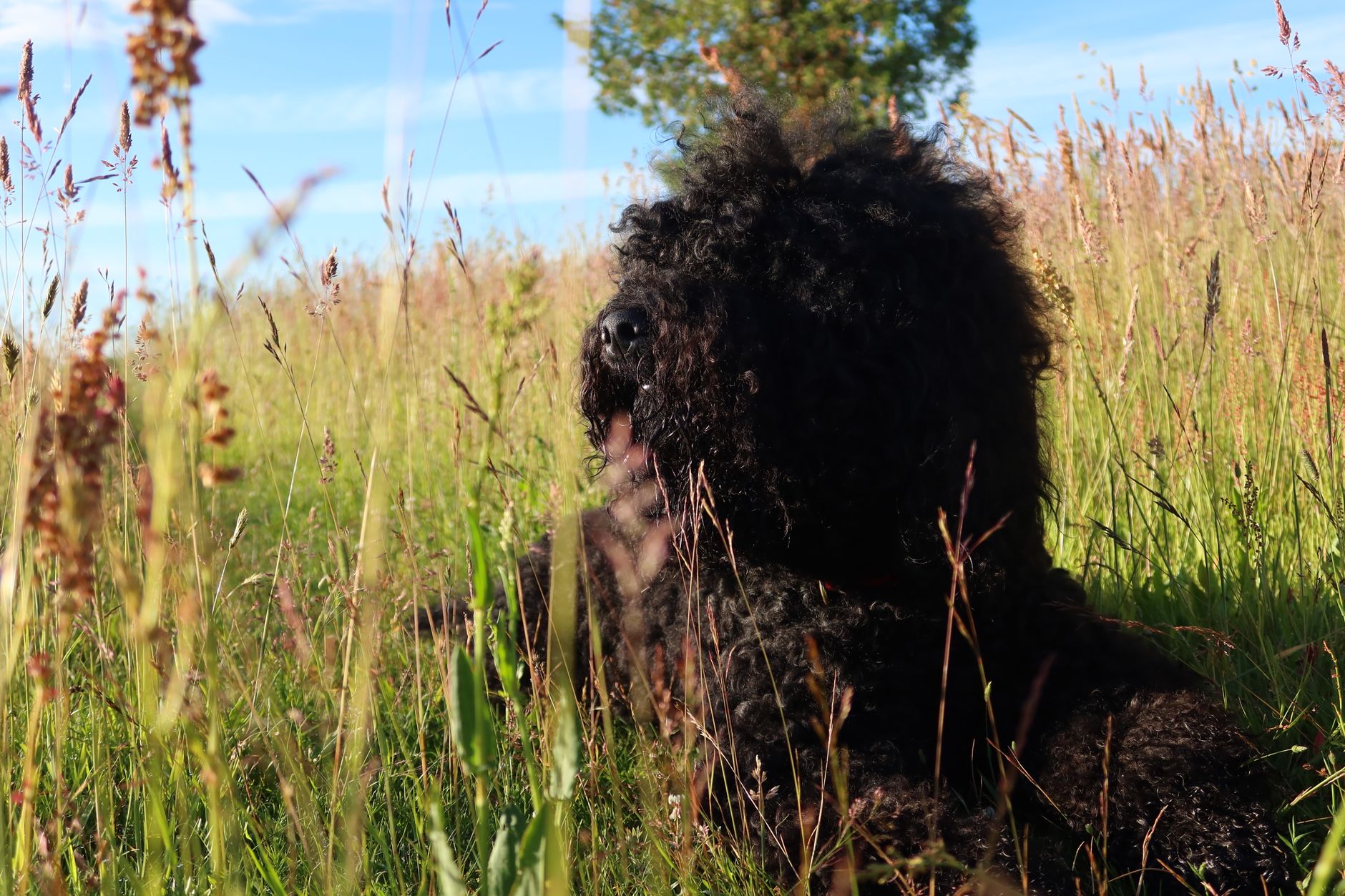
Barbet
Lagotto Romagnolo FAQs
Are Lagotto Romagnolos truly hypoallergenic?
While no dog is completely allergen-free, the Lagotto is considered hypoallergenic because they do not shed hair and produce very little dander. Most people with dog allergies tolerate them exceptionally well, provided the dog is bathed regularly to remove saliva proteins from the coat.
Why does my Lagotto Romagnolo love to dig so much?
Digging is an instinctual behavior for this breed. They were meticulously bred to dig up truffles buried deep in the Italian soil, so they find the act of digging highly self-rewarding and satisfying.
How do I stop my Lagotto from digging up my yard?
The best approach is to redirect their drive rather than punish them. Build a designated sand or dirt digging pit in your yard, bury toys or treats there, and reward your Lagotto for digging exclusively in that designated zone.
Can a Lagotto Romagnolo live in an apartment?
They can adapt to apartment living, but only if their owners are fully committed to meeting their high physical exercise and mental stimulation needs daily. Without active outdoor adventures, they can easily become barky and destructive in small spaces.
Do Lagottos like to swim?
Yes, they are historical water retrievers with water-resistant coats and webbed toes. Most Lagottos love the water, though they should still be introduced to swimming gradually and safely using a canine life jacket initially.
How often should a Lagotto Romagnolo be professionally groomed?
They typically require a professional clip or a complete shave-down every 6 to 8 weeks to keep their fast-growing woolly coat manageable and free of painful matting.
Is the Lagotto Romagnolo prone to barking?
They are naturally alert watchdogs and will bark to notify you of changes in their environment. Early training to teach a ‘quiet’ command is highly recommended to prevent alert barking from turning into a chronic nuisance habit.
What is Lagotto Storage Disease, and can it be prevented?
Lagotto Storage Disease (LSD) is a fatal, inherited neurodegenerative condition. It is completely preventable by purchasing a puppy from a responsible breeder who performs DNA testing on the parent dogs to ensure carriers are never bred together.
Should I pluck my Lagotto’s ear hair?
This is a topic of veterinary debate. Plucking can sometimes cause micro-tears and inflammation that lead to infections, whereas leaving too much hair traps moisture. I recommend working with your vet to determine if your individual Lagotto does better with gentle plucking or regular trimming close to the canal entrance.
At what age does a Lagotto’s coat fully mature?
A Lagotto puppy’s coat is soft and loosely waved. The characteristic dense, tight curls typically begin to develop and mature between 12 and 18 months of age, with the adult texture fully setting in by age two.
How much daily exercise does a Lagotto Romagnolo need?
They require at least 60 to 90 minutes of daily physical exercise. This should ideally include a mix of brisk walking, off-leash running in a safe area, swimming, and structured brain games like scent tracking.
Are Lagottos prone to separation anxiety?
Yes, they are highly people-oriented and bond intensely to their human families. If left alone for long periods without proper crate training and independence building, they can easily develop separation anxiety.
Do Lagottos have a high prey drive?
No, their prey drive is lower than that of many other sporting and hunting breeds because their historic training focused entirely on finding underground fungi rather than chasing live animals. They generally live peacefully alongside smaller household pets when socialized early.