
 Russian Blue vs
Quick Summary
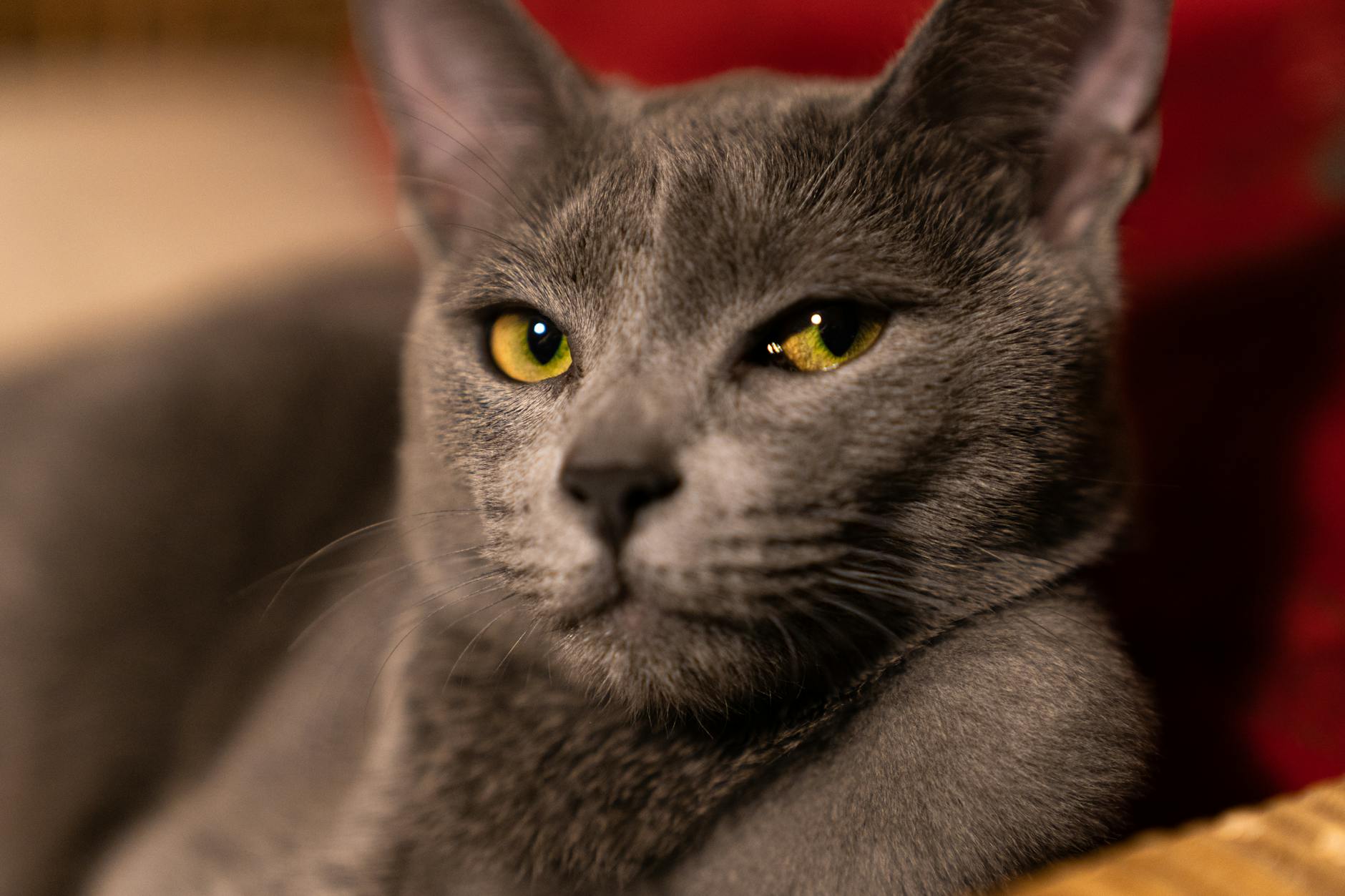
While both the Russian Blue and Chartreux boast stunning blue-grey coats, they are structurally, historically, and genetically distinct breeds. The Russian Blue is a slender, fine-boned athlete with vivid green eyes and a silvery double coat, whereas the Chartreux is a robust, heavily muscled French breed with copper eyes and a dense, woolly coat. Telling them apart relies on observing their bone structure, eye color, and unique facial silhouettes.
As an Amazon Associate, we earn from qualifying purchases.
Popular with cat owners: Slicker Brush · Kitten Food · Cat Tunnel
In my clinic, I frequently have clients bring in a gorgeous grey feline and proudly declare they rescued a Russian Blue. More often than not, they are surprised when I point out the unique physical markers that suggest otherwise.
Distinguishing between blue cat breeds is a common point of confusion for pet owners and veterinary staff alike. Today, we will demystify the key differences between two of the most famous blue-coated breeds: the elegant Russian Blue and the robust Chartreux.
By looking closely at their history, anatomy, and distinct personalities, you will easily learn to tell these remarkable felines apart.
Key Takeaways
- Russian Blues possess a long, slender ‘foreign’ body type, while Chartreux cats have a heavy, muscular ‘cobby’ build.
- Eye color is a definitive differentiator: adult Russian Blues have vivid green eyes, whereas Chartreux cats have copper or orange eyes.
- The Russian Blue coat is plush and silvery with distinct double-coating, while the Chartreux coat is dense, water-resistant, and slightly woolly.
- Chartreux cats are often described as a ‘potato on toothpicks’ due to their robust bodies and relatively thin legs.
- The Russian Blue has a distinct flat-planed, wedge-shaped head, compared to the rounded, trapezoidal head of the Chartreux.
- While both are quiet, Russian Blues tend to be reserved one-person companions, whereas Chartreux are highly adaptable, dog-like, and social.
In This Article
- Historical Roots: Arkhangelsk Ports vs. French Monasteries
- Body Silhouette: Svelte Acrobat vs. “Potato on Toothpicks”
- Facial Structure and the Battle of the “Smiles”
- The Eyes: Vivid Emerald vs. Burning Copper
- Coat Texture and Color Nuances
- Personality and Temperament in the Clinic
- Clinical Health Considerations and Lifespan
- How to ID a Mix vs. a Pedigree Cat
Historical Roots: Arkhangelsk Ports vs. French Monasteries
Understanding where these cats came from helps explain why they look and act so differently. In my practice, I find that a breed’s history always leaves a permanent mark on its physical traits.
The Russian Blue is believed to have originated in the frozen port of Arkhangelsk in Northern Russia.
Sailors prized them for their dense, warm coats and brought them to Great Britain in the late 19th century. Their survival depended on a thick double coat that could withstand sub-zero Arctic temperatures.
Swihauk Self-Cleaning Slicker Brush
- ✓Release button for one-step hair removal
- ✓Rounded bristle tips are gentle on skin
- ✓Stainless steel pins in a compact design
- Fine wire pins lift loose undercoat and work out small tangles before they turn into mats
On the other hand, the Chartreux has deep roots in France, with legends linking them to the Carthusian monks of Grande Chartreuse. They were valued as working cats, prized for their exceptional mousing skills in monasteries and farms.
Their heavy, muscular build was designed for rugged survival and physical power.

Body Silhouette: Svelte Acrobat vs. “Potato on Toothpicks”
When a blue cat walks into my exam room, the first thing I evaluate is its overall frame and silhouette. The Russian Blue is the epitome of feline elegance and grace.
They carry themselves like ballerinas, with long, fine-boned legs and a slender, elongated body.
In stark contrast, the Chartreux is built like a compact tank. They are a heavy, cobby breed with broad shoulders and a deep chest.
Breeding standards often describe them as a “potato on toothpicks” because of their massive bodies resting on relatively short, slender legs.
- Russian Blue: Elongated, elegant “foreign” body type with fine bones.
- Russian Blue: Long, slender legs with small, oval-shaped paws.
- Chartreux: Robust, heavy-boned body with broad shoulders and deep chest.
- Chartreux: Medium-short, fine-boned legs that contrast with a thick, heavy torso.
- Weight differences: Male Chartreux can easily reach 12-16 pounds, while male Russian Blues typically top out at 10-12 pounds.

Facial Structure and the Battle of the “Smiles”
Looking directly at a cat’s face reveals instant clues to their genetic background. Both breeds have highly unique facial profiles that set them apart from standard domestic shorthairs.
The shape of their skulls, muzzles, and even their natural expressions are completely distinct.
The Russian Blue’s Cobra Face
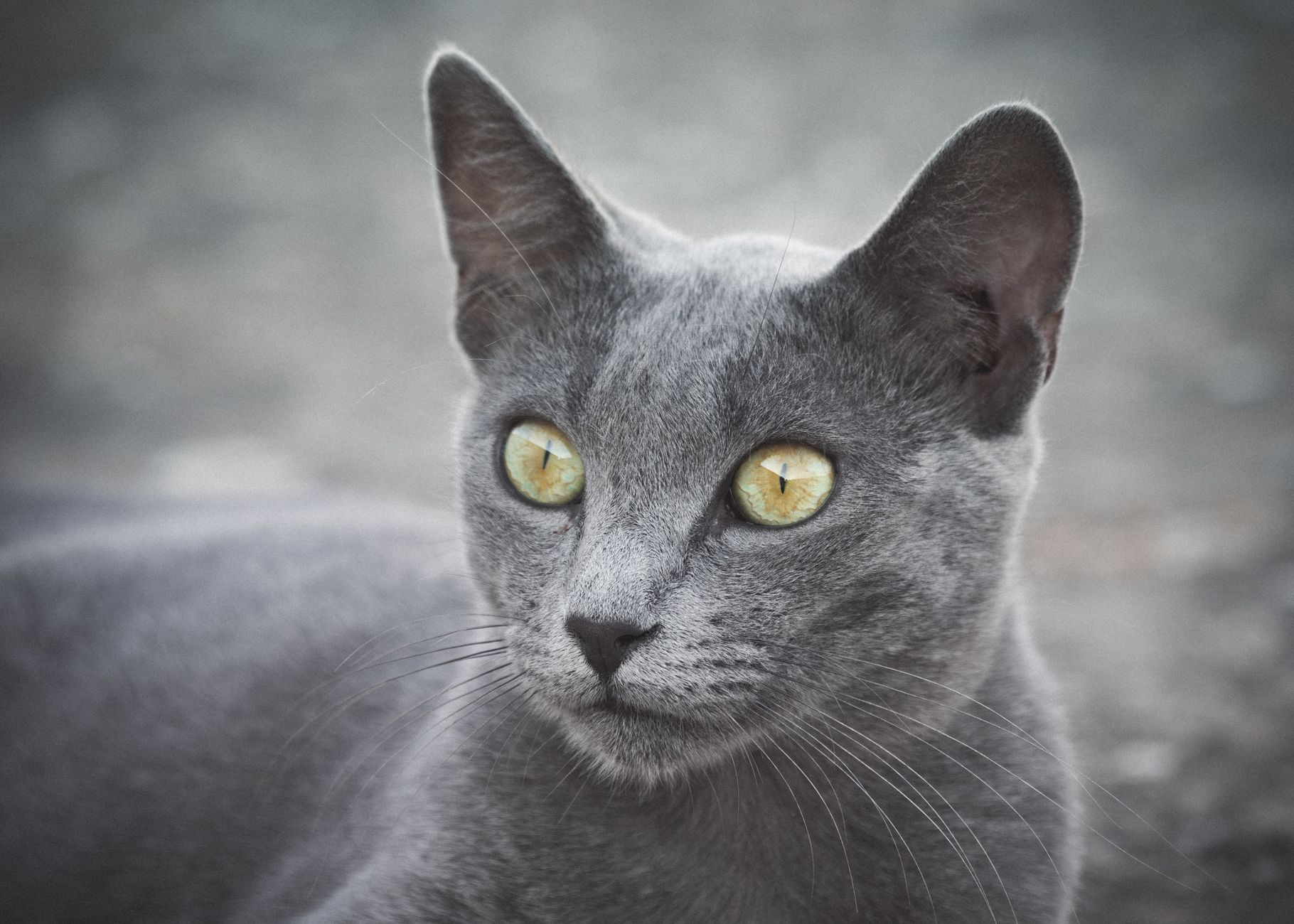
The Russian Blue has a wedge-shaped head with flat planes. When viewed from the front, their head looks like a smooth, seven-sided wedge, resembling a cobra’s hood.
Their mouth curves upward naturally, creating the famous, quiet “Mona Lisa smile” that owners adore.
The Chartreux’s Sweet Muzzle
The Chartreux head is broad and rounded, tapering to a narrow, trapezoidal muzzle. This unique muzzle structure pushes the cheeks outward, giving them a sweet, permanent smiling expression.
It is a much rounder, friendlier look than the angular Russian Blue.
The Eyes: Vivid Emerald vs. Burning Copper
If you are ever in doubt about which breed you are looking at, check the eyes. Eye color is one of the most reliable diagnostic markers I use in the clinic.
Purina ONE Healthy Kitten Dry Food
- ✓Real chicken is the #1 ingredient
- ✓DHA for vision and brain development
- ✓Easily digestible
- Higher protein and calories support a kitten’s rapid growth in the first year
However, you must keep the cat’s age in mind, as kitten eyes undergo a fascinating developmental transition.
Adult Russian Blues must have vivid, striking green eyes. In contrast, a Chartreux will show eyes ranging from bright gold to deep copper or amber.
Any hint of green in an adult Chartreux’s eye is considered a serious fault in show standards.
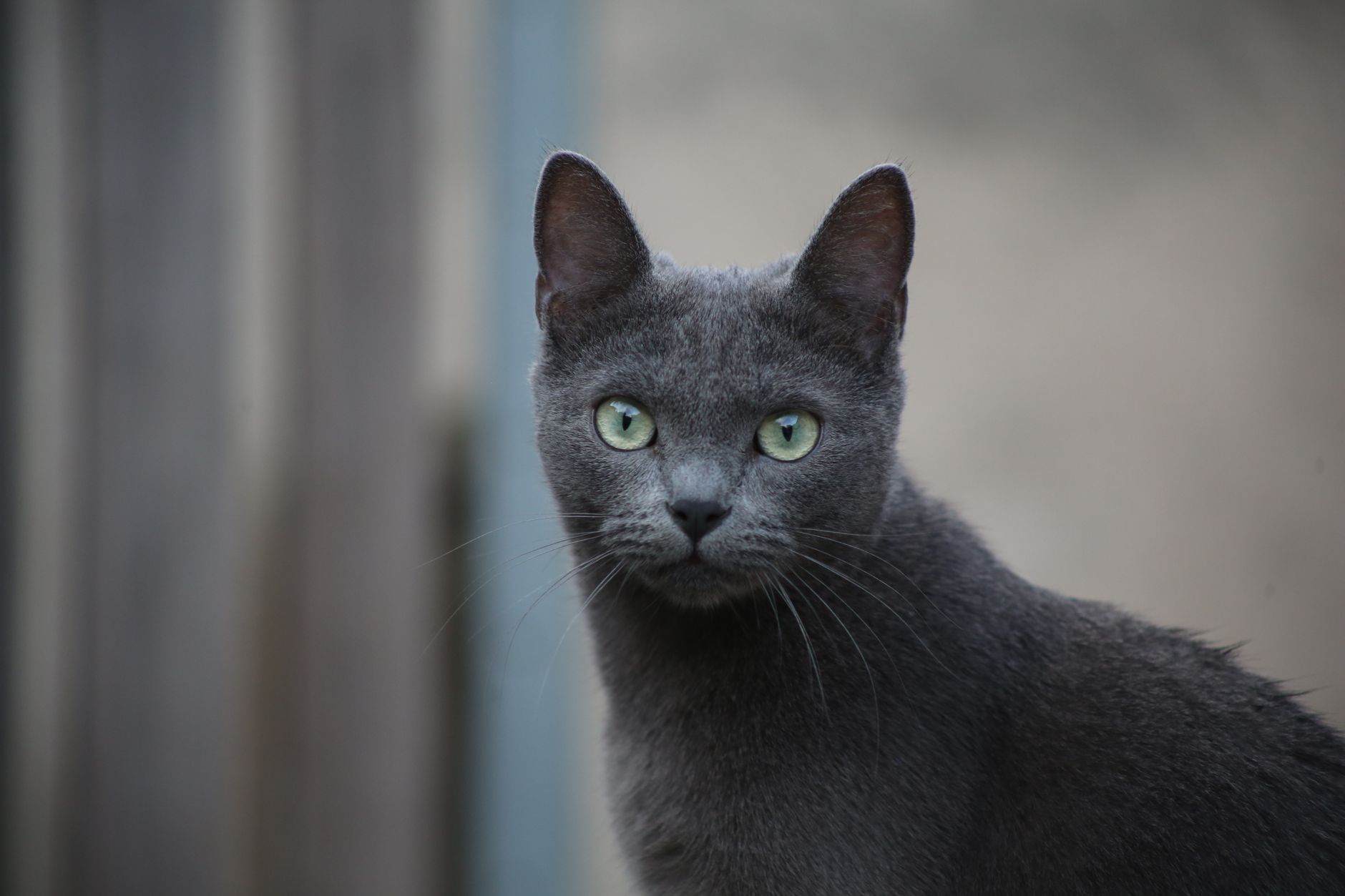
- Russian Blue: Vivid green eyes, ideally a deep, striking emerald shade.
- Russian Blue Kittens: Born with blue eyes that transition to yellow, then to green by adulthood.
- Chartreux: Gold, copper, or deep orange eyes with absolutely no trace of green.
- Chartreux Kittens: Also born blue, but their eyes quickly shift to amber and settle into brilliant copper.
- Eye Shape: Russian Blues have round, slightly wide-set eyes, while Chartreux eyes are rounded but expressive and attentive.

Coat Texture and Color Nuances
As a veterinarian, I run my hands over dozens of cats a day, and the coats of these two breeds are incredibly distinct. The Russian Blue has a double coat that stands out from the body.
If you run your fingers through it, the tracks of your fingers will actually remain in the fur.
The Chartreux possesses a very dense, water-resistant coat that is slightly woolly to the touch. This woolly texture causes the coat to “break” or separate across their heavy neck and shoulders, much like a sheep’s fleece.
This was a crucial evolutionary trait for surviving wet, outdoor conditions in historic France.
- Russian Blue: Shimmering silvery-blue coat due to silver-tipped guard hairs.
- Russian Blue: Soft, silky, plush double coat that stands out at a 45-degree angle.
- Chartreux: Any shade of blue-grey from ash to slate, with slate being highly prized.
- Chartreux: Dense, slightly harsh, and woolly coat that feels thick and protective.
- Grooming note: Russian Blues need minimal brushing, while the thick coat of a Chartreux requires frequent combing to prevent matting.
Personality and Temperament in the Clinic
In my clinical exam rooms, temperament differences become very obvious. Cats behave differently under stress, and their breed-specific traits shine through.
Both breeds are incredibly loving, but they show their affection and manage their anxiety in distinct ways.
The Reserved Russian Blue
Russian Blues are highly sensitive and tend to be quiet, reserved, and cautious with strangers. They will often hide when visitors arrive but are intensely loyal and affectionate with their chosen human.
They thrive on routine and do not like loud noises.
The Adaptable Chartreux
Chartreux cats are much more easygoing and adaptable. They are often described as “dog-like” because they will happily follow you from room to room.
They handle clinic visits with calm curiosity and are famous for being silent, rarely meowing but occasionally chirping.
Clinical Health Considerations and Lifespan
Every breed comes with its own set of genetic predispositions that veterinary professionals monitor. While both the Russian Blue and Chartreux are generally healthy, robust breeds, we still watch for specific conditions.
Knowing what to look for can help you provide preventative care and catch issues early.
Russian Blues have a fantastic lifespan, often living up to 15 to 20 years. Chartreux are also hardy, typically living 12 to 15 years, but their heavy build requires careful weight management.
- Russian Blue: Highly prone to obesity if free-fed, which can quickly lead to diabetes mellitus.
- Russian Blue: Known to have a higher incidence of progressive retinal atrophy (PRA) in some lines.
- Chartreux: Prone to patellar luxation (slipping kneecaps), a condition we screen for in heavy-bodied cats.
- Chartreux: Higher risk of polycystic kidney disease (PKD), making genetic testing of parents vital.
- Dental health: Both breeds require regular dental cleanings to prevent periodontal disease.
How to ID a Mix vs. a Pedigree Cat
Many clients ask me if their rescued grey cat is a purebred Russian Blue or Chartreux. In reality, truly pedigree cats of either breed are quite rare outside of professional registries.
Most “blue” cats found in shelters are domestic shorthairs carrying the dilute black (blue) gene.
Without official registration papers, it is almost impossible to prove a pedigree status. However, look at the physical clues.
If your grey cat has green eyes and a slender, elegant frame, it closely resembles the Russian Blue. If it is a muscular, round-faced cat with orange eyes, it shares the classic traits of the historic Chartreux.
-
EGETOTA 5-Way Cat Tunnel with Play BallA crinkly play tunnel gives cats somewhere to hide, pounce and race through
-
PETLIBRO Dockstream 2 Stainless Steel Cat Water FountainMoving, filtered water encourages pets to drink more, which supports kidney and urinary health
-
Greenies Feline Adult Dental Cat TreatsHelps reduce tartar build-up
Frequently Asked Questions
Can a Russian Blue have yellow or copper eyes?
No, adult purebred Russian Blues must have vivid green eyes. While their eyes start out blue as kittens and pass through a yellow phase, they must turn green by the time they reach physical maturity.
Are Chartreux cats hypoallergenic?
No cat is entirely hypoallergenic, but the Russian Blue is often better tolerated by allergy sufferers because they produce lower levels of the Fel d 1 allergen. The dense, woolly coat of the Chartreux traps dander well, but they produce standard levels of allergens.
Why is the Chartreux breed so rare compared to the Russian Blue?
The Chartreux was nearly driven to extinction during World War II, and breeding programs have been carefully and slowly rebuilt. They remain a relatively rare, prized breed today, whereas Russian Blues are more widely established globally.
Which breed is more suitable for a household with dogs and children?
The Chartreux is typically more suitable for active households due to their calm, social, and highly adaptable nature. Russian Blues prefer quiet environments and can become easily stressed by loud children or energetic dogs.
How can I tell a blue British Shorthair from a Chartreux?
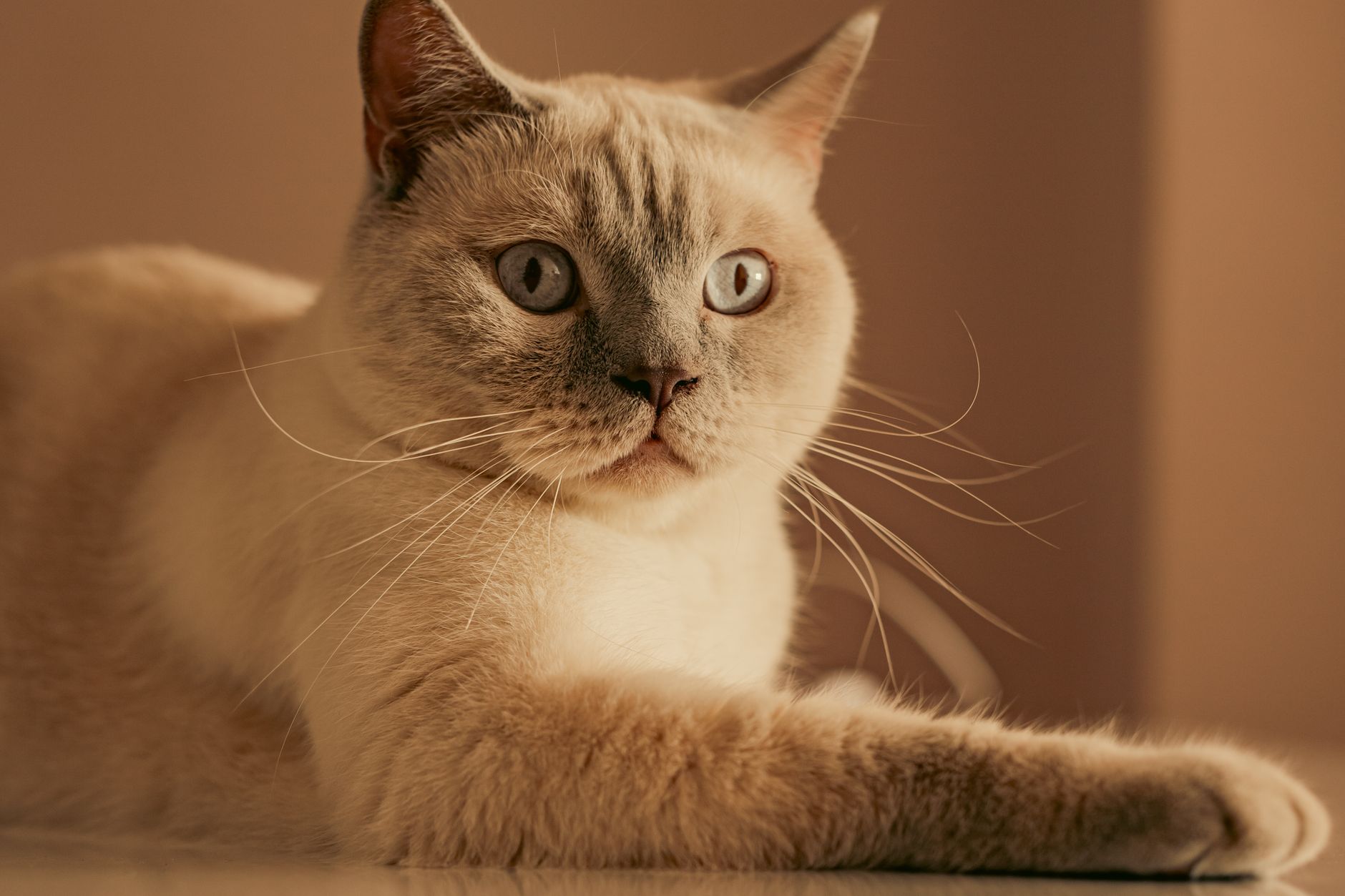
This is another common mix-up! British Shorthairs have a much rounder head, thicker cheeks, and a massive, stocky build with a short, dense coat, whereas the Chartreux has a trapezoidal muzzle, high ears, and a woolly, sheepskin-like coat.
Sources & Further Reading
- The Cat Fanciers’ Association (CFA)
- International Cat Care
- Cornell University College of Veterinary Medicine
Final Thoughts
Whether you are drawn to the quiet, emerald-eyed elegance of the Russian Blue or the robust, smiling charm of the copper-eyed Chartreux, both breeds make exceptional companions. As a veterinarian, my primary goal is always to help you understand your pet’s unique physical and emotional needs.
Identifying their physical heritage is more than just fun trivia; it helps us tailor their diet, grooming, and preventative medical care. Embrace the distinctive quirks of your blue companion, and remember that a healthy cat is a happy cat, regardless of their pedigree.