
Norwegian Forest Cat Grooming: Handling a Thick Double Coat
 Norwegian Forest Cat Grooming: Handling a Thick Double Coat” loading=”lazy”>
Quick Summary
Grooming a Norwegian Forest Cat requires specialized tools and techniques to manage their unique, water-repellent double coat. Regular weekly maintenance, seasonal undercoat removal, and professional sanitary trims are essential to prevent painful skin infections and life-threatening hairballs. As a veterinarian, I recommend a structured grooming routine to preserve both your cat’s physical health and their emotional well-being.
As an Amazon Associate, we earn from qualifying purchases.
Popular with cat owners: Deshedding Tool · Slicker Brush · Pet Hair Remover
As a practicing veterinarian, I often see Norwegian Forest Cats—affectionately known as Wegies—come into my clinic with severely matted coats. Their spectacular double coat is a marvel of evolutionary engineering, designed to withstand harsh Scandinavian winters, but it requires dedicated care.
In my years treating these majestic felines, I have learned that grooming is not just about aesthetics. It is a critical component of their overall dermatological and gastrointestinal health.
Without a proper understanding of how to manage their dense undercoat, owners can quickly find themselves overwhelmed. Let’s look at how to keep your forest cat comfortable, healthy, and tangle-free.
Key Takeaways
- The Norwegian Forest Cat has a unique, water-repellent double coat consisting of oily guard hairs and a dense, woolly undercoat.
- Using plastic or cheap brushes is ineffective; you must use high-quality steel tools to reach the undercoat safely.
- A systematic weekly grooming protocol helps prevent painful mats and minimizes the risk of dangerous hairball blockages.
- During the spring ‘coat blow,’ daily brushing is highly recommended to manage the sudden, massive volume of shedding.
- Never use household scissors to cut out mats, as feline skin is extremely thin and prone to severe lacerations.
- Bathing a Wegie requires specialized techniques and degreasing shampoo due to the highly water-repellent nature of their fur.
- A regular veterinary sanitary trim keeps the back-end clean and prevents painful fecal matting and urinary tract issues.
In This Article
- The Anatomy of the Norwegian Forest Cat Double Coat
- The Vet-Approved Grooming Toolkit
- The Step-by-Step Weekly Grooming Protocol
- Navigating the Seasonal ‘Coat Blow’
- Identifying and Safely Resolving Mats
- The Challenge of Bathing a Waterproof Cat
- The Critical ‘Sanitary Trim’ for Daily Hygiene
- Clinical Warning Signs: When to Visit My Clinic
The Anatomy of the Norwegian Forest Cat Double Coat
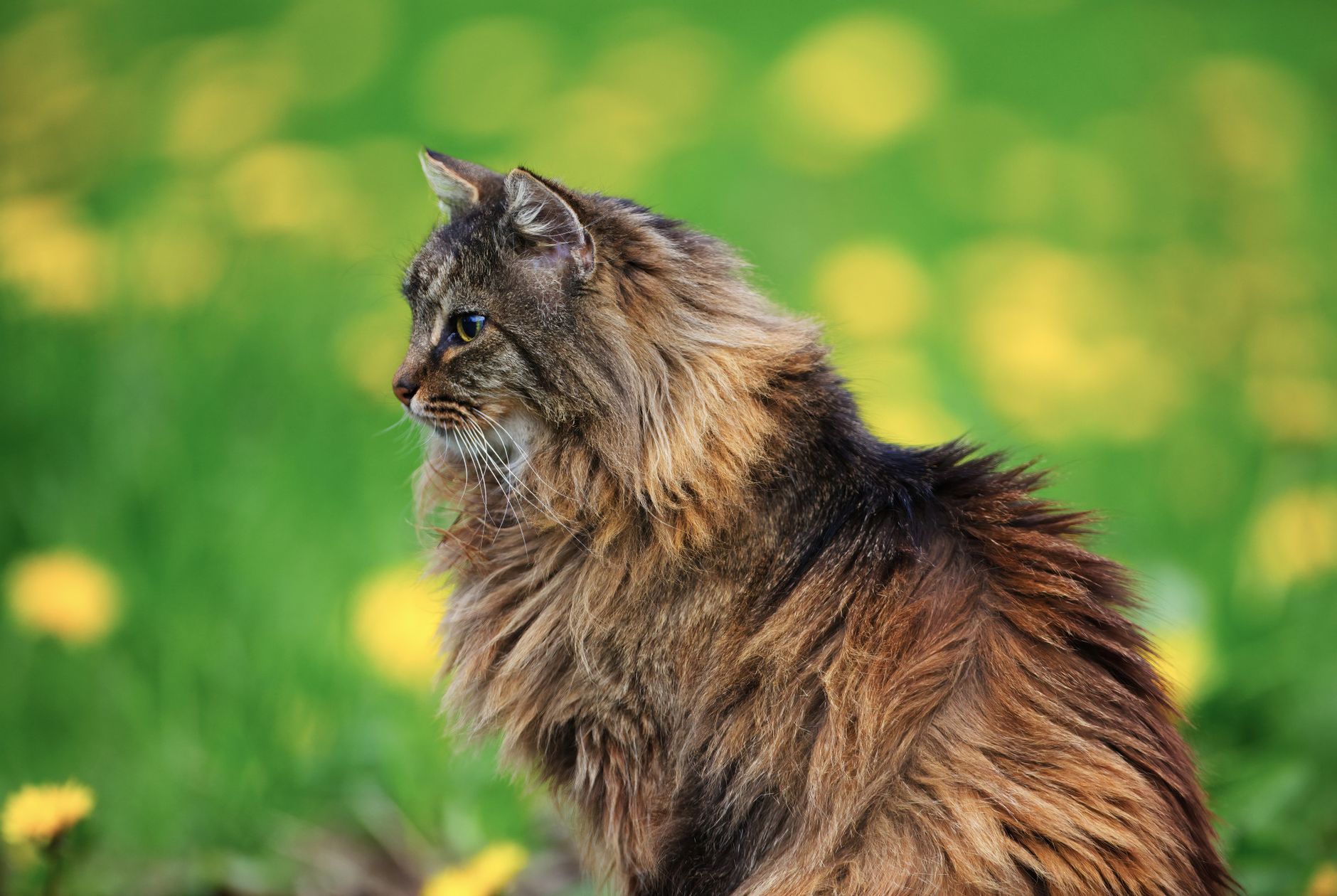
To understand how to groom a Norwegian Forest Cat, you must first understand the anatomy of their unique fur. Unlike single-coated breeds, the Wegie possesses a dense, woolly undercoat topped by long, water-repellent guard hairs.
In my practice, I describe this structure as an all-weather jacket worn over a heavy fleece sweater. The guard hairs are naturally oily and glossy, designed to shed rain and snow effortlessly.
Meanwhile, the undercoat acts as a thermal barrier, trapping warm air close to the skin. If you do not penetrate both layers during grooming, you are only styling the surface while severe mats fester underneath.
- Water-repellent guard hairs that feel slightly coarse and glossy
- Dense, woolly undercoat that provides heavy thermal insulation
- A prominent ruff around the neck and full ‘breeches’ on the hind legs
- Heavy seasonal shedding, particularly in the spring, when they shed the winter undercoat
Aumuca Self-Cleaning Cat Brush for Shedding
- ✓Pins with rounded rubber tips are gentle on skin
- ✓Release button for easy cleanup
- ✓304 stainless steel pins
- Reaches through the topcoat to remove loose undercoat, cutting down the hair on your floors and furniture
The Vet-Approved Grooming Toolkit
I always tell my clients that using the wrong tools on a Norwegian Forest Cat is worse than not grooming them at all. Soft plastic brushes merely glide over the waterproof guard hairs, completely ignoring the undercoat where mats actually form.
You need professional-grade, sturdy metal tools to reach the skin safely and effectively. Investing in high-quality equipment will save you hundreds of dollars in veterinary shave-downs and medical treatments.
Keep these tools in a dedicated kit and clean them regularly with a pet-safe disinfectant to prevent the spread of skin bacteria.
- A high-quality steel greyhound comb with both wide and narrow teeth
- A long-pinned slicker brush to grab loose undercoat fibers without scratching the skin
- An undercoat rake designed specifically for double-coated breeds
- A specialized dematting rake with curved, dull-edged safety blades
- Cornstarch or a vet-approved detangling spray to lubricate tight spots

The Step-by-Step Weekly Grooming Protocol
Establishing a systematic routine is crucial for keeping your Wegie’s coat healthy and maintaining their trust. If you pull or yank on their sensitive skin, they will quickly learn to hide whenever the brush comes out.
I recommend grooming your cat at least two to three times a week, though daily touch-ups are ideal. Always work in a quiet, calm environment and pair the session with high-value treats to create positive reinforcement.
By breaking the body down into zones, you ensure that no hidden mats are missed, particularly in high-friction areas like the armpits.
- Step 1: Inspect the skin and coat visually and tactilely for hidden mats or foreign debris
- Step 2: Use the slicker brush in gentle, short strokes to lift loose surface hair from head to tail
- Step 3: Work the undercoat rake through the dense layers, starting from the rear legs and moving forward
- Step 4: Use the greyhound comb to check your work, ensuring it glides smoothly from root to tip
- Step 5: Reward your feline companion immediately with a tasty treat to reinforce the positive experience

Navigating the Seasonal ‘Coat Blow’
Twice a year, Norwegian Forest Cats undergo a dramatic physical transformation known as ‘blowing their coat.’ During the spring, they shed their heavy winter undercoat in massive clumps to prepare for the warmer months.
During this time, my clinic sees a major spike in felines suffering from severe hairballs and gastrointestinal blockages. When cats groom themselves, they naturally ingest this loose undercoat, which can form dangerous obstructions in their digestive tract.
Pecute Skin-Friendly Self-Cleaning Slicker Brush
- ✓Instant hair-ejection button
- ✓Made for heavy shedders and sensitive skin
- ✓Works on cats and dogs
- Fine wire pins lift loose undercoat and work out small tangles before they turn into mats
If your cat begins vomiting bile, dry heaving, or displaying lethargy during shedding season, seek veterinary care immediately. Daily grooming during this period is not optional; it is a clinical necessity.
- Increase grooming frequency to daily sessions during the peak of spring and autumn
- Use veterinary-approved hairball remedy pastes to assist the passage of ingested fur
- Add moisture to their diet through high-quality wet food to support healthy digestion
- Regularly vacuum and lint-roll your home to manage the environmental hair load

Identifying and Safely Resolving Mats
Matting is not just a cosmetic issue; it is a serious animal welfare and health concern. When loose undercoat hair becomes tangled, it wraps tightly around the surrounding guard hairs, pulling closer to the skin with every movement.
In my clinic, I have treated Wegies with mats so tight they restricted the cat’s leg movement and caused deep, painful skin tears. Moisture gets trapped under these mats, creating a perfect breeding ground for bacteria and yeast.
Never use scissors to cut out a mat at home. Feline skin is incredibly thin and elastic, making it far too easy to accidentally slice open a major blood vessel.
- Moist dermatitis, also known as hot spots, caused by trapped moisture under tight fur
- Bacterial and fungal skin infections thriving in the dark, unventilated coat
- External parasite infestations, such as fleas or mites, hiding undetected beneath the mats
- Severe discomfort and behavioral changes, including sudden aggression, lethargy, or hiding
The Danger of Home Scissor Accidents
I cannot stress this enough: please put the household scissors away. Feline skin is elastic and pulls up into the mat, meaning you can easily slice open a major blood vessel.
If a mat cannot be worked out with a dematting tool, it must be clipped safely with professional electric clippers.

The Challenge of Bathing a Waterproof Cat
Bathing a Norwegian Forest Cat is an athletic event because their coats are literally designed to repel water. If you dump a cup of water on a Wegie, it will simply run off the surface, leaving the undercoat bone-dry.
To successfully bathe a Wegie, you must physically massage the water and shampoo deep into the fur to break through the natural oils. Only bathe your cat when absolutely necessary, such as when they get into something sticky or dirty.
Ensure that you use a shampoo formulated specifically for cats. Human shampoos have a different pH balance and can severely dry out a feline’s sensitive skin.
- Use a high-quality, cat-safe degreasing shampoo to break down natural skin oils
- Dilute the shampoo with warm water beforehand for easier penetration through the guard hairs
- Use a handheld sprayer with gentle pressure to force water into the dense undercoat
- Towel dry thoroughly and use a low-heat pet dryer while brushing to prevent immediate matting

The Critical ‘Sanitary Trim’ for Daily Hygiene
Because of their magnificent, long back-end fur—often called ‘breeches’ or ‘pantaloons’—Wegies are highly susceptible to hygiene issues. Soft stool can easily become trapped in this dense woolly fur, leading to a highly unpleasant mess and potential infections.
In my veterinary practice, I routinely perform what we call a ‘sanitary trim’ to prevent this issue. Keeping this area neatly clipped short is one of the kindest things you can do for your Norwegian Forest Cat’s daily comfort.
If your cat has regular digestive issues, a sanitary trim is an absolute must to prevent painful urine scalding and fecal contamination.
- Keep the fur around the anus and down the back of the thighs clipped short using pet clippers
- Inspect the rear end daily, especially if your cat has a sensitive stomach or is aging
- Use unscented, cat-safe grooming wipes for quick, daily hygiene cleanups
- Ensure their litter box is extra-large to accommodate their size and prevent tail-dipping
Clinical Warning Signs: When to Visit My Clinic
While regular home maintenance is highly effective, there are times when professional or veterinary intervention is required. Some Norwegian Forest Cats simply do not tolerate grooming, or their mats become too severe to handle safely at home.
If your cat growls, hisses, or tries to bite during grooming, do not force the issue. Stress can trigger serious cardiovascular complications in cats, so professional sedation grooming at my clinic is often the safest route.
Watch closely for signs of physical pain or skin damage while you groom. Your cat’s skin should always be pale, smooth, and free of strong odors.
- The matting is tight against the skin and covers more than 10 percent of the body
- The skin beneath a mat looks red, raw, oozing, or emits an unpleasant odor
- Your cat shows signs of extreme stress, such as panting, open-mouth breathing, or struggling to catch their breath
- You detect suspicious lumps, bumps, or skin lesions while brushing
-
ChomChom Roller Pet Hair RemoverLifts embedded fur in a few quick strokes
-
PETLIBRO Dockstream 2 Stainless Steel Cat Water FountainMoving, filtered water encourages pets to drink more, which supports kidney and urinary health
-
Temptations MixUps Crunchy and Soft Cat TreatsA tasty treat makes training, grooming and vet-carrier practice far easier
Related Cat Guides
Frequently Asked Questions
How often should I groom my Norwegian Forest Cat?
Can I shave my Norwegian Forest Cat for the summer?
Why does my Wegie hate being brushed, and how can I fix it?
What should I do if my cat gets a massive mat close to the skin?
Do Norwegian Forest Cats need frequent baths?
How do I prevent hairballs in my Wegie during shedding season?
Sources & Further Reading
Final Thoughts
Caring for a Norwegian Forest Cat’s magnificent double coat is a labor of love that rewards you with a healthy, happy, and stunning companion. By implementing a consistent weekly routine, investing in professional-grade tools, and knowing when to seek veterinary help, you can keep skin issues and painful matting at bay.
Remember that grooming is not just about vanity; it is an essential pillar of your Wegie’s physical comfort and emotional well-being. If you ever feel overwhelmed by their dense fur, do not hesitate to reach out to your veterinary team for support, guidance, or a professional sanitary trim.
Your gorgeous forest cat deserves to feel as comfortable as they look spectacular.