
British Shorthair Weight Control: Preventing Obesity in a Sedentary Breed
 British Shorthair Weight Control: Preventing Obesity in a Sedentary Breed” loading=”lazy”>
Quick Summary
British Shorthairs are genetically predisposed to a sedentary lifestyle and obesity, which is often masked by their extremely dense, plush coats. To prevent serious health issues like osteoarthritis and diabetes, owners must use hands-on Body Condition Scoring, calculate precise daily caloric limits rather than relying on pet food bags, and replace traditional feeding bowls with active foraging toys.
As an Amazon Associate, we earn from qualifying purchases.
Popular with cat owners: Cat Food · Cat Tunnel · Cat Tree
In my clinical practice, I see countless British Shorthairs who are loved just a little too much with food. These gorgeous, plush cats are famous for their round faces and easygoing temperaments, but that calm nature is a double-edged sword.
What I see most often in my examination room is a breed that is genetically primed to conserve energy, leading rapidly to silent weight gain.
Preventing obesity in these gentle giants requires a proactive, clinically sound approach that goes far beyond simply cutting back on kibble.
Key Takeaways
- British Shorthairs are genetically predisposed to a low metabolic rate and sedentary behaviors.
- Their dense, plush double coats easily camouflage early-stage obesity from visual inspection.
- Physical, hands-on Body Condition Scoring (BCS) must be performed monthly to detect weight gain.
- Standard pet food packaging guidelines typically overestimate the caloric needs of this sedentary breed.
- Transitioning from high-carbohydrate dry kibble to high-moisture wet food promotes satiety and safe weight loss.
- Ditching traditional bowls for interactive puzzle feeders is essential to stimulate physical and mental activity.
- Weight loss must be slow and controlled, aiming for 0.5% to 1.5% of total body weight loss per week to prevent fatty liver disease.
In This Article
- The Teddy Bear Trapping: Understanding the Sedentary British Shorthair
- The Illusion of Plushness: Master the Body Condition Score (BCS)
- Calculating the Calories: The Precise Math of Feline Metabolism
- Wet Food vs. Dry Food: The Hydration and Satiety Equation
- Ditch the Bowl: Interactive Feeding and Environmental Enrichment
- The Heavy Price: Clinical Consequences of Feline Obesity
- Designing a Safe and Effective Weight Loss Protocol
The Teddy Bear Trapping: Understanding the Sedentary British Shorthair
British Shorthairs are beloved for their calm, unflappable personalities. However, this placid demeanor means they burn far fewer calories than their more active feline counterparts.
In my clinic, I often refer to them as professional loungers who would rather watch a toy than chase it.
Their history as working barn cats in Great Britain is highly misleading. Today’s domestic British Shorthair has been bred for a stocky, heavy-boned build, which owners often confuse with healthy muscle mass.
This genetic blueprint, combined with a modern indoor lifestyle, makes them primary candidates for severe weight accumulation.
- Extremely low daily step counts compared to active breeds like the Siamese or Abyssinian.
- High threshold for play stimulation, requiring more structured effort from owners to initiate movement.
- A natural metabolic rate that drops significantly after reaching social maturity at three to five years of age.
- A physiological tendency to store fat in the inguinal fat pad under the belly early in life.
Blue Buffalo Indoor Adult Cat Food, Chicken & Brown Rice
- ✓Real chicken is the first ingredient
- ✓Formulated for indoor adult cats
- ✓Supports digestive care and coat health
- Balanced nutrition for less active indoor cats
- Helps with hairball and weight control
The Illusion of Plushness: Master the Body Condition Score (BCS)
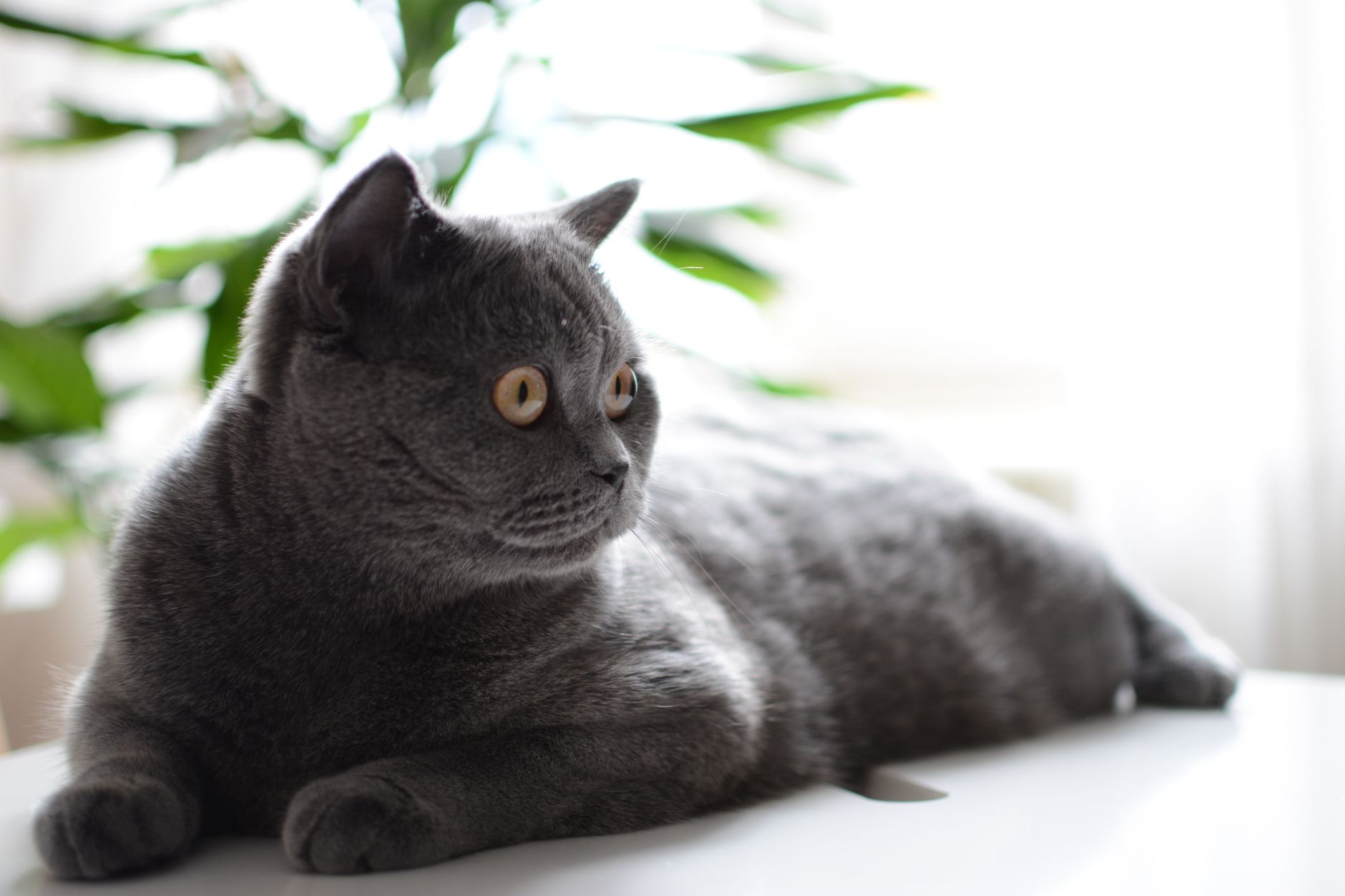
The incredibly dense, double-plush coat of the British Shorthair is their signature feature. Unfortunately, this dense fur acts as a perfect camouflage for accumulating fat.
I always tell my clients that they cannot rely on visual inspection alone to judge their cat’s weight.
Instead, you must use your hands to assess their physical structure. In veterinary medicine, we use a 9-point Body Condition Score system where a 5 is ideal, and anything 7 or above is considered clinically obese.
For this breed, you must feel through that thick coat to locate the skeletal landmarks underneath.
- The Rib Check: You should feel each rib easily under a thin layer of fat, feeling like the back of your hand.
- The Waist Tuck: Looking from above, there should be a subtle but visible indentation behind the rib cage.
- The Tummy Tuck: Viewed from the side, the abdomen should slope upward from the rib cage, not sag parallel to the floor.
- The Spine Test: Running your hand down the spine should reveal the individual vertebrae under a light layer of tissue, without sharp edges.

Calculating the Calories: The Precise Math of Feline Metabolism
Many owners feed their cats based on the guidelines printed on the back of the kibble bag. In my years treating this breed, I have found that those generic guidelines are almost always too high for a sedentary British Shorthair.
To prevent obesity, we must use precise clinical math to determine their daily caloric needs.
We begin by calculating the Resting Energy Requirement using the standard clinical formula. For an average-sized, neutered adult British Shorthair weighing 5 kilograms (11 pounds), the baseline RER is approximately 234 kilocalories per day.
We then apply a life-stage factor to find the Maintenance Energy Requirement for inactive cats.
The Spay and Neuter Caloric Drop
Spaying or neutering a British Shorthair alters their hormonal balance and reduces their metabolic rate by up to 30 percent. I advise my clients to proactively reduce their kitten’s food intake by 10 percent immediately following surgery.
Meow Mix Original Choice Dry Cat Food
- ✓Complete and balanced for adult cats
- ✓High-quality protein for strong muscles
- ✓Flavors cats love
- A high-protein, complete diet suits cats’ needs as obligate carnivores
This preventative step avoids the classic post-operative weight spike that sets up a lifetime of struggle.

Wet Food vs. Dry Food: The Hydration and Satiety Equation
If you are feeding your British Shorthair an all-dry kibble diet, you are fighting an uphill battle against their natural anatomy. Cats are obligate carnivores designed to get their moisture from their prey.
Kibble is highly concentrated, carbohydrate-dense, and lacks the moisture needed to create physical fullness.
In contrast, high-quality wet canned food contains up to 78 percent water. This high moisture content expands the volume of the meal in the stomach, triggering stretch receptors that signal satiety to the brain.
This keeps your cat feeling fuller for longer on fewer total calories.
- Wet food has a significantly lower caloric density per gram compared to dry kibble.
- Higher protein levels in quality wet food preserve lean muscle mass during weight loss.
- Increased moisture intake supports healthy renal and urinary function, protecting against urinary crystals.
- Wet food helps regulate blood glucose levels, reducing the long-term risk of feline diabetes.

Ditch the Bowl: Interactive Feeding and Environmental Enrichment
In the wild, cats must hunt, stalk, and capture their meals, expending significant energy to eat. In our homes, we hand them a bowl of calorie-dense food on a silver platter, removing all physical effort.
For a lazy British Shorthair, this static feeding model is a recipe for obesity.
To combat this, I recommend completely eliminating the standard food bowl from your home. Force your cat to work for their food by using interactive feeders, puzzle toys, and microchip-activated feeders.
This not only burns physical calories but also provides crucial cognitive stimulation that relieves indoor boredom.
- Rolling Treat Balls: Fill these with their measured daily kibble allowance, forcing them to chase the ball to release the food.
- Stationary Puzzle Boards: Use boards with cups, pegs, and wells that require your cat to scoop out food with their paws.
- Vertical Feeding Stations: Place food bowls on high shelves or cat trees to force them to climb up and down for their meals.
- Hidden Foraging Cups: Hide small portions of dry food in various elevated locations around the house to stimulate natural hunting behavior.

The Heavy Price: Clinical Consequences of Feline Obesity
Obesity is not just a cosmetic issue; it is a chronic, low-grade inflammatory state that damages every organ system. In British Shorthairs, excess fat leads to several devastating, costly health conditions that drastically shorten their lifespan.
What I see most often in practice is a direct correlation between a high BCS and early-onset joint disease.
The heavy skeletal frame of the British Shorthair is already prone to strain. When you pack on extra pounds, you accelerate the wear and tear on their joints, leading to painful osteoarthritis.
This pain makes them even more sedentary, creating a vicious cycle of further weight gain and worsening pain.
Cardiovascular and Metabolic Strain
British Shorthairs are genetically predisposed to hypertrophic cardiomyopathy (HCM). Carrying excess weight puts immense strain on the heart muscle, accelerating cardiovascular decline.
Furthermore, obese cats are up to four times more likely to develop Type 2 diabetes mellitus, which requires daily insulin injections and rigorous monitoring.

Designing a Safe and Effective Weight Loss Protocol
If your British Shorthair is already overweight, you must proceed with extreme caution. You cannot simply cut their food in half overnight.
When an obese cat’s body goes into starvation mode, it mobilizes large amounts of fat to the liver, leading to a life-threatening condition called hepatic lipidosis.
A safe weight loss program must be gradual, targeting a loss of 0.5 to 1.5 percent of their total body weight per week. For a 7-kilogram cat, this means losing only 35 to 105 grams per week.
This slow rate protects their liver and ensures they are losing fat, not valuable skeletal muscle.
- Schedule a veterinary check-up to rule out underlying issues like hypothyroidism before starting any diet.
- Purchase a digital baby scale to weigh your cat at home at the exact same time every week.
- Keep a detailed daily food diary tracking all meals, treats, and physical activity levels.
- Adjust daily caloric intake down by small increments of 10 percent if weight loss plateaus for more than two consecutive weeks.
-
Sheldamy S-Shaped 2-Way Cat TunnelA crinkly play tunnel gives cats somewhere to hide, pounce and race through
-
Globlazer XXL Cat Tower for Multiple CatsGives cats vertical space to climb, scratch and nap, which reduces stress and keeps them off your shelves
-
Stainless Steel Cat Water Fountain, 2.2LMoving, filtered water encourages pets to drink more, which supports kidney and urinary health
Related Cat Guides
Frequently Asked Questions
What is the average healthy weight for a British Shorthair?
Healthy adult male British Shorthairs typically weigh between 12 and 18 pounds (5.4 to 8.1 kg), while females are smaller, ranging from 8 to 12 pounds (3.6 to 5.4 kg). However, because individual frame sizes vary, we always prioritize hands-on Body Condition Scoring over a simple number on the scale.
How often should I feed my adult British Shorthair?
I recommend feeding adult British Shorthairs two to three small, measured meals per day rather than free-feeding. Free-feeding allows this sedentary breed to graze out of boredom, which is the leading cause of rapid weight gain.
Can I feed my British Shorthair treats during a diet?
Yes, you can feed treats, but they must be calculated into their daily caloric limit. Treats should never make up more than 10 percent of your cat’s total daily calories, and I recommend using freeze-dried single-ingredient treats like chicken breast.
Why is my British Shorthair always begging for food?
Many British Shorthairs confuse boredom with hunger, or they have learned that begging results in attention and food. Transitioning to a high-moisture wet diet and using interactive puzzle toys will help keep them physically full and mentally stimulated.
How can I encourage my lazy British Shorthair to exercise?
Engage them with short, frequent play sessions of 5 to 10 minutes using interactive toys like feather wands, laser pointers, or motorized mice. British Shorthairs respond best to toys that mimic natural prey movements, and consistency is key to building their stamina.
Sources & Further Reading
- The Cat Fanciers’ Association (CFA)
- Cornell University College of Veterinary Medicine
- American Veterinary Medical Association (AVMA)
- International Cat Care
Final Thoughts
Managing the weight of a British Shorthair is an ongoing commitment that requires veterinary-guided precision and lifestyle modifications. By shifting from visual assessments to regular hands-on body scoring, you can catch weight gain before it compromises their joints.
Remember that replacing traditional bowls with interactive puzzle feeders and prioritizing high-moisture wet food are your best defenses against obesity. With patience and consistent daily habits, you can protect your companion from the silent risks of obesity, ensuring they live a long, comfortable, and energetic life by your side.