
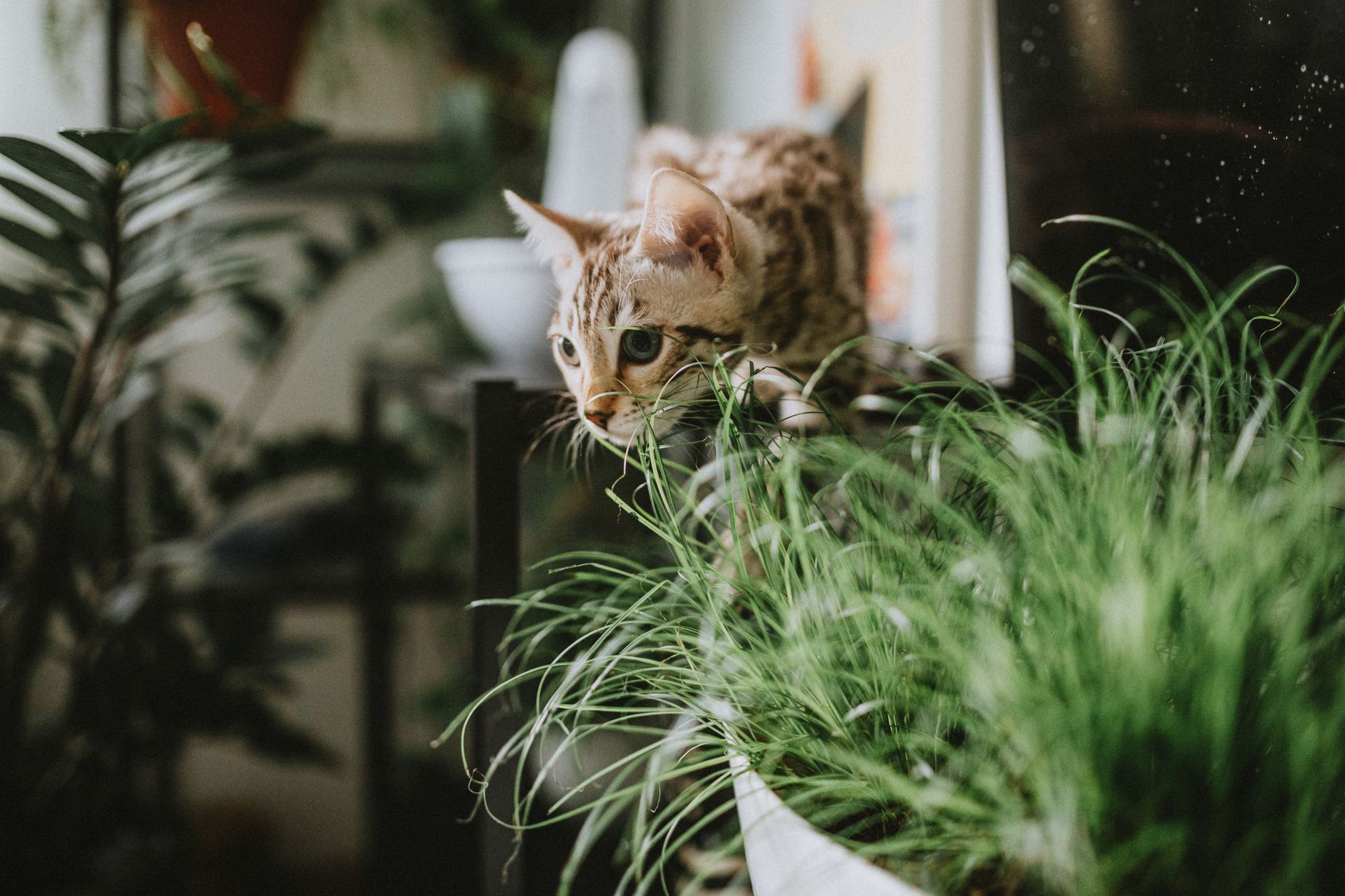
 Bengal Cat Energy Levels: Enrichment Ideas for an Active Breed” loading=”lazy”>
Quick Summary
Bengal cats possess an extraordinary amount of physical and mental energy inherited from their wild Asian Leopard Cat ancestors. Without structured daily enrichment, this athletic breed is prone to severe stress, anxiety, and destructive household behaviors. Providing vertical territory, exercise wheels, food puzzles, and safe outdoor harness walks are essential clinical interventions for a happy, healthy Bengal.
In my fifteen years as a practicing veterinarian, I have seen countless first-time owners completely overwhelmed by the sheer, relentless energy of a Bengal cat. These are not your average couch-potato felines; they are highly intelligent, athletic powerhouses with wild ancestry.
When a Bengal does not get enough mental and physical stimulation, they will create their own entertainment. This often results in shredded drapes, vocal protests, or stress-induced urinary issues.
Understanding how to direct this biological drive is essential for maintaining a peaceful, healthy home.
Key Takeaways
- Bengals require at least 1-2 hours of active, structured play and mental stimulation every single day.
- Their high energy is a genetic trait inherited directly from the wild Asian Leopard Cat.
- Boredom in Bengals often manifests as clinical issues like psychogenic over-grooming or inappropriate elimination.
- Vertical space is a biological necessity, not a luxury, for this semi-arboreal breed.
- Cat exercise wheels and food puzzle toys are highly effective tools to burn passive energy.
- Leash walking with a secure, jacket-style harness provides excellent sensory enrichment.
- Many Bengals possess a unique love of water, which can be safely harnessed for sensory play.
In This Article
- The Wild Origins and Anatomy of Bengal Energy
- The Danger of the ‘Bored Bengal’: Clinical Red Flags
- Designing a Three-Dimensional Territory
- The Game-Changer: Cat Exercise Wheels
- Cognitive Enrichment: Working for Food
- Harness Training and Safe Outdoor Exploration
- Embracing the Wet Side: Water Play for Bengals
- Clicker Training and Cognitive Trick Learning
The Wild Origins and Anatomy of Bengal Energy
To truly understand why your Bengal cat is bouncing off the walls, scaling the doorframes, or vocalizing at three o’clock in the morning, we have to look directly at their genetic lineage. Unlike typical domestic cats whose wild ancestors were domesticated thousands of years ago, the Bengal breed is a relatively modern hybrid.
They were created by crossing domestic felines with the wild Asian Leopard Cat. This genetic heritage leaves them with a highly efficient metabolic rate, incredibly dense muscle fiber distribution, and an extremely alert, active nervous system that demands stimulation.
In my clinic, when I examine a Bengal, I immediately notice the physical difference in their muscle tone. They do not feel like standard domestic shorthairs; they are built like miniature Olympic sprinters, designed for explosive power, incredible leaping ability, and rapid acceleration.
If you do not provide a structured physical outlet for this biological machinery, that latent energy does not simply disappear. Instead, it turns inward, manifesting as severe anxiety, chronic stress, or obsessive behaviors such as over-grooming, psychogenic alopecia, or destructive scratching of your most expensive household items.
- Direct genetic heritage from the wild Asian Leopard Cat
- A highly efficient metabolic rate requiring focused calorie burning
- Explosive, fast-twitch muscle fibers built for high-speed sprinting and leaping
- A hypersensitive nervous system that reacts strongly to environmental boredom
The Danger of the ‘Bored Bengal’: Clinical Red Flags
What happens when a Bengal is left with nothing to do? In my years of clinical practice, owners frequently bring their Bengals in for suspected medical emergencies—such as sudden-onset aggression or house soiling—that are actually direct behavioral manifestations of profound boredom.
I always run a full diagnostic panel, including bloodwork and a urinalysis, to rule out urinary tract infections or metabolic diseases first, but a massive portion of these cases boil down to a lack of enrichment.
When these brilliant, active cats are under-stimulated, their brains undergo a chronic stress response, spiking cortisol and adrenaline levels. This chronic elevation of stress hormones leads to behavioral coping mechanisms that can quickly degrade the peace in your home.
It is crucial to recognize these clinical red flags early before they become deeply ingrained, hard-to-break habits.
- Inappropriate elimination, particularly urinating outside the litter box on soft surfaces
- Destructive chewing on electrical cords, plastics, or houseplants
- Obsessive over-grooming, resulting in hairless patches on the belly or inner thighs
- Excessive, high-pitched vocalization or howling throughout the night
- Redirected aggression towards owners or other pets in the household
Designing a Three-Dimensional Territory
If you only provide floor space for a Bengal cat, you are effectively wasting two-thirds of your home’s usable feline territory. Bengals are semi-arboreal climbers by nature, possessing a strong biological drive to seek out the highest possible vantage points in any room to survey their kingdom.
In the wild canopy, elevation means safety, a clear hunting view, and dominance, and that instinct remains completely intact in your domestic Bengal.
I regularly advise my clients to look at their walls not as decorative spaces, but as critical feline highways. Installing vertical shelving, climbing poles, and tall scratching posts is one of the most effective ways to burn physical energy passively throughout the day, as it forces the cat to use their core muscles and hind legs to climb and balance.
- Heavy-duty cat trees that stand at least six feet tall with wide, stable bases
- Staggered wall shelves lined with non-slip carpets or sisal pads for secure traction
- Window perches positioned near bird feeders to provide active visual enrichment
- Ceiling-height climbing poles wrapped in natural, thick sisal rope
Safety Measures for High Climbers
Always ensure any wall-mounted furniture is anchored directly into wall studs. A fifteen-pound Bengal launching off a shelf exerts massive, dynamic forces, and cheap drywall anchors will eventually fail, risking severe orthopedic injuries.

The Game-Changer: Cat Exercise Wheels
When clients ask me for a single, high-impact product that can transform their Bengal’s daily routine, I almost always point them toward a high-quality cat exercise wheel. These wheels act as a safe treadmill for felines, allowing them to sprint at top speed without ever leaving the safety of your living room.
Because Bengals love to run and have an immense cardiovascular capacity, they take to these wheels far more readily than other breeds.
It is truly fascinating to watch a Bengal use an exercise wheel; they often trot or sprint on it when they feel a sudden burst of energy, effectively self-regulating their activity levels throughout the day and night. Introducing the wheel requires patience, positive reinforcement, and a bit of target training, but the long-term benefits for their cardiovascular health and joint mobility are immense.
- Choose a wheel with a minimum diameter of 48 inches to prevent unnatural spinal curvature
- Ensure the running surface is made of a high-traction, comfortable closed-cell foam
- Use positive reinforcement, such as high-value treats or feather toys, to guide them onto the wheel
- Never force or push your Bengal onto the wheel, as this can create a permanent phobia
Cognitive Enrichment: Working for Food
In the wild, a feline must spend hours every day stalking, tracking, hunting, and capturing their meals. In our modern homes, we hand our cats a static bowl of dry kibble, completely eliminating 99% of their daily cognitive work and problem-solving opportunities.
For a highly intelligent breed like the Bengal, this lack of mental challenge is deeply unsatisfying and clinically linked to lethargy and overeating.
I highly recommend transitioning your Bengal cat entirely away from standard, static food bowls. Force them to use their highly developed brains to solve puzzles, navigate mazes, and physically manipulate objects to earn their daily nutrition.
This mimics the natural ‘foraging cycle’ and leaves them mentally exhausted and satisfied.
- Treat-dispensing rolling balls that require physical manipulation to release kibble
- Stationary board puzzles with cups, pegs, and drawers to hide dry treats
- Lick mats coated with wet food or pureed treats to promote calming licking behaviors
- Hiding small portions of dry food in different elevated locations around the house daily

Harness Training and Safe Outdoor Exploration
Many owners dream of walking their Bengal on a leash, and with this breed, it is highly achievable. Taking your Bengal outdoors on a secure harness provides an incredible sensory explosion of novel smells, sights, and sounds that can exhaust them mentally and physically far faster than any indoor toy.
However, you must approach this with clinical caution and step-by-step training.
As a vet, I must emphasize that you cannot simply attach a leash to a standard collar and walk out the front door. Cats have unique anatomical structures around their necks and clavicles, allowing them to easily slip out of standard collars when startled, which can lead to tragic escapes.
- Use a high-quality, jacket-style harness that distributes pressure evenly across the chest
- Begin training indoors for short, positive intervals before stepping outside
- Reward every stage of harness wear with high-value treats like freeze-dried chicken
- Always use a fixed-length leash rather than a retractable one to maintain proper control
Preventative Medicine for Outdoor Cats
If you choose to take your Bengal outside, they must be fully protected. Ensure they are up-to-date on all core vaccines, flea, tick, and heartworm preventatives.
Exposure to soil, grass, and wild insects increases their parasite risk significantly.

Embracing the Wet Side: Water Play for Bengals
Unlike almost every other domestic feline breed, Bengals typically love water. This unique trait is another genetic gift from their wild ancestors, who frequently fished in shallow streams and rivers.
You can use this natural affinity to create highly engaging, low-impact water-based play sessions that stimulate their minds.
In my own clinical experience, water play has proven to be a fantastic way to cool down an overactive cat, especially during hot summer days. It provides a tactile, cooling sensory experience that engages their predatory instincts in a completely different physical medium than standard land-based toys.
- Install a heavy, ceramic pet drinking fountain with a bubbling stream to encourage hydration
- Fill a shallow storage bin with two inches of lukewarm water and float plastic toys inside
- Introduce battery-operated swimming fish toys that move realistically in water
- Always supervise water play to prevent accidental ingestion of non-food items or splashing hazards
Clicker Training and Cognitive Trick Learning
Bengals are often compared to dogs in terms of their trainability and desire for social interaction. They are highly responsive to positive reinforcement and can easily learn to perform tricks, navigate domestic agility courses, and follow verbal cues.
Utilizing a clicker can bridge the communication gap between you and your cat, turning training sessions into high-yield mental exercise.
In my clinic, I love demonstrating clicker training to skeptical owners because the results are almost instantaneous. When a Bengal realizes that a specific sound paired with a behavior yields a delicious treat, their eyes light up.
This active learning process burns an immense amount of cognitive energy, helping to settle them down before bedtime.
- Purchase a standard dog training clicker or use a consistent vocal cue like ‘yes’
- Keep training sessions short, lasting no more than three to five minutes to prevent mental fatigue
- Focus on basic commands first, such as ‘sit’, ‘high-five’, and ‘come’ when called
- Gradually transition to complex agility pathways, like jumping through soft hoops
Frequently Asked Questions
How much exercise does a Bengal cat need daily?
In my practice, I recommend providing at least 1 to 2 hours of active, hands-on play and mental stimulation per day. This should be broken up into several 15-to-20-minute sessions to match their natural predatory bursts of energy.
Are Bengal cats destructive when they get bored?
Yes, a bored Bengal is highly likely to become destructive. Without a proper physical and mental outlet, they often resort to shredding furniture, chewing electrical cords, knocking items off counters, or vocalizing excessively.
Can Bengal cats be left alone during the day?
Bengals can tolerate being alone for standard workdays, but only if their environment is highly enriched. If you leave them alone in a barren environment, you are highly likely to return to a messy house and an anxious cat. Setting up puzzle feeders and vertical climbing spaces is crucial.
Do Bengal cats really like water?
Yes, many Bengals have a strong fascination with water due to their Asian Leopard Cat ancestry. It is common for them to play in water bowls, splash in shallow bathtubs, or even try to join their owners in the shower.
Is an exercise wheel absolutely necessary for a Bengal?
While not strictly mandatory, an exercise wheel is one of the most effective tools for managing a Bengal’s high energy. It provides an excellent outlet for high-speed sprinting, which is difficult for them to achieve safely in a standard indoor environment.
Sources & Further Reading
Final Thoughts
Living with a Bengal cat is a thrilling adventure, but it requires a serious commitment to environmental enrichment and active play. As a veterinarian, I have seen firsthand how proper physical and mental stimulation can transform a stressed, destructive cat into a calm, affectionate companion.
By investing in vertical territory, interactive puzzle feeders, and safe outdoor exploration, you can satisfy their wild instincts. Remember to transition to new routines slowly, monitor their behavior, and consult your vet if you notice sudden changes.
Your Bengal’s vibrant energy is a gift; with the right outlets, it can bring endless joy to your home.