
Abyssinian Cat Care: Keeping a Curious, Active Breed Busy
 Abyssinian Cat Care: Keeping a Curious, Active Breed Busy” loading=”lazy”>
Quick Summary
Abyssinian cats are highly active, exceptionally intelligent companions that require intensive mental and physical stimulation to prevent behavioral issues. As a veterinarian, I recommend a combination of structured vertical spaces, environmental enrichment, and targeted preventative healthcare to support their high-octane lifestyle. Understanding their unique genetic predispositions and high energy levels is key to a harmonious home.
As an Amazon Associate, we earn from qualifying purchases.
Popular with cat owners: Cat Tree · Puzzle Toys · Cat Treats
In my clinical practice, I have treated thousands of felines, but the Abyssinian holds a truly unique place in my heart. These are not quiet, sedentary lap ornaments that sleep eighteen hours a day.
They are high-flying, endlessly curious athletes dressed in beautiful ticked coats. If you do not actively provide them with a job, they will happily invent one—which usually involves redesigning your curtains or investigating the inside of your cabinets.
To raise a healthy, happy Aby, you must understand how to channel their boundless intelligence. Let us dive deep into the specific clinical and behavioral strategies you need to know.
Key Takeaways
- Abyssinians are highly energetic ‘canine-like’ cats that require daily, structured mental and physical exercise.
- Providing vertical height via sturdy cat trees and wall perches is essential for their natural climbing instincts.
- Early training, such as clicker training and leash walking, can channel their intelligence and curb destructive behaviors.
- They are genetically predisposed to specific health issues, including Pyruvate Kinase Deficiency and early-onset periodontal disease.
- Nutrition must be carefully managed to fuel their fast metabolism while preventing obesity as they age.
- Behavioral problems like obsessive scratching or vocalization are almost always signs of deep boredom.
In This Article
- The High-Octane Mind of the Abyssinian
- Vertical Territory: Elevating Your Home Environment
- Mental Workouts: Clicker Training and Puzzle Feeders
- Clinical Health Watch: Breed-Specific Vulnerabilities
- High-Performance Nutrition for an Athletic Breed
- Managing Periodontal Disease: A Non-Negotiable Routine
- Leash Training and Safe Outdoor Exploration
The High-Octane Mind of the Abyssinian
I often tell my clients that living with an Abyssinian, or ‘Aby,’ is like living with a permanent toddler who also happens to have Olympic-level jumping abilities. Their cognitive capacity is staggering, meaning they process their environment with intense focus.
When this brilliant mind is left under-stimulated, we start seeing clinical issues like feline psychogenic alopecia or compulsive over-grooming. I routinely diagnose bored Abys with stress-induced cystitis simply because they lack an outlet for their mental energy.
To prevent these issues, you must learn to recognize when your cat is desperately searching for a task. They will not sit quietly; they will actively seek out engagement.
Yaheetech 63-Inch Large Cat Tree
- ✓Five platforms and a cosy condo
- ✓Large perch for heavy cats up to 22 lb
- ✓Wide base with anti-toppling kit
- Gives cats vertical space to climb, scratch and nap, which reduces stress and keeps them off your shelves
- Pacing or excessive vocalization when you enter a room
- Constructive mischief like opening cabinets, drawers, or heavy doors
- Unprovoked scratching or chewing on non-food household items
- Inappropriate urination triggered by environmental stress
The Danger of Boredom-Induced Stress
In my years of practice, I have seen bored cats manifest severe physical sickness. Stress in Abyssinians can rapidly compromise their immune systems and urinary tract health.
Keeping them mentally engaged is not just about entertainment. It is a vital component of veterinary preventative medicine.

Vertical Territory: Elevating Your Home Environment
To an Abyssinian, the floor is merely a temporary launching pad. In the wild, their ancestors surveyed their territory from elevated vantage points, and this instinct remains incredibly strong in the modern Aby.
I always tell my clients that if you do not provide dedicated vertical pathways, your cat will use your refrigerator, door frames, and fragile bookshelves. Elevating their environment reduces stress and builds core muscle strength.
Creating a secure, multi-level environment is the single best way to expand your cat’s territory without adding square footage to your home.
- Heavy-duty floor-to-ceiling cat trees with wide, weighted bases to prevent tipping
- Wall-mounted cat shelves arranged in a stepped pattern for safe leaping
- Window perches overlooking a bird feeder to provide passive visual stimulation
- Clear pathways across high furniture to let them navigate the room aerially

Mental Workouts: Clicker Training and Puzzle Feeders
Physical exercise alone will not tire out an Abyssinian. You must challenge their brains to achieve true exhaustion and contentment.
In my clinic, I highly recommend clicker training for this breed because it taps into their natural problem-solving abilities. It also strengthens the human-animal bond, helping them focus their high-strung energy on cooperative tasks.
Using their food as motivation is a fantastic way to turn mealtime into a brain-building game.
- Introduce puzzle feeders that require them to slide doors or spin wheels for dry kibble
- Use a simple clicker and high-value treats like freeze-dried chicken to teach basic commands
- Teach them to fetch small, soft toys, which many Abys take to naturally
- Practice target training, encouraging them to touch their nose to a stick on command
Globlazer F70 Pro Heavy Duty Cat Tree
- ✓Spacious square hammock and condo
- ✓4 scratching posts plus a scratch board
- ✓For large adult cats
- Gives cats vertical space to climb, scratch and nap, which reduces stress and keeps them off your shelves
Ditching the Food Bowl
I recommend completely abandoning standard bowls for this breed. Force them to hunt and work for every single calorie to mimic their natural survival instincts.
This simple adjustment can dramatically reduce daily behavioral issues.
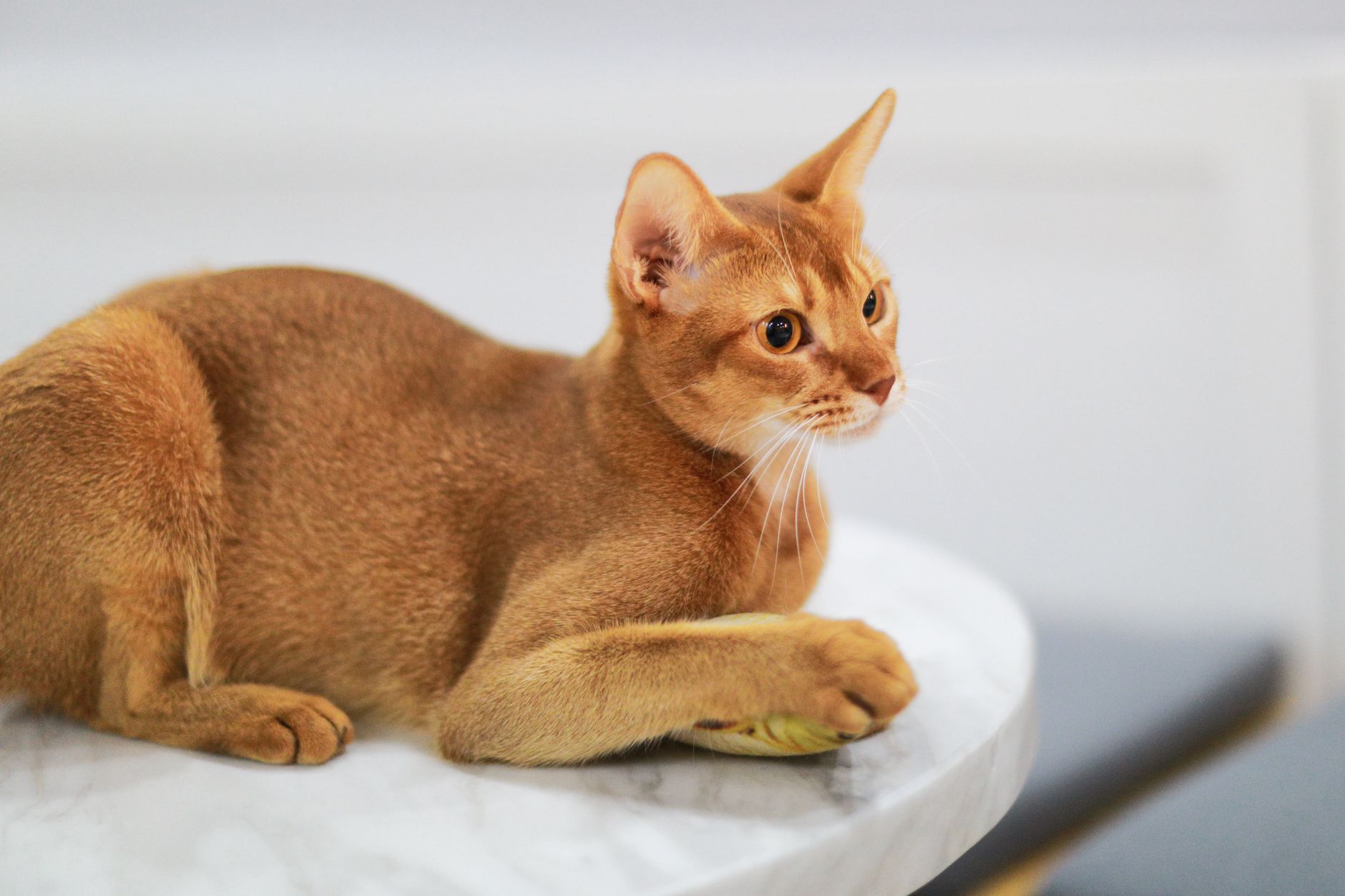
Clinical Health Watch: Breed-Specific Vulnerabilities
While Abyssinians are generally robust, agile cats, they do carry genetic risks that every owner must monitor. What I see most often in practice is a lack of awareness about their dental and hereditary conditions.
Early screening and proactive veterinary care are absolutely vital for this breed. Identifying these issues early can dramatically extend their lifespan and preserve their quality of life.
As a responsible owner, you must partner with a veterinarian who understands these specific hereditary concerns.
- Pyruvate Kinase (PK) Deficiency: A genetic mutation causing intermittent regenerative hemolytic anemia.
- Progressive Retinal Atrophy (PRA): A degenerative eye disease that can lead to gradual, painless blindness.
- Renal Amyloidosis: A serious condition where abnormal proteins deposit in the kidneys, leading to renal failure.
- Severe Periodontal Disease: Rapid plaque buildup that can progress to painful juvenile-onset gingivitis.
The Critical Importance of Genetic Screening
Before bringing an Abyssinian home, always ask the breeder for DNA clearance certificates. Specifically, look for negative tests for PK Deficiency and PRA to protect your future pet.
If you have already adopted, a simple cheek swab test can be performed at your next vet visit.

High-Performance Nutrition for an Athletic Breed
Because Abyssinians are constantly on the move, their metabolic rate is significantly higher than that of a typical domestic shorthair. They burn through calories rapidly during their daily acrobatics.
However, this does not mean they should be free-fed. I frequently treat indoor Abys that have transitioned from lean athletes to overweight cats because their owners overcompensated for their high energy.
Managing their diet with precision is crucial to keeping their joints healthy and preventing chronic diseases.
- Focus on high-quality, animal-based proteins to support their dense muscle mass
- Measure daily portions carefully using a digital kitchen scale rather than a plastic scoop
- Incorporate wet food daily to increase moisture intake and protect their kidneys
- Adjust caloric intake dynamically based on their age, neuter status, and activity levels

Managing Periodontal Disease: A Non-Negotiable Routine
If there is one thing I emphasize to every Abyssinian owner during annual exams, it is dental health. Abyssinians are notoriously prone to early-onset gingivitis and periodontitis.
Without active home care, many Abys require multiple dental extractions by the age of three or four. This is entirely preventable with a dedicated daily routine.
Do not wait for bad breath to develop before you start paying attention to their mouth.
- Brush their teeth daily using a soft-bristled brush and veterinary-approved enzymatic toothpaste
- Schedule professional veterinary dental cleanings and dental X-rays annually starting at age two
- Use VOHC-approved (Veterinary Oral Health Council) dental treats or water additives
- Inspect their gums weekly for redness, bleeding, or bad breath
Leash Training and Safe Outdoor Exploration
Because they are so intensely curious, many Abys thrive when allowed to explore the outdoors safely. I never recommend letting an Abyssinian roam freely, as they are too trusting and fast to avoid outdoor hazards.
Instead, leash training with a secure, H-style harness can open up a whole new world of sensory stimulation. It is a fantastic way to burn off energy while keeping them entirely safe.
Outdoor exploration should be a structured activity, not a chaotic free-for-all.
- Introduce the harness indoors first, pairing it with positive reinforcement and high-value treats
- Let them drag the leash behind them under strict supervision to get used to the weight
- Start with quiet backyard sessions before attempting busy parks or trails
- Always keep their parasite preventatives completely up to date before stepping outside
-
DR CATCH Dog Puzzle Feeder ToyFood puzzles turn mealtime into a brain game, burning mental energy in clever, easily bored pets
-
Temptations Classic Crunchy and Soft Cat TreatsA tasty treat makes training, grooming and vet-carrier practice far easier
-
Greenies Feline Adult Dental Cat TreatsHelps reduce tartar build-up
Related Cat Guides
Frequently Asked Questions
How long can I leave my Abyssinian cat alone during the day?
I do not recommend leaving an Abyssinian alone for more than 6 to 8 hours without significant environmental stimulation. They are highly social and prone to separation anxiety, which can manifest as destructive chewing or scratching.
Are Abyssinians good lap cats?
Generally, no, at least not during the day. They prefer to be in the same room as you, supervising your activities from a high perch, though they may snuggle close once they are thoroughly exhausted in the evening.
How much exercise does an Abyssinian need daily?
They require at least 1 to 2 hours of active, interactive play and mental stimulation per day. This should be broken up into several 15-to-20-minute sessions to match their natural activity bursts.
Do Abyssinians get along well with other pets?
Yes, they typically do very well with other high-energy cats or dog-friendly dogs. In fact, having a companion can help keep them entertained and reduce the burden of playtime on you.
Are Abyssinian cats hypoallergenic?
No, they are not hypoallergenic. While they have short, low-maintenance coats that shed moderately, they still produce the Fel d 1 protein in their saliva and dander, which triggers allergies.
Why is my Abyssinian constantly vocalizing?
Excessive vocalization in this breed is usually a direct plea for attention or a symptom of boredom. Ensure they have enough interactive toys and vertical space to keep their minds occupied.
Sources & Further Reading
- The Cat Fanciers’ Association (CFA)
- Cornell University College of Veterinary Medicine
- International Cat Care
- American Veterinary Medical Association (AVMA)
Final Thoughts
Caring for an Abyssinian is a deeply rewarding, though often exhausting, commitment. These brilliant, dynamic felines demand your active participation in their daily lives.
By providing them with vertical spaces, mental puzzles, and dedicated dental care, you can prevent common behavioral and physical ailments. As a veterinarian, nothing pleases me more than seeing an Aby owner lean into this breed’s incredible intelligence.
Invest the time in their care, and they will reward you with unparalleled loyalty, amusement, and affection.