
 Abyssinian vs Somali: Comparing Two Ticked-Coat Breeds” loading=”lazy”>
Quick Summary
While sharing an identical genetic lineage and the signature ticked agouti coat, the Abyssinian and Somali differ primarily in coat length and subtle temperament variations. The short-haired Abyssinian is a sleek, high-octane athlete, whereas the long-haired Somali offers a softer, fox-like appearance and slightly more relaxed disposition. Both breeds require dedicated dental care, mental enrichment, and proactive screening for inherited conditions like pyruvate kinase deficiency.
As an Amazon Associate, we earn from qualifying purchases.
Popular with cat owners: Cat Brush · Hairball Control Treats · Cat Tunnel
Welcome back to the practice blog. In my years treating felines of all shapes and sizes, few breeds capture my clinical admiration quite like the Abyssinian and its long-haired sibling, the Somali.
Clients often come into my clinic struggling to choose between these two magnificent breeds. They see the wild, exotic look of the ticked coat and wonder how these cats actually fit into a modern household.
Today, we are going to dive deep into the genetic roots, physical distinctions, daily care, and veterinary profiles of both the Abyssinian and the Somali.
Key Takeaways
- The Somali is the long-haired genetic variant of the short-haired Abyssinian.
- Both breeds possess the agouti gene, which gives each individual hair multiple bands of pigmentation.
- Abyssinians are highly energetic, ground-bound athletes, while Somalis are often slightly softer and more aerial.
- Both breeds carry inherited risks for Pyruvate Kinase Deficiency (PKD) and Progressive Retinal Atrophy (PRA).
- Early dental home care is vital for both breeds due to a high clinical incidence of early-onset gingivitis.
- Their high intelligence requires advanced environmental enrichment to prevent stress-induced behavioral issues.
In This Article
- The Shared Genetic Blueprint: What is a Ticked Coat?
- Physical Distinctions: Sleek Athlete vs. Fluffy Fox
- Temperament and Household Dynamics
- Grooming and Skin Care Demands
- Clinical Health Profiles and Genetic Vulnerabilities
- Nutritional Needs for High-Metabolism Felines
- Lifestyle Matching: Which Breed Fits Your Home?
The Shared Genetic Blueprint: What is a Ticked Coat?
To truly understand these breeds, we must first look at their DNA. The hallmark of both the Abyssinian and the Somali is the ticked, or agouti, coat pattern.
When I parting the fur of one of these patients on my exam table, I always point out the individual hair shafts to my clients. Each single hair is banded with dark and light pigments, ending in a dark tip.
This unique genetic patterning minimizes solid lines or stripes, mimicking the camouflage of wild felines like the African wildcat.
Historically, the Somali arose directly from the Abyssinian gene pool. The long coat of the Somali is the result of a recessive gene that was naturally introduced into the Abyssinian line, likely in the mid-20th century.
- Agouti Gene: Causes individual hairs to display alternating bands of dark and light pigmentation.
- Recessive Long-Hair Gene: Requires both parent cats to carry the gene to produce a fluffy Somali kitten.
- Wild Look: Mimics the natural camouflage seen in wild felines, lacking traditional tabby stripes on the body.
- Color Variations: Both breeds officially recognize ruddy, red (sorrel), blue, and fawn shades.
Docrok Deshedding Brush & Metal Comb Combo
- ✓Dematting brush plus metal comb
- ✓Rounded edges are gentle on skin
- ✓For medium and long-haired pets
- Regular brushing prevents mats and hairballs, especially in long-haired cats
Physical Distinctions: Sleek Athlete vs. Fluffy Fox
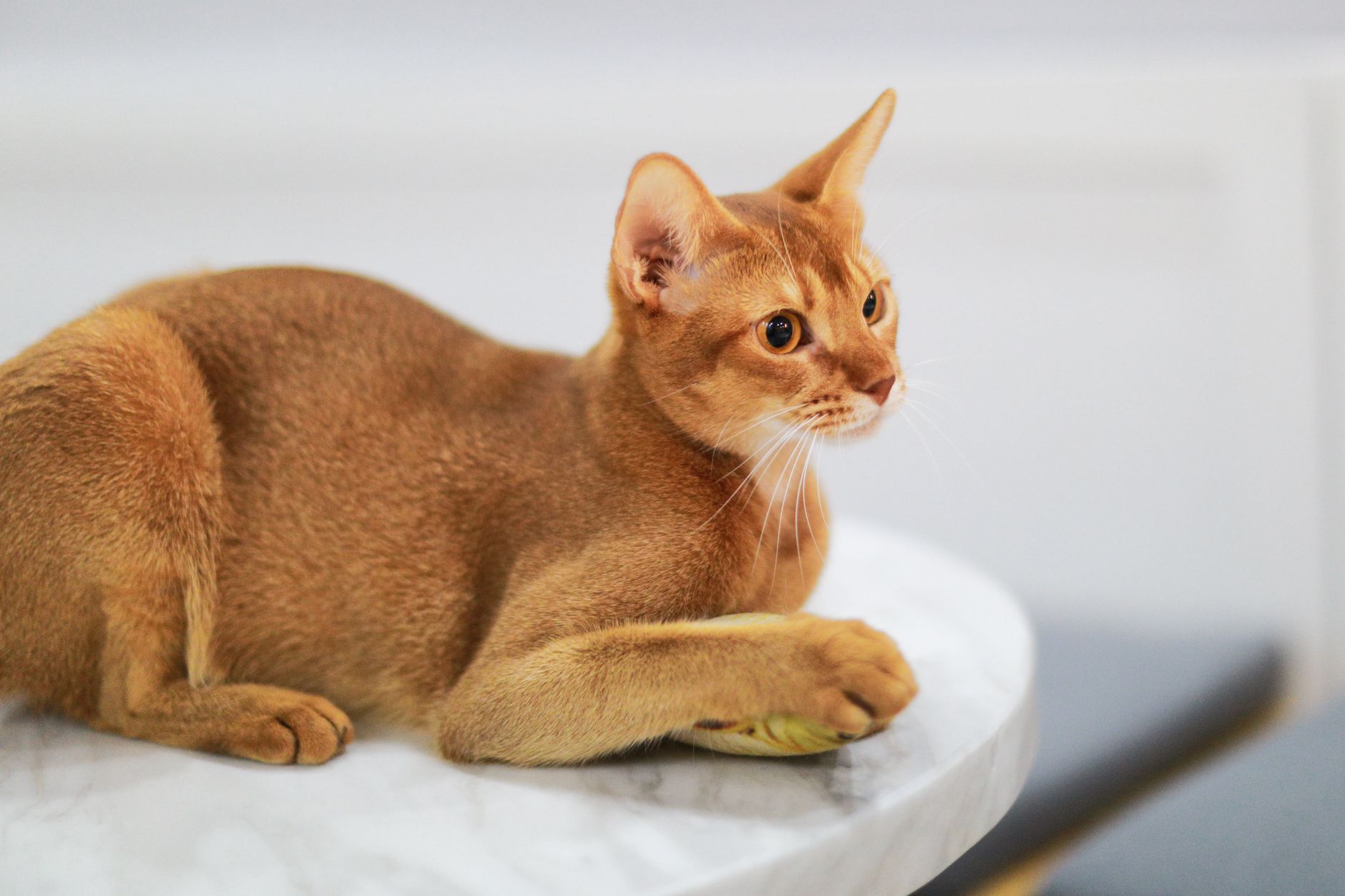
While they are structurally similar beneath their coats, their outward presentations are strikingly different. The Abyssinian is the epitome of sleek, muscular elegance.
In my clinic, I describe them as the decathletes of the cat world because their short, close-lying coats show off every ounce of lean muscle.
In contrast, the Somali is often affectionately referred to as the ‘fox cat.’ Their medium-long double coat softens their outline, giving them a softer and more romantic appearance.
They sport a beautiful, bushy tail and a dense ruff around the neck that matures as they reach adulthood. When a Somali walks into my exam room, their plume of a tail immediately commands attention.
- Abyssinian Coat: Short, fine, close-lying to the body, requiring minimal maintenance.
- Somali Coat: Medium-long, soft, double coat with a full ruff around the neck and britches on the hind legs.
- The Tail Factor: The Abyssinian tail is thick at the base and tapers, while the Somali tail is a thick, bushy brush.
- Ear Tufts: Somalis often exhibit more pronounced tufts of hair inside and at the tips of their large, alert ears.
Temperament and Household Dynamics
If you are looking for a quiet lap cat that will sit still for hours, neither of these breeds is the right fit. Both the Abyssinian and the Somali are incredibly intelligent, active, and intensely curious.
However, I do observe subtle behavioral differences between them in clinical practice. Abyssinians tend to operate at a higher velocity, constantly moving, jumping, and exploring every vertical space in your home.
Somalis are equally playful but often display a slightly gentler, more soft-spoken demeanor. They are highly interactive and tend to use their paws like tiny hands to investigate water bowls, toys, and your face.
- High Activity Level: Both breeds require daily active play sessions to expend their abundant energy.
- Climbing Instincts: You will routinely find both breeds perched on top of refrigerators, doors, and high shelves.
- Human-Oriented: They do not tolerate isolation well and want to be involved in every household chore.
- Pencil-Generators: Both breeds are notorious for fetching toys and manipulating small objects with their nimble paws.
Just Try Cat Grass Hairball Treats
- ✓Made with cat grass, salmon and catnip
- ✓Helps pass existing hairballs
- ✓Under 1.3 calories per treat
- Hairball formulas help swallowed fur pass through, so long-haired cats cough up fewer hairballs
Managing the Active Mind
Because of their intelligence, these cats can become frustrated easily. I advise my clients to implement clicker training to keep their minds sharp.

Grooming and Skin Care Demands
Grooming requirements represent the most significant practical divergence between these two breeds. The Abyssinian is incredibly low-maintenance, requiring only a quick weekly brushing to remove loose hair and distribute skin oils.
Somalis, despite having a long coat, are surprisingly easy to manage compared to Persians or Maine Coons. Their coat is silky and does not mat easily, but it still demands regular attention.
In my clinic, I frequently treat long-haired cats with painful matting behind the ears and in the groin area. To avoid this, a consistent grooming routine must be established early in life.
- Abyssinian Routine: Weekly brushing with a rubber curry brush or a soft-bristled brush is sufficient.
- Somali Routine: Tri-weekly combing using a high-quality steel greyhound comb to prevent undercoat tangles.
- Shedding Cycles: Both breeds shed, but the Somali will experience a heavy seasonal ‘blow’ of the undercoat twice a year.
- Ear Cleaning: Due to their large, open ears, both breeds can accumulate wax and require monthly checks.

Clinical Health Profiles and Genetic Vulnerabilities
As a veterinarian, health is always my primary focus when discussing breeds. Because they share a gene pool, the Abyssinian and Somali are prone to the exact same hereditary health conditions.
Before purchasing a kitten from any breeder, I instruct my clients to demand proof of DNA clearance for Pyruvate Kinase (PK) Deficiency and Progressive Retinal Atrophy (PRA). PK Deficiency is an inherited hemolytic anemia that can cause lethargy, pale mucous membranes, and splenomegaly.
PRA is a slowly progressive degenerative eye disease that eventually leads to complete blindness. Thankfully, reliable DNA tests can easily identify carriers of these mutated genes.
- Pyruvate Kinase Deficiency: A genetic enzyme defect causing intermittent or chronic hemolytic anemia.
- Progressive Retinal Atrophy: A genetic ocular disease causing rod and cone degeneration, leading to blindness.
- Patellar Luxation: A physical condition where the kneecap slips out of its normal anatomical groove.
- Renal Amyloidosis: A serious condition where abnormal proteins deposit in the kidneys, leading to renal failure.
The Dental Disease Battle
In my clinical experience, Abyssinians and Somalis have an incredibly high rate of juvenile-onset gingivitis and periodontal disease. I cannot stress enough how important daily tooth brushing is for these breeds from the moment you bring them home.
- Start brushing teeth with pet-safe enzymatic toothpaste at 12 weeks of age.
- Schedule professional veterinary dental cleanings annually starting at two years of age.
- Watch for drooling, bad breath, or dropping of dry kibble as signs of oral pain.

Nutritional Needs for High-Metabolism Felines
Because both the Abyssinian and the Somali are highly active, their metabolic rates are significantly higher than the average domestic shorthair. They burn through calories rapidly during their daily acrobatics.
Feeding a low-quality, high-carbohydrate diet can quickly lead to muscle wasting or, conversely, rapid fat accumulation if they are spayed or neutered and suddenly become less active. I highly recommend a diet rich in animal-based proteins to support their dense muscle structure.
Moisture is also critical to protect their kidneys. Incorporating wet food into their daily feeding schedule is a wise preventative strategy.
- High Protein: Look for diets where the first three ingredients are identifiable meat sources.
- Controlled Portions: Use measured meals rather than free-feeding to prevent obesity as they age.
- Hydration Support: Utilize cat water fountains, as both breeds are highly attracted to running water.
- Omega-3 Fatty Acids: Supplementing with marine-sourced DHA and EPA supports their skin and coat health.

Lifestyle Matching: Which Breed Fits Your Home?
Choosing between these two breeds often comes down to your personal aesthetic preference and how much time you can dedicate to grooming. Both will fill your home with laughter, energy, and constant interaction.
If you have a hectic schedule but still want a highly interactive, intelligent cat, the Abyssinian is likely the better choice due to its minimal grooming needs.
If you enjoy the process of grooming, love the look of a miniature wild fox, and prefer a cat that might be a tiny bit more cuddly, the Somali is a fantastic option. Whichever you choose, prepare to have your life permanently upgraded by a clever, loving shadow.
- Choose the Abyssinian if: You want low coat maintenance, high athletic energy, and sleek aesthetics.
- Choose the Somali if: You prefer a softer, fluffier look and enjoy regular brushing sessions.
- Allergic considerations: Neither breed is hypoallergenic, though the Somali’s long hair may trap more environmental allergens.
- Child compatibility: Both breeds do exceptionally well with respectful children who will engage them in active play.
-
Tempcore 3-Way Cat TunnelA crinkly play tunnel gives cats somewhere to hide, pounce and race through
-
Globlazer F70 Pro Heavy Duty Cat TreeGives cats vertical space to climb, scratch and nap, which reduces stress and keeps them off your shelves
-
Friskies Gravy Swirlers Dry Cat FoodA high-protein, complete diet suits cats’ needs as obligate carnivores
Related Cat Guides
Frequently Asked Questions
Are Abyssinians and Somalis hypoallergenic?
No, neither breed is hypoallergenic. They both produce the Fel d 1 protein in their saliva and skin oils, which is the primary trigger for human cat allergies, though the Somali’s long coat may trap more dander in the environment.
How long do Abyssinian and Somali cats live?
With excellent veterinary care, a high-quality diet, and routine dental care, both breeds typically enjoy a lifespan of 12 to 15 years, with many living even longer.
Do Somalis shed more than Abyssinians?
Yes, Somalis have a double coat and will shed more volume than Abyssinians, particularly during seasonal changes in the spring and autumn when they lose their undercoat.
Are these breeds prone to separation anxiety?
Yes, both breeds are highly social and form deep bonds with their families. They can easily develop separation anxiety or destructive behaviors if left alone for long periods without mental stimulation.
Can Abyssinian and Somali cats live with dogs?
Absolutely. Because of their fearless and active nature, both breeds usually get along very well with cat-friendly dogs, often joining them in games or lounging together.
Sources & Further Reading
- The Cat Fanciers’ Association (CFA)
- Cornell University College of Veterinary Medicine
- International Cat Care
- PetMD
Final Thoughts
Whether you choose the sleek, athletic Abyssinian or the beautifully plumed Somali, you are inviting a highly intelligent, captivating companion into your home. In my clinical experience, these breeds thrive best when their owners understand their distinct physical, mental, and veterinary needs.
Keep up with their dental hygiene, schedule their routine genetic screenings, and provide them with plenty of vertical spaces to climb. By taking these proactive veterinary steps, you will enjoy many vibrant, active years with your beautiful ticked-coat companion.