
Siamese vs Balinese: Comparing Shorthaired and Longhaired Cousins
 Siamese vs Balinese: Comparing Shorthaired and Longhaired Cousins” loading=”lazy”>
Quick Summary
While the Siamese and Balinese share a near-identical genetic heritage and vocal, highly affectionate personality, they differ primarily in coat length and grooming needs. The short, tight coat of the Siamese requires minimal maintenance, whereas the medium-to-long coat of the Balinese requires regular brushing but is uniquely manageable due to their lack of a downy undercoat.
As an Amazon Associate, we earn from qualifying purchases.
Popular with cat owners: Deshedding Tool · Hairball Control Treats · Cat Food
In my twenty years of veterinary practice, few feline groups spark as much curiosity as the pointed breeds. Clients often walk into my clinic confused about the physical and behavioral boundaries between the sleek Siamese and the flowing, elegant Balinese.
I always tell my clients that while they are close genetic cousins, they are not carbon copies. Understanding their unique clinical profiles and daily care needs is vital before welcoming one of these vocal beauties into your home.
Key Takeaways
- The Balinese is a natural, longhaired genetic mutation of the shorthaired Siamese.
- Neither breed has a downy undercoat, which makes grooming the Balinese surprisingly easy.
- Both breeds are highly vocal, though the Balinese tends to have a slightly softer, more melodic voice.
- They share similar genetic health risks, including progressive retinal atrophy and amyloidosis.
- Balinese cats may produce lower levels of the Fel d 1 allergen, making them a popular choice for mild allergy sufferers.
- Both breeds possess high intelligence and athletic builds that require active daily mental and physical stimulation.
In This Article
- The Genetic Mirror: Roots of the Shorthair and Longhair Cousins
- Coat Characteristics and Grooming Realities
- Vocalization, Intellect, and Social Needs
- Clinical Health Profiles and Genetic Vulnerabilities
- The Hypoallergenic Claim: Separating Myth from Science
- Nutritional Management and Maintaining the Lean Profile
- Environmental Enrichment for High-Energy Breeds
The Genetic Mirror: Roots of the Shorthair and Longhair Cousins
Many people do not realize that the Balinese is not a separate ancient breed. It is actually a natural, spontaneous genetic mutation of the Siamese.
In my clinical experience, understanding this genetic link explains why their temperaments are so closely matched. Historically, longhaired kittens popped up in purebred Siamese litters in the early 20th century.
Breeders loved the elegant look and isolated the recessive longhair gene. They named the new breed after the graceful dancers of Bali to reflect their flowing, silky movement.
Aumuca Self-Cleaning Cat Brush for Shedding
- ✓Pins with rounded rubber tips are gentle on skin
- ✓Release button for easy cleanup
- ✓304 stainless steel pins
- Reaches through the topcoat to remove loose undercoat, cutting down the hair on your floors and furniture

Coat Characteristics and Grooming Realities
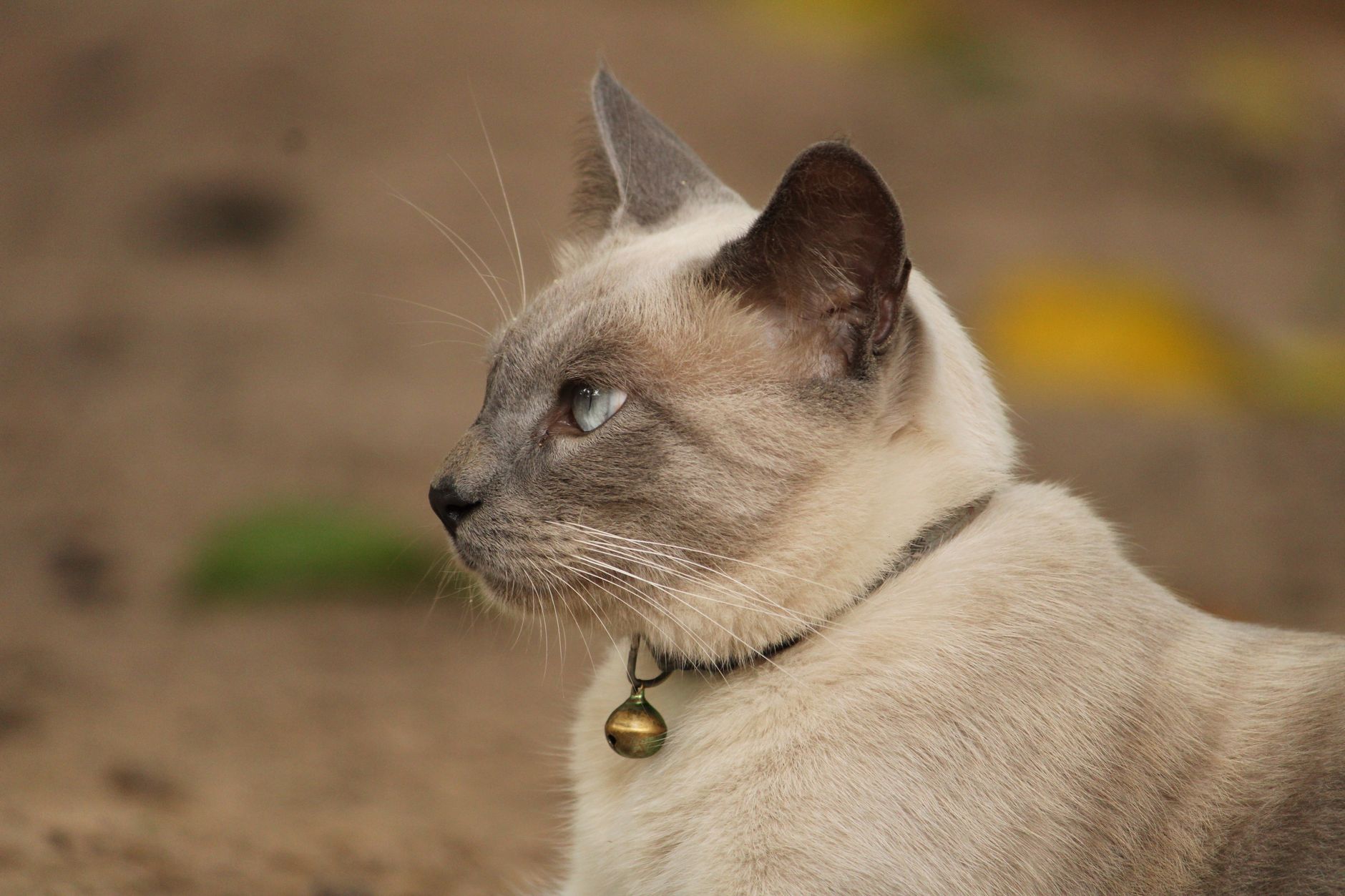
From a veterinary dermatology standpoint, coat structures dictate skin health. The Siamese has a tight, single, short coat that lies flat against the body.
It requires very little physical maintenance.
The Balinese features a medium-to-long single coat. Crucially, they lack a downy undercoat.
This absence of an undercoat is a major clinical advantage because it prevents severe matting.
However, they still require structured grooming. This helps manage natural shedding and distributes protective skin oils across their coat.
- Siamese grooming: A weekly rubdown with a rubber curry brush to remove loose hairs.
- Balinese grooming: Brushing twice a week with a stainless-steel comb to prevent minor tangling.
- Bathing needs: Neither breed needs frequent baths unless they suffer from a dermatological condition.
- Skin check-ups: Use grooming sessions to check for flea dirt, localized redness, or dry skin flakes.

Vocalization, Intellect, and Social Needs
In my exam rooms, Siamese cats are famous for their loud, raspy, persistent voices. They will vocalize loudly during physical exams to voice their clear disapproval.
Balinese cats share this highly vocal nature, but their voices are typically softer and more melodic.
Both breeds are incredibly intelligent. They require active mental engagement to prevent boredom-related issues.
Without proper stimulation, these cats can develop stress-induced habits. These include psychogenic grooming alopecia and destructive scratching behaviors.
- Interactive toys: Food puzzles and treat dispensers keep their active minds occupied.
- Vertical space: Tall cat trees are essential, as both breeds love to survey their territory from above.
- Social companionship: They do not tolerate isolation well; having a companion animal is highly recommended.
- Leash training: Their canine-like intelligence makes them excellent candidates for harness walking.

Clinical Health Profiles and Genetic Vulnerabilities
Because they share a common gene pool, both breeds face similar hereditary health risks. In my practice, I monitor these lineages closely for specific genetic conditions.
SleekEZ Deshedding Tool for Cats
- ✓Patented wave blade grabs loose fur
- ✓Works on short- and long-haired cats
- ✓Also cleans pet beds and carpets
- Reaches through the topcoat to remove loose undercoat, cutting down the hair on your floors and furniture
We must proactively screen for Progressive Retinal Atrophy (PRA), Systemic Amyloidosis, and Hypertrophic Cardiomyopathy (HCM). Early diagnostic screening allows us to manage these conditions before clinical signs turn severe.
Progressive Retinal Atrophy (PRA)
PRA is a genetic condition that causes slow, irreversible degeneration of the retina. This eventually leads to complete blindness.
I always recommend genetic DNA testing for all breeding pairs to eradicate this gene from future generations.
- Watch for dilated pupils in low light.
- Note if your cat bumps into furniture at night.
- Annual ophthalmic exams are crucial for senior cats.
Systemic Amyloidosis
This serious disease involves abnormal protein deposits, called amyloid, in vital organs. In Siamese lines, this often targets the liver, leading to acute organ dysfunction or failure.
We watch for symptoms like lethargy, jaundice, and unexplained weight loss.
- Symptoms include increased thirst and urination.
- Look out for unexplained weight loss.
- Routine blood panels help monitor liver and kidney function.
The Hypoallergenic Claim: Separating Myth from Science
Clients frequently ask me if Balinese cats are truly hypoallergenic due to their long hair. Professionally, I must clarify that no cat breed is completely allergen-free.
All felines produce the Fel d 1 protein in their saliva and sebaceous glands.
However, some clinical research suggests the Balinese produces lower levels of this specific protein. Combined with their lack of an undercoat, they tend to spread fewer allergens around the home.
This makes them a potentially better option for mild allergy sufferers, though individual human reactions will still vary.
- Frequent hand washing: Always wash your hands immediately after petting or grooming.
- HEPA filtration: Use high-efficiency particulate air filters in rooms where the cat spends most time.
- Dietary interventions: Feeding diets that neutralize active Fel d 1 in saliva can significantly reduce allergen loads.
- Litter box placement: Keep litter boxes in well-ventilated areas away from living spaces.
Nutritional Management and Maintaining the Lean Profile
Both the Siamese and Balinese boast a long, athletic, tubular build. This structure is highly sensitive to excess weight gain.
Even a single extra pound can put immense stress on their delicate joints and raise feline diabetes risks.
In my clinic, I use a 9-point Body Condition Score (BCS) system to evaluate these patients. We aim for a strict score of 4 or 5 out of 9.
At this ideal weight, their ribs are easily felt but not visible, and a clear abdominal tuck is visible from the side.
- Portion control: Avoid free-feeding dry kibble; use measured, scheduled meals instead.
- High-protein, low-carbohydrate wet food: This supports their high metabolism and maintains muscle mass.
- Hydration support: Use water fountains to encourage drinking, protecting their kidney health.
- Weight checks: Bring your cat to the clinic for regular weight checks between annual exams.

Environmental Enrichment for High-Energy Breeds
A bored Siamese or Balinese is a recipe for serious behavioral issues. In my practice, I have treated many cases of destructive scratching and excessive vocalization that were resolved simply by modifying the home.
These cats operate at a higher cognitive level than many other domestic breeds. They need structured play that mimics the wild hunt-catch-groom-sleep cycle.
Creating an engaging physical environment keeps their minds sharp and their stress levels low.
- Daily active play: Dedicate at least two 15-minute sessions to active toy chasing daily.
- Window perches: Install bird feeders outside windows to provide hours of safe visual stimulation.
- Clicker training: Teach commands like ‘sit’ and ‘high-five’ to satisfy their desire to learn.
- Rotation of toys: Swap out toys weekly to keep their interest from waning.
-
Greenies Feline Smartbites Indoor Cat TreatsHairball formulas help swallowed fur pass through, so long-haired cats cough up fewer hairballs
-
Meow Mix Original Choice Dry Cat FoodA high-protein, complete diet suits cats’ needs as obligate carnivores
-
Sheldamy S-Shaped 2-Way Cat TunnelA crinkly play tunnel gives cats somewhere to hide, pounce and race through
Related Cat Guides
Frequently Asked Questions
Are Balinese cats calmer than Siamese cats?
Generally, yes. Many owners and veterinarians observe that while Balinese cats are still highly playful and interactive, they tend to be slightly more easygoing and less intensely demanding than their shorthaired Siamese counterparts.
Do Balinese cats shed more than Siamese cats?
The physical volume of shed hair may appear greater with a Balinese due to the length of the strands, but they do not necessarily shed more frequently. Because they lack a dense undercoat, their shedding is much easier to manage than that of other longhaired breeds.
Are these breeds prone to separation anxiety?
Yes, both breeds are highly social and form intense bonds with their human families. If left alone for long periods without stimulation or companionship, they can easily develop separation anxiety and related destructive behaviors.
Can Siamese and Balinese cats live peacefully together?
Absolutely. They share highly compatible energy levels, social needs, and communication styles. They often make ideal companions for one another, keeping each other mentally and physically active.
How long do Siamese and Balinese cats typically live?
With proper veterinary care, high-quality nutrition, and an indoor lifestyle, both breeds can live remarkably long lives. It is not uncommon for them to reach 15 to 20 years of age.
Sources & Further Reading
- The Cat Fanciers’ Association (CFA)
- Cornell University College of Veterinary Medicine
- International Cat Care
- Merck Veterinary Manual
Final Thoughts
Choosing between a Siamese and a Balinese ultimately comes down to your personal grooming preferences and lifestyle. Both breeds offer unparalleled companionship, sharp intellect, and a vocal presence that will fill your home with life.
As your veterinarian, I am here to support you through every stage of their lives, from pediatric vaccinations to senior wellness exams. Whichever cousin you choose, prepare for a deep, interactive, and incredibly rewarding bond that spans many healthy years.