
Newfoundland Dog Drooling and Coat Care: A Practical Owner’s Guide
 Newfoundland Dog Drooling and Coat Care: A Practical Owner’s Guide” loading=”lazy”>
Quick Summary
Managing a Newfoundland‘s heavy drooling and dense double coat requires a consistent, proactive care routine. Daily muzzle hygiene prevents painful lip fold infections, while weekly line-brushing and proper drying prevent severe matting and hot spots. Never shave a Newfoundland, as their coat is crucial for regulating body temperature.
As an Amazon Associate, we earn from qualifying purchases.
Popular with dog owners: Undercoat Rake · Dog Ear Cleaner · Dog Cooling Mat
In my fifteen years of veterinary practice, I have treated nearly every dog breed imaginable, from tiny Chihuahuas to giant Mastiffs. Yet, few hold a special place in my heart quite like the majestic Newfoundland.
These gentle giants bring immense joy, unparalleled loyalty, and a calm presence to any household. However, they also bring an astronomical amount of drool and fur into your living space.
Many new owners find themselves completely overwhelmed by the sheer scale of physical maintenance these massive dogs require. I wrote this comprehensive guide to share the exact clinical strategies and grooming routines I recommend to my clients.
Key Takeaways
- Newfoundland drooling is caused by their deep upper lips (flews) and is entirely natural, but sudden changes require veterinary attention.
- Daily cleaning of lip folds with chlorhexidine wipes prevents yeast and bacterial infections (lip fold pyoderma).
- Never shave a Newfoundland; their double coat insulates them from both cold and heat.
- Use the line-brushing technique with a slicker brush and undercoat rake to reach the skin and prevent mats.
- Always dry a wet Newfoundland completely with a high-velocity dryer to prevent painful hot spots.
- Support skin and coat health from the inside out with omega-3 fatty acids, high-quality proteins, and zinc.
In This Article
- The Anatomy of the Newf Drool: Why It Happens
- Managing the Slobber and Preventing Lip Fold Infections
- The Double Coat: Understanding Nature’s Wet Suit
- The Line-Brushing Technique: Step-by-Step Grooming
- Bathing and Drying: Preventing Dangerous Hot Spots
- Essential Nutrition for Skin and Coat Health
- Navigating the Seasonal ‘Coat Blow’
- Common Skin Conditions in Newfoundlands
The Anatomy of the Newf Drool: Why It Happens
When a Newfoundland owner walks into my exam room with a slobber rag slung over their shoulder, I always smile. It is a true badge of honor for anyone who shares their life with this magnificent breed.
Many clients ask me if there is a way to stop the drooling, but I have to explain that it is a physical certainty written directly into their DNA.
Newfoundlands possess incredibly deep, loose upper lips, which we veterinarians refer to as ‘flews.’ These heavy folds of skin create natural pockets where saliva pools throughout the day. Because giant dogs produce massive quantities of saliva to aid digestion, these pockets quickly overflow.
Gravity takes over, and the result is the characteristic ‘shoestrings’ of drool you see hanging from their muzzles.
Understanding what triggers this salivation can help you prepare. While some drool is constant, certain situations will cause a massive surge in saliva production that requires quick intervention.
- The sight, smell, or anticipation of food and treats
- Warm ambient temperatures or high indoor humidity
- Physical exercise, playing, or heavy panting
- Situational stress, excitement, or anxiety
Identifying Abnormal Drooling
While standard drooling is normal, a sudden, dramatic increase in saliva can indicate a serious medical problem. I always tell my clients to look for signs of oral pain, foreign objects lodged in the teeth, or dental disease.
FURminator Grooming Rake for Thick Coats
- ✓Rotating metal teeth remove loose undercoat
- ✓Removes tangles and prevents mats
- ✓For dense fur and double coats
- Long teeth reach deep into thick double coats to pull out dead hair during heavy shedding seasons
If your dog is drooling excessively and panting heavily in warm weather, it could be an early sign of life-threatening heatstroke.

Managing the Slobber and Preventing Lip Fold Infections
Living with a Newf means embracing the slobber, but it also means protecting their delicate skin. The warm, dark, and damp environment within those heavy lip folds is an absolute paradise for opportunistic bacteria and yeast.
In my clinic, I regularly diagnose lip fold pyoderma, a highly painful and foul-smelling skin infection, in giant breeds because of poor moisture management.
To prevent this condition, you must establish a strict, daily cleaning routine. Simply wiping the outer muzzle with a dry towel is not enough to keep the deep skin crevices healthy.
You need to actively clean and dry the interior folds to prevent bacterial overgrowth.
I recommend keeping a dedicated grooming kit near your dog’s water bowl to make daily maintenance a seamless habit.
- Use veterinary-grade chlorhexidine wipes to clean deep inside the lip folds daily.
- Gently dry the skin folds with a clean, highly absorbent microfiber towel after every meal.
- Keep the hair around the muzzle and chin trimmed short to prevent saliva accumulation.
- Inspect the lips weekly for signs of intense redness, swelling, or a musty, sour odor.
Clinical Signs of Lip Fold Pyoderma
If bacteria take hold in the folds, your dog will let you know through their behavior. They may rub their face frantically against your carpets, paw at their mouth, or resist having their muzzle touched.
If you notice a red, raw appearance inside the folds accompanied by a strong, unpleasant smell, schedule an appointment with your veterinarian for medicated topicals.

The Double Coat: Understanding Nature’s Wet Suit
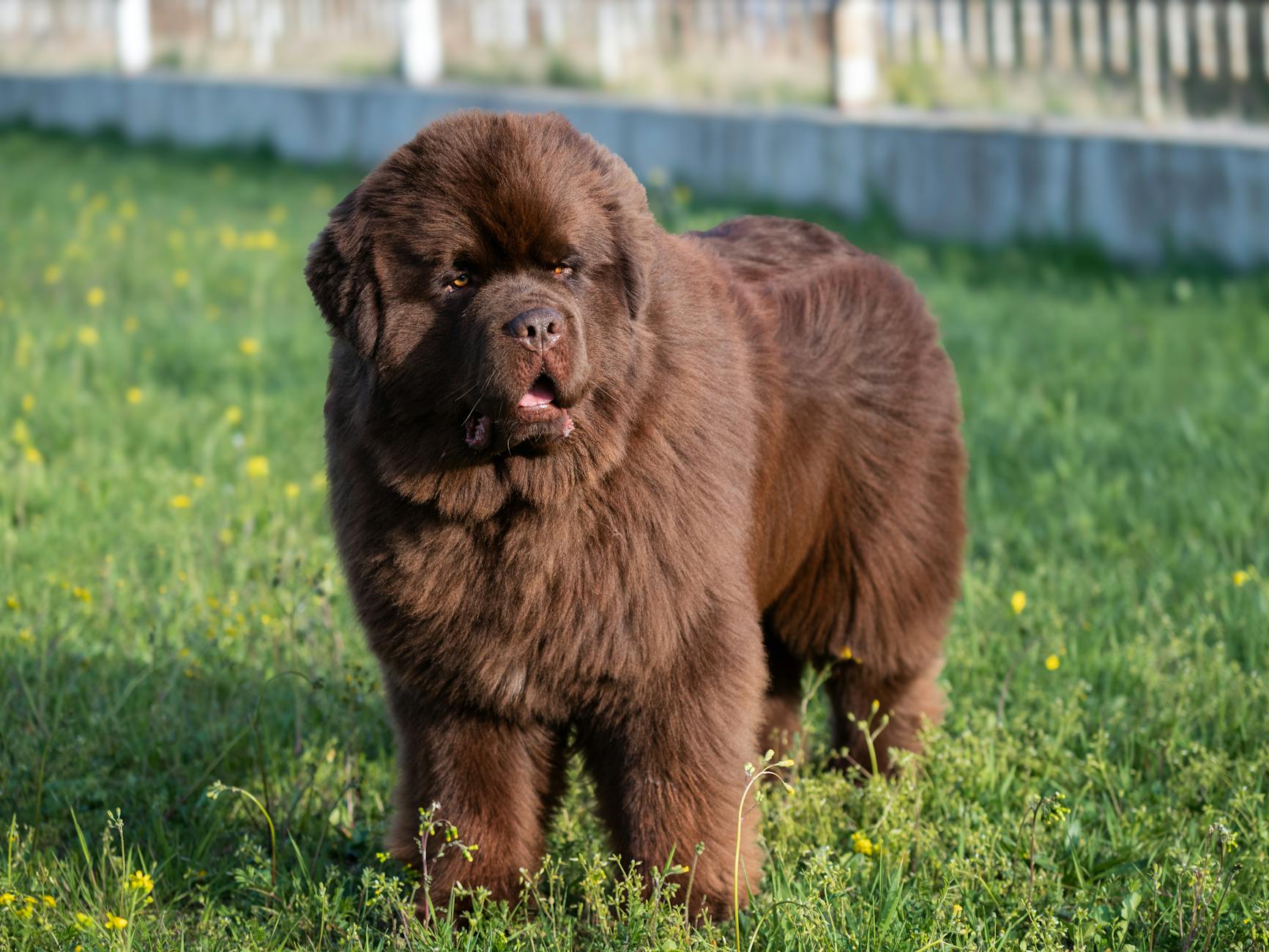
To care for a Newfoundland’s coat, you must first understand its complex, dual-layered structure. These dogs possess a soft, dense, downy undercoat and a longer, coarser, water-resistant outer coat.
This magnificent system was specifically bred to protect them from the freezing, turbulent waters of the North Atlantic during water rescues.
The undercoat acts as a thermal barrier, trapping air close to the skin to insulate the dog from both extreme cold and extreme heat. The outer guard hairs are coated in natural oils that repel water, dirt, and debris, allowing the dog to shake off moisture easily.
Because this coat is a highly specialized biological shield, it requires specific care. Treating it like a single-coated breed’s fur can lead to disastrous consequences for your dog’s skin health and temperature regulation.
The Golden Rule: Never Shave Your Newfoundland
I cannot stress this enough: do not shave your double-coated dog in the summer months. Shaving strips away their natural insulation against heat, leaving them highly vulnerable to sunburn and heatstroke.
Furthermore, when the coat grows back, the undercoat often outpaces the outer coat, resulting in a damaged, fuzzy texture that mats instantly.
Pecute Self-Cleaning Undercoat Rake
- ✓Designed for thick double coats
- ✓Rounded teeth glide without irritating skin
- ✓Self-cleaning for quick fur removal
- Long teeth reach deep into thick double coats to pull out dead hair during heavy shedding seasons
The Line-Brushing Technique: Step-by-Step Grooming
Many well-meaning owners make the mistake of only brushing the top layer of their dog’s coat with a standard brush. This superficial grooming leaves the dense undercoat untouched, allowing dead hair to tangle and form tight, painful mats near the skin.
To prevent this, I teach all my giant-breed clients the ‘line-brushing’ technique.
This systematic method ensures you reach all the way to the skin without causing painful brush burn on your dog’s sensitive skin. It takes time and patience, but it is the only effective way to maintain a healthy double coat.
Grab your slicker brush, undercoat rake, and a metal greyhound comb, and follow these steps during your weekly grooming sessions.
- Part the hair horizontally with your non-dominant hand to expose a clear line of skin.
- Use a long-pinned slicker brush to gently brush the hair downward from the parted line.
- Work in small, manageable sections, starting from the paws and slowly moving upward.
- Follow up with a steel greyhound comb, gliding it gently through the brushed section to find hidden mats.
- Use a specialized undercoat rake to pull out dead, loose hair from the dense undercoat layer without cutting the guard hairs.

Bathing and Drying: Preventing Dangerous Hot Spots
Bathing a ninety to one hundred and fifty-pound dog is a major athletic event that requires preparation. Because their coats are designed to repel water, getting a Newfoundland thoroughly wet to the skin takes significant time and a high-flow water source.
However, the real clinical danger lies not in the bath itself, but in the drying process. Leaving a Newfoundland’s thick undercoat damp is a direct recipe for acute moist dermatitis, commonly known as hot spots.
These painful, raw, weeping skin infections can develop and spread across your dog’s body in a matter of hours.
To prevent this, you must invest in the proper equipment and follow a strict drying protocol every single time your dog gets wet.
- Use a dedicated high-velocity dog dryer rather than a standard human hair dryer.
- Blow the air stream in the direction of hair growth to avoid creating severe tangles.
- Keep the dryer nozzle moving constantly to prevent heat buildup and protect the skin.
- Ensure highly prone areas, such as behind the ears and the groin, are completely dry to the touch.
- Apply a pet-safe, drying antiseptic powder to any skin folds that tend to retain moisture.

Essential Nutrition for Skin and Coat Health
In my clinical practice, I always look at a dog’s coat as a direct reflection of their internal health. A dull, dry, brittle coat or flaky, itchy skin almost always points to nutritional deficiencies or systemic imbalances.
Giant breeds have unique metabolic demands that must be met to support their massive skeletal structures and heavy coats.
Adding specific nutrients to your Newfoundland’s diet can dramatically improve skin barrier function and reduce excessive shedding. It is much easier and highly effective to support the coat from the inside out than to constantly battle dry skin with topical products.
Before adding any supplements, consult with your veterinarian to ensure they are dosed correctly for your dog’s weight.
- High-quality omega-3 fatty acids from wild-caught fish oil to reduce skin inflammation.
- Easily digestible animal proteins to provide the amino acids necessary for keratin production.
- Zinc and biotin supplements to strengthen the individual hair shafts and prevent breakage.
- Vitamin E and other antioxidants to protect the skin cells from oxidative stress and environmental damage.

Navigating the Seasonal ‘Coat Blow’
Twice a year, typically in the spring and autumn, your home will be covered in a soft layer of dark fluff. This is when Newfoundlands ‘blow’ their undercoats to adapt to the changing outdoor temperatures.
The sheer volume of fur shed during these transitions can be shocking to first-time owners.
During a coat blow, daily grooming is absolutely non-negotiable. If you neglect the coat during this critical window, the dead undercoat will quickly lock together with the emerging new growth, leading to severe, full-body matting that requires medical clipping.
Using a high-velocity dryer outside can help blow out the loose undercoat before you even begin brushing, saving you hours of manual labor.
- Increase grooming sessions to at least once or twice a day during the peak shedding weeks.
- Take the dog outdoors and use a high-velocity dryer to blow out the loose, dead undercoat.
- Use a specialized de-shedding tool gently, taking care not to scrape or irritate the skin.
- Schedule a professional ‘bath and blowout’ if the volume of shedding becomes completely unmanageable.
Common Skin Conditions in Newfoundlands
Because of their thick coats and heavy skin folds, Newfoundlands are predisposed to several specific dermatological issues. As a veterinarian, I frequently treat these conditions in my clinic, and early detection is always the key to a quick recovery.
If you notice your dog scratching excessively, licking a specific spot, or producing a strange odor, it is time for a thorough skin check. Familiarizing yourself with these common issues will help you know when to handle the problem at home and when to seek professional veterinary care.
- Acute moist dermatitis (hot spots) caused by trapped moisture and self-trauma from licking.
- Yeast dermatitis, especially in the ears, paw pads, and skin folds, thriving in warm, damp areas.
- Folliculitis, a bacterial infection of the hair follicles, often presenting as small pustules or crusty spots.
- Allergic dermatitis, triggered by environmental allergens or food ingredients, causing intense itching.
When to See Your Vet
If your dog’s skin is oozing, bleeding, or has a strong, sweet, or musty odor, do not wait. These are clear signs of an active infection that requires prescription topical therapies or systemic medications to resolve.
-
VetWELL Ear Cleaner for Dogs and CatsRegular ear cleaning helps prevent infections, especially in breeds with floppy or hairy ears
-
Rywell Dog Cooling Mat 2.0, 44 x 32 inPressure-activated cooling helps dogs that struggle in the heat stay comfortable on warm days
-
LUKITO Lick Mat for Dogs and Cats, 3 PackLicking is naturally calming, so a lick mat with spread-on food helps during baths, nail trims and storms
Related Dog Guides
Frequently Asked Questions
Can I shave my Newfoundland in the summer to keep them cool?
No, you should never shave a double-coated breed like a Newfoundland. Their double coat acts as insulation against both cold and heat, and shaving destroys this natural thermal barrier. It also leaves them vulnerable to sunburn and skin infections, and the coat may grow back permanently damaged.
How often should I bathe my Newfoundland?
Generally, a healthy Newfoundland only needs a bath every six to eight weeks. Bathing too frequently can strip the coat of its natural protective oils, leading to dry, irritated skin. However, if they get muddy or swim in dirty water, a bath with a gentle, dilutable shampoo is necessary.
Why does my Newfoundland smell bad even after a bath?
If your Newfoundland smells sour or musty, it is often due to trapped moisture in their thick undercoat or an active infection. Check their lip folds, ears, and skin for redness or dampness. If the skin is healthy, ensure you are drying them completely down to the skin with a high-velocity dryer.
How do I clean my Newfoundland’s ears to prevent infections?
Newfoundlands have heavy, floppy ears that trap moisture, making them prone to yeast infections. Clean their ears weekly with a veterinarian-approved, drying ear cleanser. Squeeze the solution into the canal, massage the base of the ear, and gently wipe away loose debris with a cotton ball.
Is there a surgery to stop my Newfoundland from drooling?
There is a surgical procedure called a cheiloplasty that modifies the lip folds to reduce drooling, but it is rarely recommended. As a veterinarian, I only recommend this procedure if the dog suffers from chronic, severe, and untreatable lip fold infections. It should never be done for purely cosmetic reasons.
Sources & Further Reading
- American Kennel Club (AKC)
- Merck Veterinary Manual
- American Veterinary Medical Association (AVMA)
- PetMD
Final Thoughts
Caring for a Newfoundland is undoubtedly a labor of love, but the rewards are beyond measure. By understanding their unique anatomy and committing to a consistent grooming routine, you can keep your gentle giant happy, healthy, and smelling fresh.
Remember that consistency is your greatest tool when managing drool and maintaining that beautiful double coat. Never hesitate to reach out to your veterinary team if you notice any changes in their skin or overall comfort.
With patience and the right techniques, you will find that managing this wonderful breed is entirely achievable.