
Shih Tzu Eye Care: Preventing Tear Stains and Infections
 Shih Tzu Eye Care: Preventing Tear Stains and Infections” loading=”lazy”>
Quick Summary
Shih Tzus are highly predisposed to eye issues due to their brachycephalic anatomy, shallow eye sockets, and large eyelid openings. Preventing painful infections and unsightly tear staining requires a rigorous regimen of daily cleaning with sterile saline, addressing underlying causes like blocked tear ducts or environmental allergens, and recognizing early warning signs of corneal ulcers.
As an Amazon Associate, we earn from qualifying purchases.
Popular with dog owners: Dog Harness · Dog Shampoo · Pet Water Fountain
In my years treating brachycephalic dogs, I have looked into thousands of Shih Tzu eyes. These soulful, expressive pools are a hallmark of the breed, but their unique anatomy makes them incredibly fragile.
What I see most often in my clinical practice is a combination of chronic tear staining and preventable corneal injuries. Understanding how to care for these eyes is not just about aesthetics; it is about preserving your dog’s vision and comfort.
Let’s walk through the exact steps, anatomical quirks, and veterinary insights you need to keep your Shih Tzu’s eyes bright, healthy, and pain-free.
Key Takeaways
- Shih Tzu eye sockets are shallow, making their eyes bulge and rendering them highly susceptible to debris and dry spots.
- Tear staining is caused by porphyrins, iron-rich molecules in tears that oxidize and turn reddish-brown on the fur.
- A daily cleaning routine using sterile saline and lint-free pads is crucial to prevent yeast and bacterial infections.
- Yellow or green discharge, squinting, and cloudiness are medical emergencies that require immediate veterinary care.
- Simple environmental changes, like using filtered water and stainless steel bowls, can dramatically reduce tear staining.
- Never use over-the-counter human eye drops or products containing hydrogen peroxide near your dog’s eyes.
- Surgical interventions like medial canthoplasty can correct underlying eyelid defects and prevent chronic pain.
In This Article
- The Anatomy of a Shih Tzu’s Eyes: Why They Are Vulnerable
- Deciphering Tear Stains: What Causes the Red-Brown Discoloration?
- Clinical Guide to Daily Eye Cleaning
- Distinguishing Normal Tears from Active Infections
- Environmental and Dietary Adjustments for Clear Eyes
- Medical Interventions and When to Seek Professional Care
The Anatomy of a Shih Tzu’s Eyes: Why They Are Vulnerable
Shih Tzus are a brachycephalic breed, meaning they have shortened skulls and flattened faces. This skeletal structure leaves very little room for their eye sockets, resulting in shallow orbits that cause their eyes to bulge outward.
In my clinical practice, I frequently diagnose ‘brachycephalic ocular syndrome,’ which is a collection of structural issues that predispose these dogs to eye problems. Because the eyes protrude, they are highly exposed to wind, dust, debris, and physical trauma.
Additionally, many Shih Tzus suffer from macroblepharon, which means their eyelid openings are too large for their eyelids to close completely, especially during sleep. This constant exposure dries out the cornea, leading to chronic irritation and a higher rate of traumatic injuries.
IVY&LANE No-Pull Small Dog Harness Set
- ✓Neck buckle, no pulling it over the head
- ✓Includes leash and car seat belt
- ✓Front and back clips; reflective strips
- Spreads pressure across the chest instead of the neck, which is safer for small and flat-faced breeds
- Shallow bony orbits that offer minimal physical protection to the delicate eyeball.
- Exophthalmos (bulging eyes) that increases the surface area exposed to environmental debris.
- Lagophthalmos, which is the inability to blink fully and lubricate the entire corneal surface.
- Medial entropion, a condition where the inner corners of the eyelids roll inward, rubbing eyelashes directly against the eye.
Lagophthalmos: The Half-Open Eye
If your Shih Tzu sleeps with their eyes slightly open, they likely suffer from lagophthalmos. This prevents the normal tear film from distributing evenly, leading to chronic dry spots on the cornea that can easily ulcerate and scar over time.
Deciphering Tear Stains: What Causes the Red-Brown Discoloration?
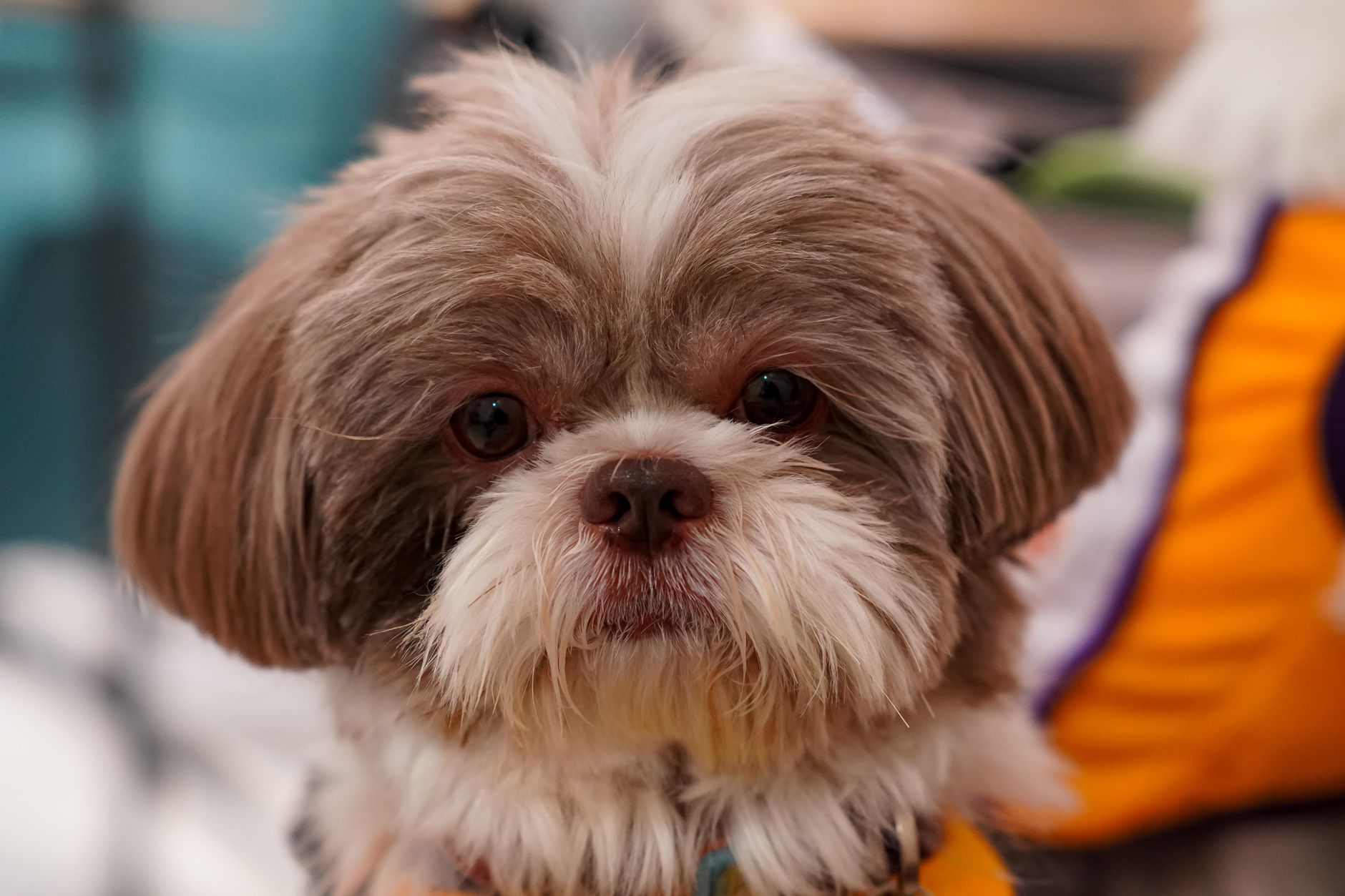
I always tell my clients that tear staining is not a disease in itself, but rather a symptom of epiphora, which is the medical term for excessive tearing. When tears spill over onto the facial hair, they react with light and air, creating a dark rust-colored stain.
Many owners believe these stains are caused by poor hygiene, but the culprit is actually a group of iron-containing molecules called porphyrins. When the body breaks down red blood cells, porphyrins are naturally excreted through bile, urine, saliva, and tears.
Because a Shih Tzu’s facial hair is constantly wet from overflowing tears, the porphyrins bind to the hair shaft and oxidize. However, we must distinguish between normal physiological staining and staining caused by underlying disease processes.
- Blocked or narrow nasolacrimal (tear) ducts that fail to drain tears naturally into the nose.
- Abnormally placed eyelashes, such as distichia or ectopic cilia, that scratch the ocular surface.
- Chronic allergies to environmental pollen, household dust, or specific food proteins.
- Teething in young puppies, which increases salivary and tear production due to cranial nerve pressure.
The Porphyrin Factor
The damp environment created by chronic tearing is a perfect breeding ground for yeast and bacteria like Pityrosporum. This secondary overgrowth not only deepens the red-brown staining but also produces a distinct, sour odor that many owners mistake for simple dirty fur.

Clinical Guide to Daily Eye Cleaning
To prevent both tear stains and infections, you must implement a daily hygiene routine. In my clinic, I teach owners to treat this as a non-negotiable daily habit, just like brushing their own teeth.
Consistency is key because allowing tears to dry and crust on the face makes them much harder to remove without hurting your dog. Dried crusts can pull at the delicate skin, creating micro-tears that invite bacterial infections.
Burt’s Bees for Pets Oatmeal Dog Shampoo
- ✓Colloidal oat flour soothes dry skin
- ✓Honey and beeswax condition the coat
- ✓Sulfate- and paraben-free, pH balanced for dogs
- A gentle, pH-balanced dog shampoo cleans without stripping the natural oils that protect skin and coat
Never use harsh chemicals, human makeup removers, or products containing hydrogen peroxide near the eyes. A simple, medically safe approach is always the most effective way to protect the ocular surface.
- Sterile saline solution (preservative-free) to flush out debris and moisten dried crusts.
- Lint-free cotton pads or cosmetic rounds, avoiding fluffy cotton balls that leave irritating fibers behind.
- A fine-toothed facial comb to gently slide through damp hair and remove softened debris.
- High-quality, vet-approved tear stain wipes formulated with mild, non-irritating chelating agents.
The Safe Cleaning Sequence
Saturate a cotton pad with sterile saline and hold it against the tear stain for 30 seconds to soften crusts. Gently wipe outward away from the eye, and finish by using a dry pad to ensure the skin remains completely dry.

Distinguishing Normal Tears from Active Infections
It is vital for Shih Tzu owners to know when a tear stain is just an aesthetic issue and when it points to an active infection. A delay in recognizing an infection can lead to corneal scarring or even the loss of the eye.
Normal tear staining should be dry or slightly damp, rust-colored, and odorless or mildly metallic. The underlying eye should be clear, bright, and free of redness or swelling.
If you notice a sudden change in the volume, color, or consistency of the discharge, your dog needs to be evaluated immediately. Infections progress incredibly fast in brachycephalic breeds due to their compromised anatomy.
- Thick yellow, green, or grey discharge accumulating in the corners of the eye or along the eyelids.
- Persistent squinting, blinking, or holding one eye partially closed in response to discomfort.
- Pawing at the face, rubbing the eyes against furniture, or showing extreme sensitivity to bright light.
- A cloudy, milky, or bluish appearance on the surface of the cornea, indicating edema or damage.
Corneal Ulcers: A Medical Emergency
Because of their bulging eyes, Shih Tzus are highly prone to corneal ulcers, which are painful open sores on the eye surface. If your dog is squinting, assume they have an ulcer until proven otherwise by a veterinarian.

Environmental and Dietary Adjustments for Clear Eyes
What I see most often in practice is that small changes in a dog’s environment can yield dramatic improvements in their eye health. Many cases of chronic epiphora are exacerbated by minor daily exposures that owners overlook.
For instance, the mineral content in tap water can significantly increase porphyrin staining. Switching to filtered or distilled water often reduces the intensity of the red staining within a few weeks.
Additionally, plastic food bowls can harbor microscopic bacteria in their scratches, which transfer to your dog’s face during meals. Switching to stainless steel, ceramic, or glass bowls is a simple clinical recommendation I make daily.
- Feed high-quality, easily digestible diets free from artificial colors and heavy chemical preservatives.
- Use filtered, purified, or distilled water instead of mineral-heavy municipal tap water.
- Switch to stainless steel, ceramic, or glass food and water dishes, washing them daily.
- Run a high-efficiency particulate air (HEPA) filter in rooms where your dog sleeps to minimize airborne allergens.
The Hair Dilemma: Trimming vs. Top Knots
Keep the hair around the inner corners of the eyes trimmed extremely short with safety-tip scissors, or grow it out long enough to pull back securely into a top knot. Stray hairs constantly poking the eyeball are a leading cause of chronic tearing.

Medical Interventions and When to Seek Professional Care
Sometimes, home care and environmental adjustments are not enough to resolve chronic eye issues. In my clinical experience, some Shih Tzus require targeted medical or surgical intervention to live comfortably.
If a dog’s tear ducts are anatomically compromised or fully blocked, I may recommend a tear duct flush under light sedation. This clears out inflammatory debris and allows tears to drain naturally into the nasal cavity.
For severe anatomical defects, like eyelashes growing in abnormal directions or eyelids rolling inward, surgery is often the most humane and effective solution. These procedures prevent lifelong pain and recurrent corneal scarring.
- Nasolacrimal duct flushing to clear physical blockages and restore natural tear drainage.
- Cryotherapy or electrolysis to permanently remove misplaced, rubbing eyelashes (distichia).
- Medial canthoplasty, a surgical procedure that slightly reduces the eyelid opening to protect the globe.
- Prescription ophthalmic drops, including topical cyclosporine for dry eye (Keratoconjunctivitis Sicca).
The Danger of OTC Medications
Never use leftover human eye drops or over-the-counter red-reducing drops on your Shih Tzu. Many of these products contain vasoconstrictors or steroids that can rapidly worsen an undiagnosed corneal ulcer.
-
Veken 95oz Pet Water FountainMoving, filtered water encourages pets to drink more, which supports kidney and urinary health
-
Rywell Dog Cooling Mat 2.0, 44 x 32 inPressure-activated cooling helps dogs that struggle in the heat stay comfortable on warm days
-
VetWELL Ear Cleaner for Dogs and CatsRegular ear cleaning helps prevent infections, especially in breeds with floppy or hairy ears
Related Dog Guides
Frequently Asked Questions
Why does my Shih Tzu’s eye discharge smell so bad?
A foul, sour, or musty smell is caused by yeast or bacterial overgrowth. When the fur around the eyes is constantly wet from tears, it creates a damp, warm microenvironment where microbes thrive, requiring clinical cleaning and sometimes topical antimicrobial treatment.
Can I use baby shampoo to clean my Shih Tzu’s eyes?
No, I do not recommend using baby shampoo. While it is marketed as gentle, it can still disrupt the delicate pH of the tear film and cause drying of the cornea; instead, stick to sterile saline or vet-approved ophthalmic wipes.
How often should I clean my Shih Tzu’s eyes?
You should wipe and dry your Shih Tzu’s eye area at least once daily. For dogs with severe epiphora (excessive tearing) or active allergies, twice-daily cleaning is highly recommended to prevent tear staining and yeast buildup.
Are tear stain removal food additives safe for my dog?
You must be cautious with food additives. Many older products contained low doses of tylosin, an antibiotic that is unsafe and illegal for cosmetic use; always consult your vet before adding any supplement to your dog’s diet.
Why is my Shih Tzu squinting one eye?
Squinting is a primary sign of ocular pain in dogs. It is often caused by a corneal scratch or ulcer, which is a medical emergency that can quickly lead to infection and permanent vision loss if not treated immediately by a vet.
Can dry eye cause excessive tear staining?
Yes, dry eye (Keratoconjunctivitis Sicca) can paradoxically cause watery eyes. When the eye does not produce enough high-quality, lubricating tears, it overcompensates by producing watery, low-quality tears that overflow onto the face.
Sources & Further Reading
- American Kennel Club (AKC)
- Merck Veterinary Manual
- American Veterinary Medical Association (AVMA)
- PetMD
Final Thoughts
Caring for your Shih Tzu’s eyes is a lifelong commitment that requires daily vigilance, but the reward is a happy, comfortable companion with a bright, healthy gaze. By understanding their unique brachycephalic anatomy, you can anticipate problems before they turn into painful medical emergencies.
Remember that consistency in daily cleaning, keeping facial hair trimmed, and addressing environmental triggers are your best defense against both cosmetic staining and deep-seated infections. Never hesitate to contact your veterinarian at the first sign of squinting, cloudiness, or unusual discharge.
Your prompt action could very well save your beloved pet’s vision.