
Miniature Schnauzer vs Scottish Terrier: Comparing Two Wiry Terriers
 Miniature Schnauzer vs Scottish Terrier: Comparing Two Wiry Terriers” loading=”lazy”>
Quick Summary
While Miniature Schnauzers and Scottish Terriers share a wiry-coated aesthetic, they are vastly different under the hood. Miniature Schnauzers are social, highly vocal, and prone to metabolic conditions like pancreatitis, whereas Scottish Terriers are independent, dignified, and require unique vigilance for specific oncological and neuromuscular conditions.
As an Amazon Associate, we earn from qualifying purchases.
Popular with dog owners: Dog Food · Training Treats · Slicker Brush
Every week in my clinic, I meet pet owners who struggle to tell these two breeds apart. They see a small, bearded dog with a wiry coat and assume they are getting the same personality.
In reality, the Miniature Schnauzer and the Scottish Terrier are worlds apart in terms of temperament, clinical needs, and daily care.
Choosing between them requires a deep look into their history, genetics, and structural health.
Key Takeaways
- Miniature Schnauzers are vocal, social, and eager to please, making them easier to train than Scotties.
- Scottish Terriers possess an independent, cat-like dignity and are far more reserved with strangers.
- Schnauzers have a major genetic predisposition to hyperlipidemia and acute pancreatitis.
- Scotties have a significantly higher risk of transitional cell carcinoma (bladder cancer) than other breeds.
- Both breeds require intensive professional grooming or hand-stripping to maintain their classic wiry coats.
- Scotties are low-slung and heavy-boned, whereas Schnauzers have a square, athletic build.
- A Schnauzer’s diet must be strictly low-fat to prevent life-threatening metabolic crises.
In This Article
- Ancestral Anchors: Ratters vs. Badger Hunters
- Physical Distinctions: Silhouette and Structure
- The Grooming Commitment: Managing the Wiry Coat
- Temperament in the Exam Room: Social vs. Reserved
- Clinical Spotlight: Miniature Schnauzer Health Concerns
- Clinical Spotlight: Scottish Terrier Health Concerns
- Training and Cognitive Needs: Outsmarting the Terrier Mind
- Nutritional Rules: Feeding for Longevity
Ancestral Anchors: Ratters vs. Badger Hunters
To understand their behaviors today, we have to look at what they were bred to do. Miniature Schnauzers originated on German farms as multi-purpose ratters and guard dogs.
They worked closely with human families and lived alongside other farm animals. This made them highly social, alert, and prone to vocalizing at any change in their environment.
Scottish Terriers, by contrast, were bred in the rugged Scottish Highlands to hunt solitary, dangerous prey. They went head-to-head with badgers and foxes in underground dens.
This specialized work required immense self-reliance, silence, and physical toughness.
In my practice, I see these traits play out daily. A Schnauzer will bark to tell me about a stethoscope, while a Scottie will quietly evaluate my movements with stoic concentration.
Purina Pro Plan Sensitive Skin & Stomach Dog Food, Salmon
- ✓Real salmon is the first ingredient
- ✓Oatmeal is gentle on sensitive stomachs
- ✓Live probiotics for digestive and immune health
- A complete, balanced diet matched to your dog’s size and age is the foundation of a healthy coat, gut and energy level
Physical Distinctions: Silhouette and Structure
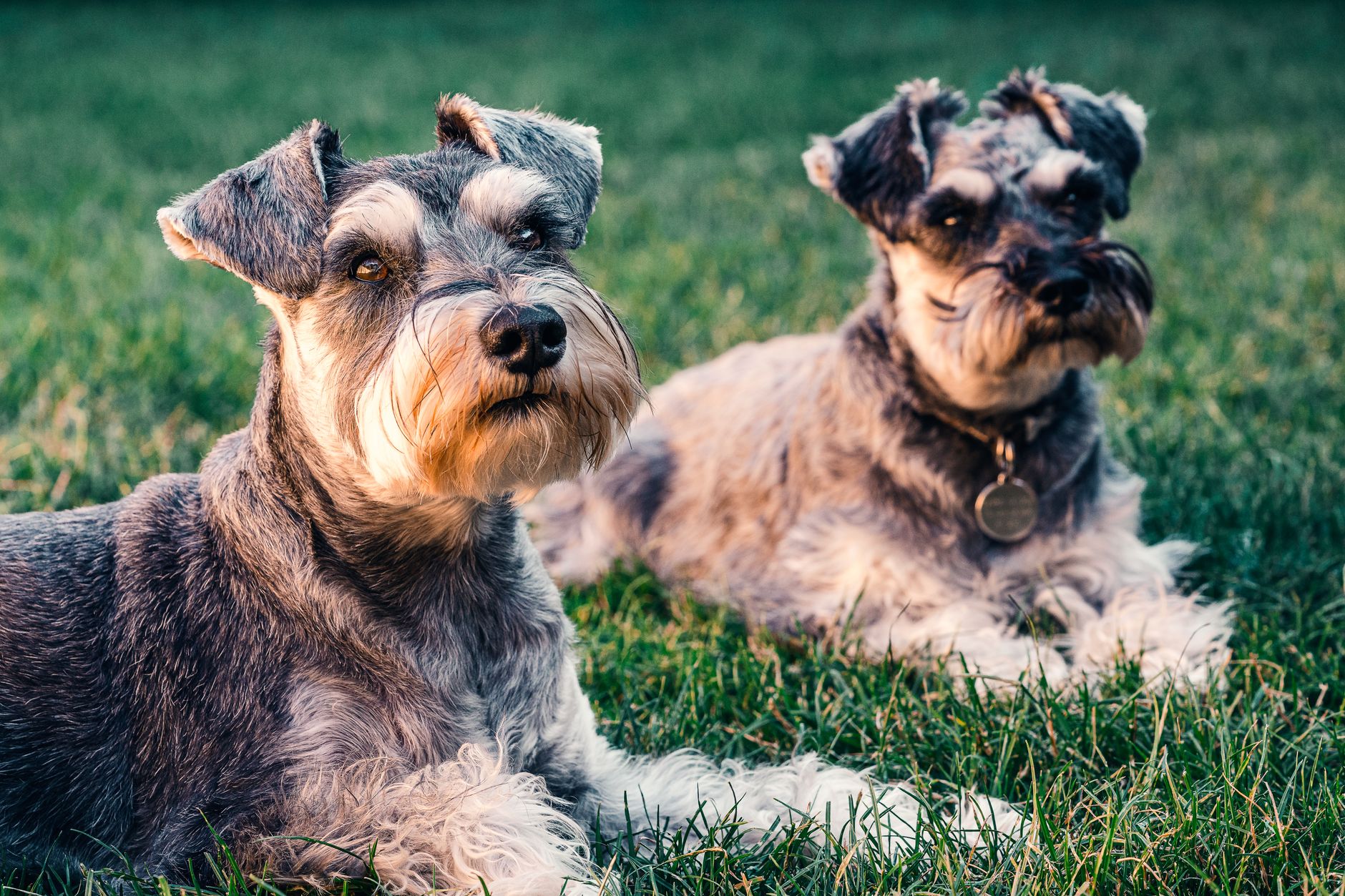
At a distance, they look similar, but their structural differences are profound. Miniature Schnauzers are built on a square frame, meaning their height matches their length.
They are elegant, light-footed, and surprisingly agile when jumping.
Scottish Terriers are built low to the ground with heavy bone density. They have an oblong silhouette, a deep chest, and short legs.
This low center of gravity was essential for underground digging, but it means they are not built for high-impact jumping.
Because of these structural differences, I treat their physical limits differently. I warn Scottie owners about spinal strain, while Schnauzer owners must watch for joint issues related to high-energy leaping.
The Miniature Schnauzer Build
Square proportions with upright carriage. They weigh between 11 to 20 pounds on average.
The Scottish Terrier Build
Short-legged and heavily built. They typically weigh between 18 to 22 pounds despite their shorter height.
The Grooming Commitment: Managing the Wiry Coat
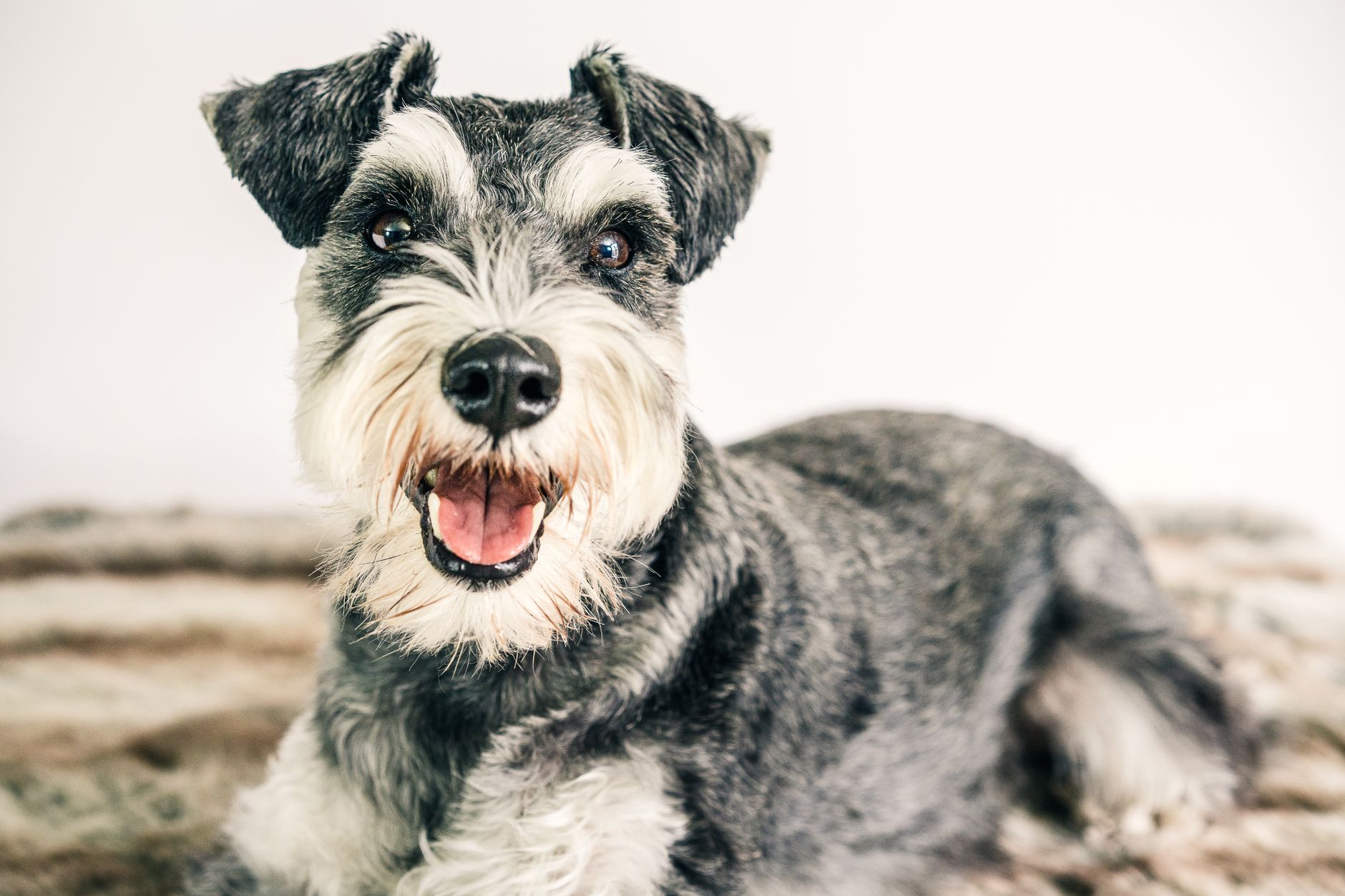
Both breeds possess a double coat consisting of a soft undercoat and a harsh, wiry outer coat. Keeping these coats in top condition is a major responsibility that many new owners underestimate.
If you want that classic look, you cannot just let their coats grow wild. Matted fur can pull on the skin, leading to painful hot spots and bacterial infections.
In my clinic, I frequently treat skin conditions that could have been prevented with proper grooming.
- Slicker brushes for daily detangling of the leg furnishings and beard.
- Metal greyhound combs to check for hidden mats close to the skin.
- Regular professional grooming appointments every six to eight weeks.
- Hand-stripping if you want to preserve the harsh texture and rich color of the wire coat.
- Clipping as an alternative, though it softens the coat texture and fades the color over time.

Temperament in the Exam Room: Social vs. Reserved
In my examination room, these two breeds behave like entirely different species. Miniature Schnauzers are usually bouncy, vocal, and desperate to engage.
They crave human attention but can become easily over-stimulated or anxious.
Diamond Naturals Skin & Coat Dog Food, Salmon & Potato
- ✓Real salmon is the #1 ingredient
- ✓Omega fatty acids for healthy skin and coat
- ✓Suitable from puppy to senior; with probiotics
- A complete, balanced diet matched to your dog’s size and age is the foundation of a healthy coat, gut and energy level
Scottish Terriers are the diplomats of the dog world. They rarely seek immediate affection from strangers, preferring to keep a dignified distance.
They are incredibly loyal to their chosen family, but they do not tolerate rough handling or pushy behavior.
I always advise families with very young children to exercise caution with Scotties. A Scottie will not hesitate to correct a child who handles them too roughly.
- Schnauzers thrive on family inclusion and can suffer from separation anxiety.
- Scotties are highly independent and tolerate being left alone much better.
- Schnauzers tend to bark persistently at visitors, delivery drivers, and passing cars.
- Scotties are quiet watchdogs who only bark when they detect a genuine threat.
- Schnauzers are generally friendlier with other dogs if socialized early.
- Scotties can be highly dog-reactive and rarely back down from a challenge.

Clinical Spotlight: Miniature Schnauzer Health Concerns
From a medical standpoint, Miniature Schnauzers keep veterinarians very busy. Their primary health issues stem from metabolic and genetic anomalies.
I tell my clients that Schnauzers are the poster children for fat metabolism disorders. They are highly prone to hyperlipidemia, which means their blood carries excess fat.
This condition directly leads to acute pancreatitis, a painful and potentially fatal inflammation of the pancreas.
- Acute pancreatitis: Triggered easily by high-fat meals or table scraps.
- Calcium oxalate bladder stones: Requiring frequent urinalyses and sometimes surgical removal.
- Mycobacterium avium complex (MAC): A rare but serious genetic immune deficiency.
- Cataracts and Progressive Retinal Atrophy (PRA): Genetic eye diseases that can lead to blindness.
- Schnauzer Bumps: A benign skin condition also known as comedone syndrome.

Clinical Spotlight: Scottish Terrier Health Concerns
Scottish Terriers present a completely different set of clinical challenges. Their health risks are heavily genetic and often relate to oncology and neurology.
In my career, I have had to deliver more tough cancer diagnoses to Scottie owners than to almost any other breed group. They are famously susceptible to certain malignant tumors, which means proactive screening is vital for this breed.
- Transitional Cell Carcinoma (TCC): A highly aggressive bladder cancer with a rate 18 to 20 times higher in Scotties than other breeds.
- Scottie Cramp: A harmless-looking but distressing neuromuscular condition where the dog temporarily loses coordination when excited.
- Von Willebrand’s Disease: A genetic bleeding disorder that prevents blood from clotting properly.
- Craniomandibular Osteopathy (CMO): An abnormal jawbone growth seen in growing puppies.
- Demodectic mange: A skin mite infestation that Scotties are genetically less equipped to fight off.

Training and Cognitive Needs: Outsmarting the Terrier Mind
Training a terrier requires you to throw out traditional obedience handbooks. Neither of these breeds will obey a command simply because you asked them to.
However, their motivations differ wildly. Miniature Schnauzers are eager for your approval and respond beautifully to positive reinforcement and food rewards.
Scottish Terriers are self-directed and require you to make training feel like their own brilliant idea.
- Keep sessions short: 5 to 10 minutes maximum to prevent boredom.
- Use high-value rewards: Liver treats or real chicken work best for stubborn minds.
- Vary the routine: Repeated commands will cause a Scottie to tune you out completely.
- Start socialization early: Expose both breeds to sounds, sights, and strange dogs before 16 weeks.
- Avoid harsh corrections: Both breeds are sensitive and will shut down under pressure.
Nutritional Rules: Feeding for Longevity
What you put in their bowls determines their lifespan, especially for these two breeds. Because of their genetic predispositions, a generic diet simply will not cut it.
For Miniature Schnauzers, fat content is the single most important metric on the dog food label. I recommend keeping their dietary fat below 10% to 12% on a dry-matter basis.
A single high-fat cheat meal, like a piece of bacon, can land a Schnauzer in my intensive care unit.
The Schnauzer Low-Fat Rule
Always look for lean protein sources like turkey, venison, or whitefish. Avoid feeding table scraps of any kind, especially fatty meats.
The Scottie Weight Watch
Scotties easily become overweight, which puts massive strain on their low-slung spines. Measure their kibble precisely using a digital scale.
-
Zuke’s Mini Naturals Training Treats, Peanut Butter & OatsSmall, soft treats are quick to eat, so you can reward the right moment and keep training sessions moving
-
Depets Self-Cleaning Slicker BrushFine wire pins lift loose undercoat and work out small tangles before they turn into mats
-
3-Step Pet Stairs for Small Dogs and CatsPet stairs save small, senior and long-backed dogs from jumping on and off beds and sofas
Related Dog Guides
Frequently Asked Questions
Which breed is better for allergy sufferers?
Both breeds are considered low-shedding and hypoallergenic because they have hair rather than fur. However, Miniature Schnauzers are generally better tolerated by allergy sufferers because they produce less dander and do not drool.
Are Scottish Terriers good with other household pets?
Scotties have a very high prey drive and are generally not recommended for homes with small animals like hamsters or rabbits. They can coexist with cats if raised together, but they may still chase them when excited.
Why do Miniature Schnauzers bark so much?
Schnauzers were bred as alarm dogs on farms. This means they are genetically programmed to bark at anything unfamiliar, requiring consistent training to manage this instinct.
How can I prevent bladder cancer in my Scottish Terrier?
While you cannot change their genetics, you can minimize environmental risks by keeping them away from lawn chemicals, herbicides, and secondhand smoke, which are heavily linked to bladder cancer in this breed.
What is Scottie Cramp, and is it painful?
Scottie Cramp is a genetic neuromuscular disorder that causes muscle spasms and a bunny-hopping gait when the dog is excited or exercised. It is not painful, and mild cases require no treatment other than keeping the dog calm.
Sources & Further Reading
- American Kennel Club (AKC)
- Merck Veterinary Manual
- American Veterinary Medical Association (AVMA)
- PetMD
Final Thoughts
Choosing between a Miniature Schnauzer and a Scottish Terrier comes down to your personal lifestyle and daily routine. If you want an active, affectionate, and highly trainable companion who will follow you from room to room, the Miniature Schnauzer is an excellent fit.
If you prefer a quiet, independent, and dignified dog who respects your space as much as you respect theirs, the Scottish Terrier is unmatched. Whichever you choose, remember that proactive veterinary care, strict diets, and regular grooming are the keys to a long, happy life together.