
 Poodle vs Bichon Frise: Comparing Two Low-Shedding Breeds” loading=”lazy”>
Quick Summary
While both the Poodle and the Bichon Frise are excellent low-shedding choices for allergy-prone owners, they have distinct physiological and behavioral differences. Poodles are highly energetic, exceptionally intelligent working dogs that come in three sizes, whereas Bichons are cheerful, companion-oriented lapdogs with a higher clinical predisposition to urinary stones and separation anxiety.
In my two decades of clinical veterinary practice, I have had thousands of families walk through my doors asking the exact same question: “Which low-shedding dog is right for us?” Frequently, their top two choices are the Poodle and the Bichon Frise.
While they might look similar to the untrained eye—both sporting curly, low-dander coats—their genetic makeup, health profiles, and behavioral temperaments could not be more different.
Today, I want to unpack these differences from a strictly clinical and practical perspective to help you make the best decision for your household.
Key Takeaways
- Poodles and Bichons are low-shedding but not completely hypoallergenic; both require daily brushing and professional grooming every 4 to 6 weeks.
- Poodles are highly intelligent working dogs that need substantial mental stimulation to prevent anxiety-induced destructive behavior.
- Bichons are dedicated companion dogs that are highly prone to separation anxiety if not trained early in puppyhood.
- Bichons have a strong genetic predisposition to developing calcium oxalate bladder stones and pancreatitis.
- Poodles offer more size versatility, coming in Toy, Miniature, and Standard sizes, whereas Bichons are uniform in size.
- Dental hygiene is a critical, lifelong requirement for both breeds to prevent severe periodontal disease and systemic infection.
In This Article
- The Coat Anatomy: Hair vs. Fur and the Hypoallergenic Myth
- Health Profiles: Common Conditions I See in the Clinic
- Grooming Realities: Professional Maintenance vs. Home Care
- Temperament and Behavioral Nuances
- Nutritional Needs and Dietary Sensitivities
- Exercise and Physical Activity Requirements
- Size Variations and Lifespan Expectations
- Financial Commitment and Lifelong Veterinary Costs
The Coat Anatomy: Hair vs. Fur and the Hypoallergenic Myth
Many of my clients mistakenly believe these breeds are 100 percent hypoallergenic. In my clinical experience, no dog is truly allergen-free.
Humans react to proteins found in a dog’s saliva, dander, and urine, not just the coat itself.
However, both Poodles and Bichons possess a single-layered coat of continuously growing hair rather than a double coat of shedding fur. This unique hair structure means that when individual hairs die, they get trapped inside the curls instead of falling onto your carpets.
This dramatically reduces airborne dander in your home. But it also means that the trapped hair will quickly form painful, solid mats if it is not manually brushed out.
- Single coat structure: Neither breed has a dense, shedding undercoat like a retriever or shepherd.
- Dander entrapment: The tight curl pattern traps dander and shed hair close to the skin, lowering environmental allergens.
- Saliva allergens: Proteins like Can f 1 are still active in their saliva, meaning sensitive owners may still react to licks.
- High grooming dependence: Because dead hair cannot fall out naturally, regular professional grooming is non-negotiable.

Health Profiles: Common Conditions I See in the Clinic
From a veterinary standpoint, these two breeds present very different medical challenges. Poodles, particularly Toy and Miniature varieties, frequently come into my clinic for orthopedic issues.
I often diagnose them with patellar luxation or progressive retinal atrophy (PRA).
Bichons present a completely different set of clinical hurdles. I routinely treat Bichons for severe atopic dermatitis and environmental allergies that cause intense paw-chewing.
More seriously, Bichons are highly prone to urinary tract issues. They require constant monitoring to prevent life-threatening blockages.
- Poodle Orthopedics: Toy and Miniature Poodles are highly prone to slipping kneecaps (patellar luxation).
- Bichon Urinary Stones: Bichons have a notorious genetic tendency to form calcium oxalate uroliths.
- Endocrine Diseases: Poodles are more susceptible to Addison’s disease, while Bichons frequently develop diabetes.
- Ophthalmic Vulnerabilities: Cataracts and progressive retinal atrophy are major concerns for aging dogs in both breeds.
The Threat of Bladder Stones in Bichons
Bichon Frises are significantly overrepresented in veterinary clinics for bladder stones. Their unique metabolism can cause calcium oxalate crystals to form in their bladder.
These stones cannot be dissolved with medicine and almost always require surgical removal.

Grooming Realities: Professional Maintenance vs. Home Care
I always tell my clients that choosing a Poodle or a Bichon is a commitment to a lifetime of rigorous grooming. If you are not prepared to brush your dog daily, neither breed is a good fit.
When grooming is neglected, the coat mats down to the skin, trapping moisture and bacteria. This leads to painful hot spots, severe skin infections, and even ear canal damage.
I frequently have to perform complete shave-downs on neglected dogs. This is highly stressful for the pet and can leave their skin highly sensitive and prone to sunburn.
- High-quality slicker brush: Essential for breaking up surface tangles without scraping the delicate skin beneath.
- Metal greyhound comb: Use this to check your work; if it cannot pass cleanly from skin to hair tip, mats are forming.
- Professional grooming schedule: Plan for a professional clipping every 4 to 6 weeks to maintain coat health.
- Daily eye wiping: Essential for Bichons to prevent red yeast tear staining and painful crusting.

Temperament and Behavioral Nuances
Poodles are working dogs at heart. Standard Poodles were originally bred as water retrievers, and that high-drive, highly intelligent heritage remains intact across all sizes today.
They need a job to do. If you do not give them mental exercise, they will invent their own entertainment, which usually involves chewing your baseboards.
Bichons, conversely, were bred solely for human companionship. They are incredibly sweet and affectionate, but this intense focus on humans makes them highly susceptible to severe separation anxiety.
The Poodle’s High Need for Mental Stimulation
Because of their brilliant minds, Poodles quickly become bored and anxious. I highly recommend interactive puzzle toys, obedience training, and nosework games to keep their brains tired and happy.
Managing Bichon Separation Anxiety
Bichons are the ultimate “Velcro” dogs. From the day you bring them home, you must actively train them to tolerate short periods of alone time to prevent distress vocalizations and destructive behaviors.

Nutritional Needs and Dietary Sensitivities
Proper nutrition is the foundation of preventive veterinary medicine. In my practice, I find that Bichons are highly prone to hyperlipidemia, which is an excess of fat in the blood.
This condition is a primary trigger for acute, life-threatening pancreatitis.
Poodles tend to present with highly sensitive digestive tracts. They are more likely to develop food allergies that manifest as chronic ear infections rather than typical stomach upset.
For both breeds, feeding a high-quality diet with controlled fat levels is essential for long-term health.
- Strict fat limits: Absolutely no table scraps, butter, or fatty meats, especially for the pancreatitis-prone Bichon.
- Novel protein options: Sensitive Poodles often thrive on limited-ingredient diets containing venison, duck, or salmon.
- Preventative joint supplements: Introduce omega-3 fatty acids early to support joint health in active Poodles.
- Hydration encouragement: Keep clean water circulating to help Bichons dilute their urine and prevent crystal formation.

Exercise and Physical Activity Requirements
Do not let their elegant or fluffy appearances fool you. Both of these breeds require regular, structured physical exercise to keep their joints lubricated and their minds calm.
A Standard Poodle is an athletic beast. They need at least an hour of vigorous exercise daily, such as hiking, swimming, or running.
Miniature Poodles, Toy Poodles, and Bichons do well with 30 to 45 minutes of walking per day. However, they also require indoor play sessions to burn off pent-up energy and maintain cardiovascular health.
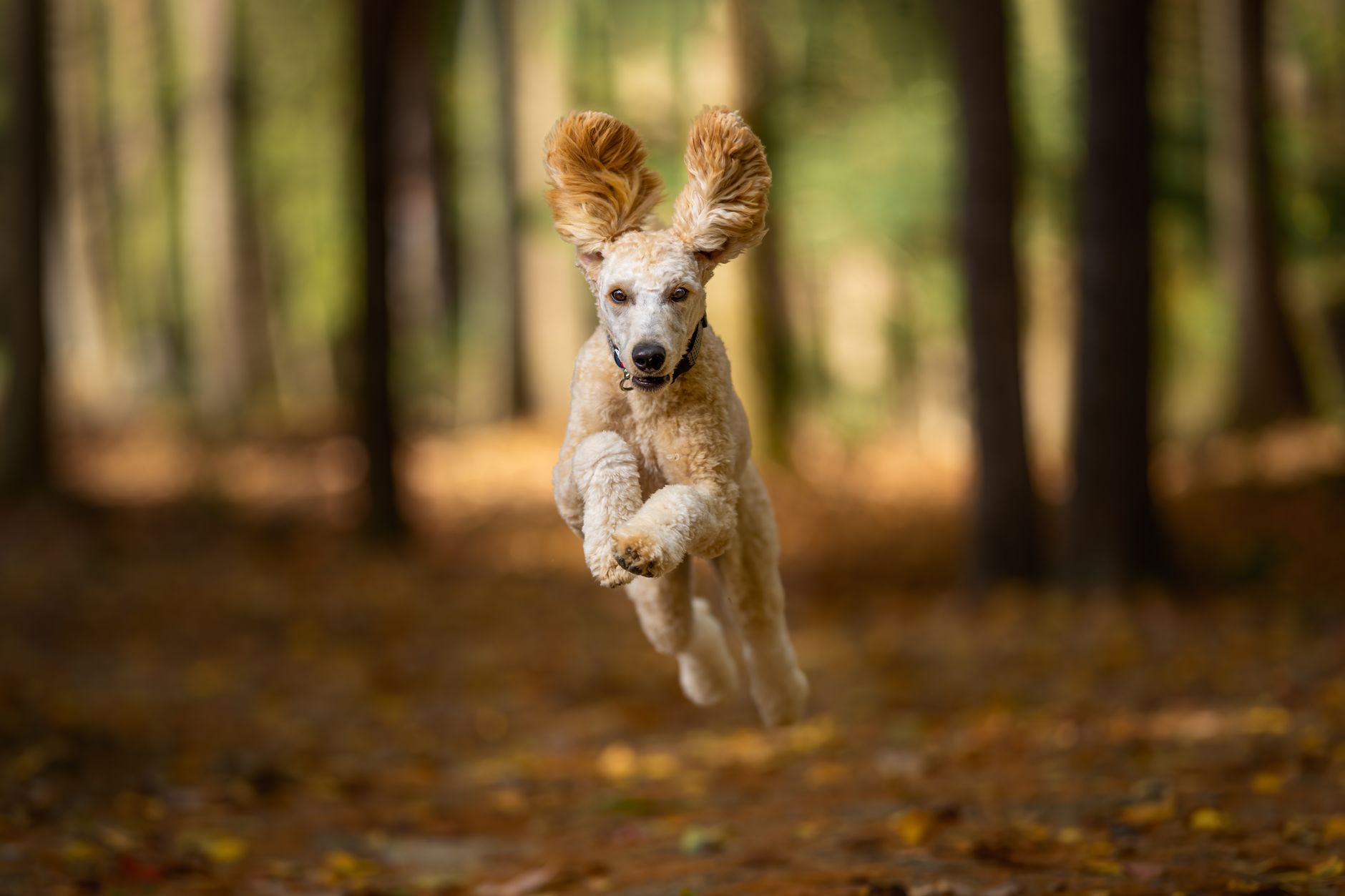
Size Variations and Lifespan Expectations
Physical size is a major logistical factor for many families. Poodles offer incredible versatility, coming in three distinct sizes: Toy, Miniature, and Standard.
Bichons are much more uniform. They typically stand between 9.5 and 11.5 inches at the shoulder and weigh between 12 and 18 pounds.
Smaller dogs generally enjoy longer lifespans. Both Toy Poodles and Bichons frequently live to 15 or even 17 years in my practice, while Standard Poodles average around 11 to 13 years.
- Standard Poodle lifespan: Typically 11 to 13 years, with senior health checks starting at age 8.
- Toy and Miniature Poodle lifespan: Often 14 to 17 years, but they require diligent dental care to protect their hearts.
- Bichon Frise lifespan: Usually 12 to 15 years, with age-related cataracts being highly common in senior years.
- Senior screening recommendations: I advise senior blood panels and urinalyses every six months once these breeds turn 8.
Financial Commitment and Lifelong Veterinary Costs
I always remind my clients that owning a low-shedding dog comes with a significant financial footprint. Regular professional grooming alone can cost over a thousand dollars per year.
Additionally, small Poodles and Bichons have crowded mouths. This structural trait makes them highly susceptible to severe periodontal disease.
Without routine, professional dental cleanings under anesthesia, bacteria from the mouth can enter the bloodstream. This leads to irreversible damage to their heart valves and kidneys over time.
- Grooming expenses: Budget $70 to $120 per session, recurring every 4 to 6 weeks for the dog’s entire life.
- Dental cleanings: Plan for professional veterinary dental cleanings every 1 to 2 years to prevent painful tooth loss.
- Specialized diets: Be prepared for higher costs if your Bichon requires a prescription urinary diet to prevent stones.
- Pet insurance: I highly recommend securing a comprehensive policy during puppyhood before any chronic conditions arise.
Frequently Asked Questions
Are Poodles or Bichons better for severe allergy sufferers?
While both are low-shedding, Poodles are often slightly better for severe allergy sufferers. They have a single coat that tightly traps dander. However, because allergens also exist in saliva, you should spend time around both breeds before making a decision.
Which breed is easier to housebreak?
Poodles are generally easier to housebreak due to their high intelligence and eagerness to learn. Bichons can be notoriously stubborn during house training and often require highly consistent, crate-based training methods to succeed.
Can Poodles and Bichons live together in the same household?
Yes, they can live together wonderfully. Their social natures usually complement each other well, provided the Poodle’s larger size or higher energy does not overwhelm the smaller Bichon.
How often do Poodles and Bichons need to be groomed?
Both breeds need to be brushed thoroughly at least three times a week, though daily is best. They will also require professional grooming, including clipping and bathing, every 4 to 6 weeks.
Do Bichons bark more than Poodles?
Bichons are prone to alert barking and can become highly vocal when suffering from separation anxiety. Poodles can also be vocal, but they are generally easier to train to stop barking on command.
Sources & Further Reading
- American Kennel Club (AKC)
- Merck Veterinary Manual
- American Veterinary Medical Association (AVMA)
- PetMD
Final Thoughts
Choosing between a Poodle and a Bichon Frise ultimately comes down to your personal lifestyle, time, and energy. If you want an athletic, highly trainable, and versatile partner for outdoor adventures, a Poodle is hard to beat.
If you are looking for a gentle, affectionate lapdog that will follow you from room to room, the Bichon is a spectacular choice. Regardless of your decision, please remember that both breeds require a significant investment in coat care, dental health, and mental enrichment.
As a veterinarian, my goal is always to see happy, healthy pets paired with prepared, loving owners.