

Quick Summary
Selecting the right active dog breed requires aligning your specific outdoor pursuits with a breed’s unique biomechanical and physiological traits. As a veterinarian, I stress that high-stamina breeds need specialized joint care, tailored nutrition, and structured conditioning to thrive in rugged environments. This clinical guide highlights the ten best breeds for active owners, along with essential preventative health strategies for the trail.
In my years of clinical practice, I have seen a tragic mismatch between owners’ expectations and their dogs‘ natural physical capabilities. Too often, people choose a dog based on looks, only to find the animal is either physically ill-equipped for grueling weekend hikes or, conversely, so high-drive that they destroy the house when under-stimulated.
An active, outdoor lifestyle is incredible for canine health, but only if you select a breed whose evolutionary design matches your favorite activities. Whether you are trail running, mountain climbing, or backcountry skiing, your dog’s joint structure, coat type, and energy systems must be up to the challenge.
Let’s look at the top canine athletes from a veterinary perspective, focusing on what makes them exceptional and how to keep them structurally sound for years to come.
Key Takeaways
- Match your specific outdoor activity (swimming, climbing, running) to the breed’s evolutionary design.
- Herding and sporting breeds require mental conditioning alongside high-stamina physical exercise.
- Always delay high-impact running and jumping until growth plates have fused, typically between 12 to 18 months of age.
- Water-loving dogs require aggressive ear drying and monitoring to prevent painful otitis externa.
- Deep-chested, active breeds are highly susceptible to gastric dilatation-volvulus (GDV) and require careful feeding schedules around exercise.
- Cold-weather breeds face severe risk of heatstroke in ambient temperatures above 70 degrees Fahrenheit.
In This Article
- collie-and-australian-shepherd”>1. The High-Drive Herders: Border Collie and Australian Shepherd
- 2. The Aquatic Champions: Labrador Retriever and Portuguese Water Dog
- vizsla-and-weimaraner“>3. The Endurance Running Specialists: Vizsla and Weimaraner
- 4. The Alpine Athletes: Siberian Husky and Alaskan Malamute
- 5. The Marathoner: German Shorthaired Pointer
- 6. The Rugged Backcountry Companion: Rhodesian Ridgeback
- 7. The Pocket Rocket: Jack Russell Terrier
- 8. The Mountain Powerhouse: Greater Swiss Mountain Dog
1. The High-Drive Herders: Border Collie and Australian Shepherd
When clients tell me they want a trail running or agility partner, these two breeds immediately come to mind. Border Collies and Australian Shepherds are not casual weekend walkers; they are elite athletes that require daily physical and cognitive outlets.
In my clinic, I frequently treat herding breeds for repetitive motion injuries. Because they are bred to make sharp, lateral cuts while managing livestock, they will push themselves to the absolute limit on trails, often ignoring pain signals until a major soft-tissue injury occurs.
I always advise my clients to focus on structured conditioning rather than just letting them run wild. These breeds excel at navigating complex terrain, but their intense drive means you must act as their governor to prevent premature joint degeneration.
- Monitor closely for Cranial Cruciate Ligament (CCL) tears, which often present as sudden rear-leg lameness.
- Implement daily mental stimulation, such as puzzle toys or scent work, to prevent destructive backyard digging.
- Begin joint protective supplements like glucosamine, chondroitin, and green-lipped mussel early in life.

2. The Aquatic Champions: Labrador Retriever and Portuguese Water Dog
If your outdoor adventures revolve around lakes, rivers, or coastal beaches, these breeds are structurally and genetically built for you. Both the Labrador Retriever and the Portuguese Water Dog possess water-resistant double coats and webbed feet that make them incredibly efficient swimmers.
From a medical perspective, however, water work introduces specific health risks that owners must actively manage. Wet ears are a breeding ground for yeast and bacteria, and cold water can lead to a painful muscular condition known as limber tail.
I always tell my clients that post-swim hygiene is just as important as the swim itself. Keeping these dogs dry and clean after a lake day will save you dozens of veterinary visits for skin and ear infections.
- Always dry ears thoroughly with a vet-approved, drying ear cleaner containing salicylic acid after every swim.
- Watch for ‘limber tail’ (acute caudal myopathy), where the tail hangs limp and painful after swimming in cold water.
- Be vigilant about hot spots (acute moist dermatitis), especially under heavy collars or harness straps where moisture gets trapped.
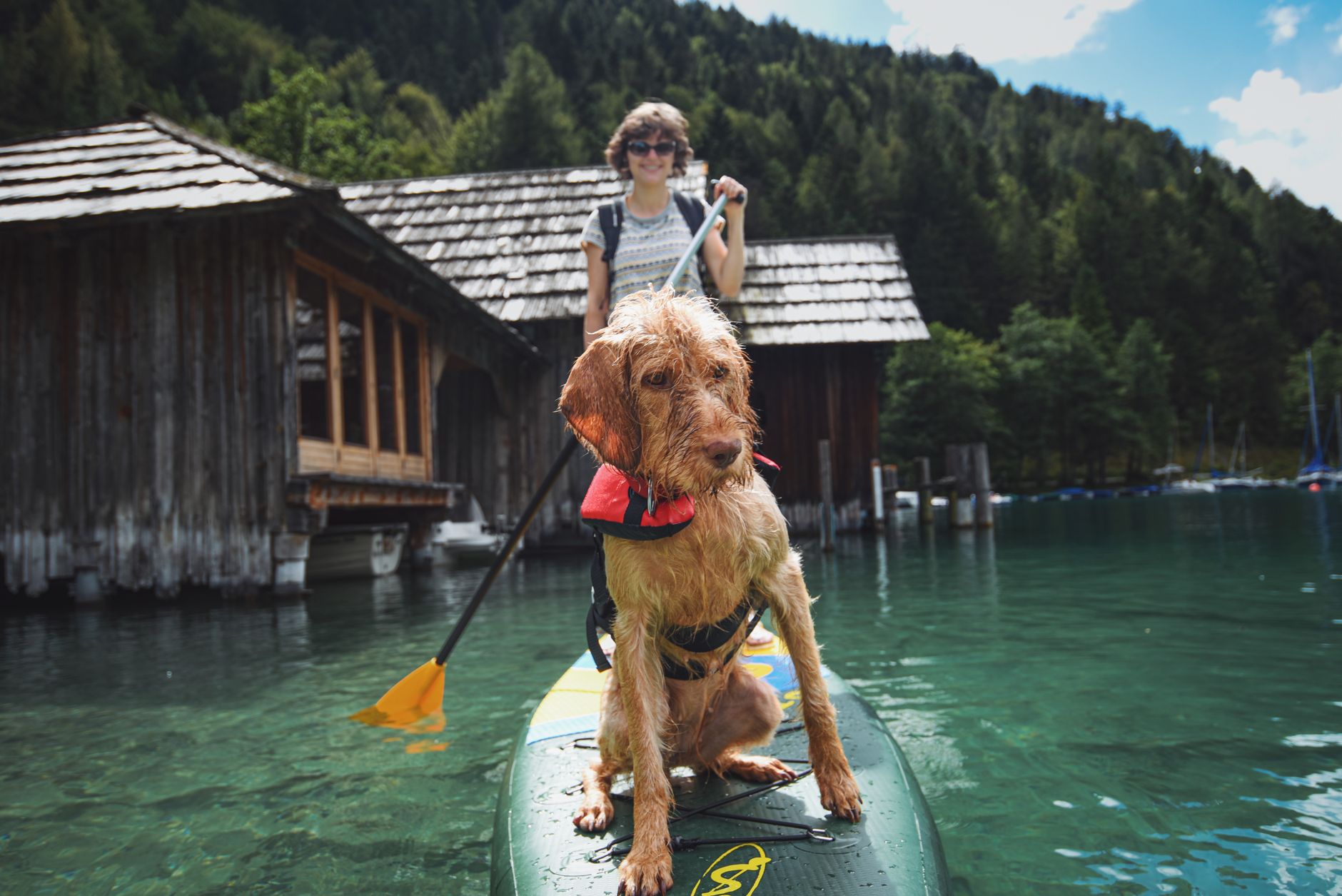
3. The Endurance Running Specialists: Vizsla and Weimaraner
For long-distance runners, the Vizsla and Weimaraner are unmatched in their ability to maintain a steady, high-cadence pace over miles of hard dirt. These sleek, short-coated pointer breeds possess a highly efficient cardiovascular system and a light, leggy build that minimizes joint impact.
Because they have virtually no protective undercoat, they do not overheat as easily as double-coated breeds in moderate weather. However, this lack of insulation makes them highly susceptible to scratches, scrapes, and hypothermia in cold, wet conditions.
I often see these dogs in my clinic with torn paw pads and skin lacerations from briars and sharp rocks. Their thin skin requires extra protection and post-run inspections.
- Regularly apply protective paw wax or use dog booties when running on gravel, granite, or hot asphalt.
- Provide a high-protein, high-fat diet formulated for performance dogs to meet their extreme caloric demands.
- Equip them with insulated, form-fitting vests if you plan to trail run in temperatures below 40 degrees Fahrenheit.

4. The Alpine Athletes: Siberian Husky and Alaskan Malamute
For snowshoeing, winter hiking, and ski-joring, nothing compares to the power and cold-tolerance of the Siberian Husky and Alaskan Malamute. These northern breeds are biochemically adapted to burn fat and carbohydrates with incredible efficiency in freezing temperatures.
In my practice, the biggest danger to these breeds is not the cold, but the heat. I treat far too many northern breeds for life-threatening heatstroke because their owners tried to run them in summer weather.
Their thick double coat acts as a thermos, trapping heat inside. If you live in an area with hot summers, you must strictly limit their strenuous exercise to the early morning hours or air-conditioned environments.
- Never shave a double coat, as it actually helps insulate the dog against heat and protects their pale skin from sunburn.
- Limit strenuous outdoor exercise entirely when ambient temperatures exceed 70 degrees Fahrenheit.
- Check between their toes frequently during winter hikes for painful ice balls that can cut the webbing.

5. The Marathoner: German Shorthaired Pointer
The German Shorthaired Pointer (GSP) is an absolute powerhouse of endurance and versatility. Originally bred as all-around hunting dogs, they possess an incredible work ethic and can run for hours without showing signs of fatigue.
In my clinic, I emphasize that GSPs are deep-chested dogs. This specific anatomical structure puts them at a significantly higher risk for Gastric Dilatation-Volvulus (GDV), commonly known as bloat, which is a life-threatening medical emergency.
Because they are so active, owners must be incredibly strict about the timing of their meals relative to their exercise schedules to minimize this anatomical risk.
- Never feed your GSP within one hour before or two hours after vigorous, high-impact running.
- Learn the signs of bloat: unproductive retching, a distended abdomen, pacing, and drooling.
- Consider discussing a preventative gastropexy (tacking the stomach) if you plan to hunt or run extensively with your GSP.
Understanding Gastric Dilatation-Volvulus (GDV)
GDV occurs when the stomach fills with gas and twists on its axis, cutting off blood supply to the stomach and spleen. This is a rapid-onset emergency that requires immediate surgical intervention to save the dog’s life.
- Keep emergency vet numbers programmed into your phone.
- Avoid elevated food bowls, as research suggests they may actually increase the risk of GDV.
- Ensure your dog drinks moderate amounts of water rather than gulping large volumes after running.

6. The Rugged Backcountry Companion: Rhodesian Ridgeback
If your idea of a weekend is backpacking through hot, dry, and rugged terrain, the Rhodesian Ridgeback is an exceptional partner. Bred in Southern Africa to track lions, they have incredible heat tolerance, tough paw pads, and a highly muscular frame that can handle rocky ascents.
Despite their rugged nature, Ridgebacks are large-breed dogs prone to orthopedic issues such as hip and elbow dysplasia. Keeping them at a lean, healthy weight is critical to preserving their joint health over a long hiking career.
I always remind Ridgeback owners that their dog’s high prey drive means they must be impeccably trained on recall before being allowed off-leash in the wilderness.
- Administer preventative tick and flea treatments monthly, as Ridgebacks love to explore dense brush where disease vectors live.
- Keep a highly visible orange vest on them during hunting seasons to prevent accidental target identification.
- Perform a thorough full-body search for ticks, burrs, and thorns in their unique ridge of hair after every hike.

7. The Pocket Rocket: Jack Russell Terrier
Do not let their small stature fool you; the Jack Russell Terrier is a tireless athlete packed into a compact frame. For hikers who want a dog that can easily fit in a car or be lifted over trail obstacles, this breed is a fantastic choice.
Jacks possess an astonishing amount of cardiovascular stamina and a fierce, bold personality that keeps them moving forward. However, their small size makes them vulnerable to predators and environmental hazards that larger dogs can easily bypass.
In my practice, I frequently treat terriers for injuries sustained from burrowing into wild animal dens or slipping down steep rock faces that are too large for their stride.
- Invest in a high-quality canine hiking harness with a top handle so you can safely lift them over difficult obstacles.
- Be extremely vigilant about snakebites, as their instinct to investigate holes and rock crevices puts them at high risk.
- Watch for patellar luxation (slipping kneecaps), a common genetic issue in small breeds that causes them to hop on three legs.
8. The Mountain Powerhouse: Greater Swiss Mountain Dog
If you are a slow-and-steady hiker who loves heavy backpacking or winter camping, the Greater Swiss Mountain Dog is a magnificent breed. These draft dogs were bred to pull heavy carts through the Swiss Alps, giving them incredible lower-body strength and a calm, stable temperament.
Because they are a giant breed, their skeletons mature much slower than smaller dogs. In my clinic, I strictly forbid clients from allowing these dogs to carry weighted dog packs or tackle steep, high-impact downhills before they are fully structurally mature.
Once they reach adulthood, however, they make incredible heavy-duty trail companions that can comfortably carry their own water, food, and waste bags.
- Wait until the dog is at least 24 months old, and has clear orthopedic x-rays, before introducing a weighted dog backpack.
- Never load a dog backpack with more than 10% to 15% of the dog’s total body weight.
- Monitor their joint movement closely for signs of early-onset osteoarthritis, which is common in giant breeds.
Frequently Asked Questions
At what age can I start taking my puppy on long trail runs?
You must wait until your puppy’s growth plates have fully closed, which typically occurs between 12 and 18 months of age, depending on the breed’s size. Running a young puppy on hard surfaces can cause permanent, irreversible joint damage and lead to early arthritis.
How can I tell if my dog is overheating on a hike?
Early signs of overheating include heavy, rapid panting that doesn’t slow down when resting, bright red or purple gums, thick ropey saliva, and a wide, flattened tongue. If your dog begins to stumble, glaze over, or vomit, you must immediately get them into the shade, apply cool (not freezing) water to their belly and paws, and seek emergency veterinary care.
Should I let my active trail dog drink from mountain streams?
No, you should never allow your dog to drink standing or running wilderness water if you can avoid it. Mountain streams are often contaminated with microscopic parasites like Giardia and Cryptosporidium, or bacteria like Leptospirosis, which can cause severe gastrointestinal disease or kidney failure. Always carry fresh, potable water and a collapsible bowl specifically for your dog.
What should I keep in my dog’s wilderness first aid kit?
Your canine first aid kit should include self-adhering vet wrap (which doesn’t stick to fur), sterile saline solution to flush out wounds or eyes, liquid diphenhydramine (Benadryl) for insect stings, a tick removal tool, styptic powder for torn nails, canine booties, and a muzzle. Even the sweetest dog may bite when experiencing severe pain from a trail injury.
Does my active dog need a different type of food?
Yes, dogs performing strenuous, multi-hour physical activity on a regular basis require a diet higher in fat and protein to meet their caloric needs. Look for formulas labeled as performance, active, or sport diets, but make sure to transition them slowly over 7 to 10 days to prevent digestive upset.
Sources & Further Reading
Final Thoughts
Choosing an active dog breed is the first step toward an incredibly rewarding, health-promoting partnership. However, remember that an athletic dog requires a lifetime of preventative veterinary care, proper joint protection, and structured training.
I always urge my clients to be honest about their daily routine; even the most active owners have busy work weeks where a high-drive dog still needs stimulation. By matching your favorite outdoor pursuits with the right canine physiology and committing to their physical conditioning, you will enjoy countless safe, exhilarating miles together.
Treat your dog like the elite athlete they are, and they will happily follow you to the ends of the earth.