
Positive Reinforcement vs Balanced Training: What Science Says
Quick Summary
Modern veterinary science overwhelmingly supports positive reinforcement over balanced training due to the significant mental and physical risks associated with aversive methods. Clinical research shows that reward-based training leads to lower stress levels, improved cognitive flexibility, and a stronger human-canine bond without the risk of behavioral fallout. As a veterinarian, I advocate for force-free training to protect both the physical airway and the long-term psychological health of our dogs.
In my years treating dogs with severe behavior issues, I have seen a massive shift in how we understand canine psychology. Every week, clients ask me about the intense debate between positive reinforcement and balanced training.
As a veterinarian, my advice is always grounded in peer-reviewed clinical science, not trends. What I see most often in practice is that the methods we use to train our dogs profoundly affect both their physical health and their long-term mental well-being.
Key Takeaways
- Veterinary behavioral science heavily favors reward-based training over methods relying on fear, force, or pain.
- Balanced training utilizes aversives like prong, choke, or shock collars, which carry high risks of chronic stress and physical trauma.
- Aversive training techniques are clinically linked to elevated cortisol levels and redirected aggression.
- Common physical injuries from training collars include tracheal collapse, laryngeal nerve damage, and thyroid trauma.
- True positive reinforcement training is highly structured and relies on managing the environment and setting clear boundaries.
- Transitioning to force-free training can successfully rehabilitate fear-based behaviors and rebuild trust.
In This Article
- The Physiology of Stress: What Happens Inside the Brain
- Defining the Quadrants: What is Balanced Training?
- The Danger of Behavioral Fallout: When Aversives Backfire
- Physical Consequences Observed in the Clinic
- The Science of Reward-Based Learning
- Myth-Busting: ‘Positive Only’ Does Not Mean No Boundaries
- How to Safely Transition Away from Aversives
The Physiology of Stress: What Happens Inside the Brain
When a dog experiences a sudden correction, like a leash jerk or an electronic shock, their body immediately reacts to a perceived threat. The brain’s amygdala triggers an instant fight-or-flight survival response, flooding the system with adrenaline and cortisol.
In my clinic, I can instantly spot a dog that has been trained with chronic aversive pressure. Their physiological baseline is highly elevated, meaning they exist in a state of constant, low-grade hypervigilance.
This chronic stress does far more than just make a dog anxious; it actively suppresses their immune system. Over time, elevated cortisol levels lead to gastrointestinal issues, skin flare-ups, and even a shortened lifespan.
The Cortisol Spike
Research shows that dogs trained with aversive stimuli show significantly higher cortisol levels during training compared to reward-trained dogs. This hormonal surge impairs their cognitive ability to process and retain new tasks.

Defining the Quadrants: What is Balanced Training?
To understand this training debate, we must look at the four quadrants of operant conditioning. Balanced trainers use a mix of all four, blending positive rewards with physical aversives to suppress unwanted behaviors.
While this sounds logical on paper, the practical application often relies heavily on punishment to get quick results. In my veterinary behavioral consultations, I see that these quick fixes usually mask the underlying emotional state rather than solving the problem.
Understanding the scientific terminology helps pet owners make informed, ethical decisions. Let’s break down how these concepts translate into real-world training scenarios.
- Positive Reinforcement (R+): Adding a desirable reward, like a freeze-dried liver treat, to increase the frequency of a good behavior.
- Negative Reinforcement (R-): Removing an unpleasant stimulus, such as releasing tension on a slip lead, the moment the dog complies.
- Positive Punishment (P+): Applying an unpleasant stimulus, like a collar pop or a verbal scold, to stop a behavior from happening again.
- Negative Punishment (P-): Removing something the dog wants, like turning your back when they jump up, to reduce that behavior.

The Danger of Behavioral Fallout: When Aversives Backfire
The biggest clinical concern I have with balanced training is what behavioral scientists call ‘fallout.’ This happens when a dog associates the pain of a correction with whatever they happen to be looking at, rather than their own behavior.
If a dog gets shocked every time they bark at a passing dog, they may quickly learn to hate other dogs. This shifts a mild, frustrated response into severe, defensive aggression.
What looks like a perfectly obedient, quiet dog can actually be a dog experiencing learned helplessness. They stop behaving because they have realized that no action they take can safely guarantee their comfort.
- Sudden, unexplained reactivity toward nearby people, dogs, or innocent bystanders during training.
- Learned helplessness, where the dog shuts down completely and refuses to offer any voluntary behaviors.
- An increase in subtle appeasement signals, such as lip licking, yawning, tucking the tail, and displaying whale eye.
- Redirected biting, where the dog turns and bites the handler or a nearby object out of sheer panic and pain.

Physical Consequences Observed in the Clinic
I always tell my clients that training tools are not just psychological; they have direct, physical impacts on canine anatomy. The neck is home to delicate structures like the trachea, thyroid gland, and major blood vessels.
In my years treating dogs, I have diagnosed dozens of cases of avoidable trauma caused by slip leads, prong collars, and choke chains. A single hard pull or correction can cause lasting micro-damage to these vital structures.
Toy breeds and brachycephalic dogs are particularly vulnerable to these forces, but even large, muscular breeds can suffer severe, chronic injuries.
- Tracheal collapse, characterized by a harsh, dry, honking cough when pressure is applied to the neck.
- Severe bruising of the cervical muscles and micro-tears in the delicate connective tissues of the neck.
- Increased intraocular pressure, which can worsen conditions like glaucoma, especially in predisposed breeds.
- Hypothyroidism caused by chronic mechanical trauma to the thyroid gland located at the front of the throat.
- Laryngeal paralysis and damage to the recurrent laryngeal nerve from sustained collar pressure.

The Science of Reward-Based Learning
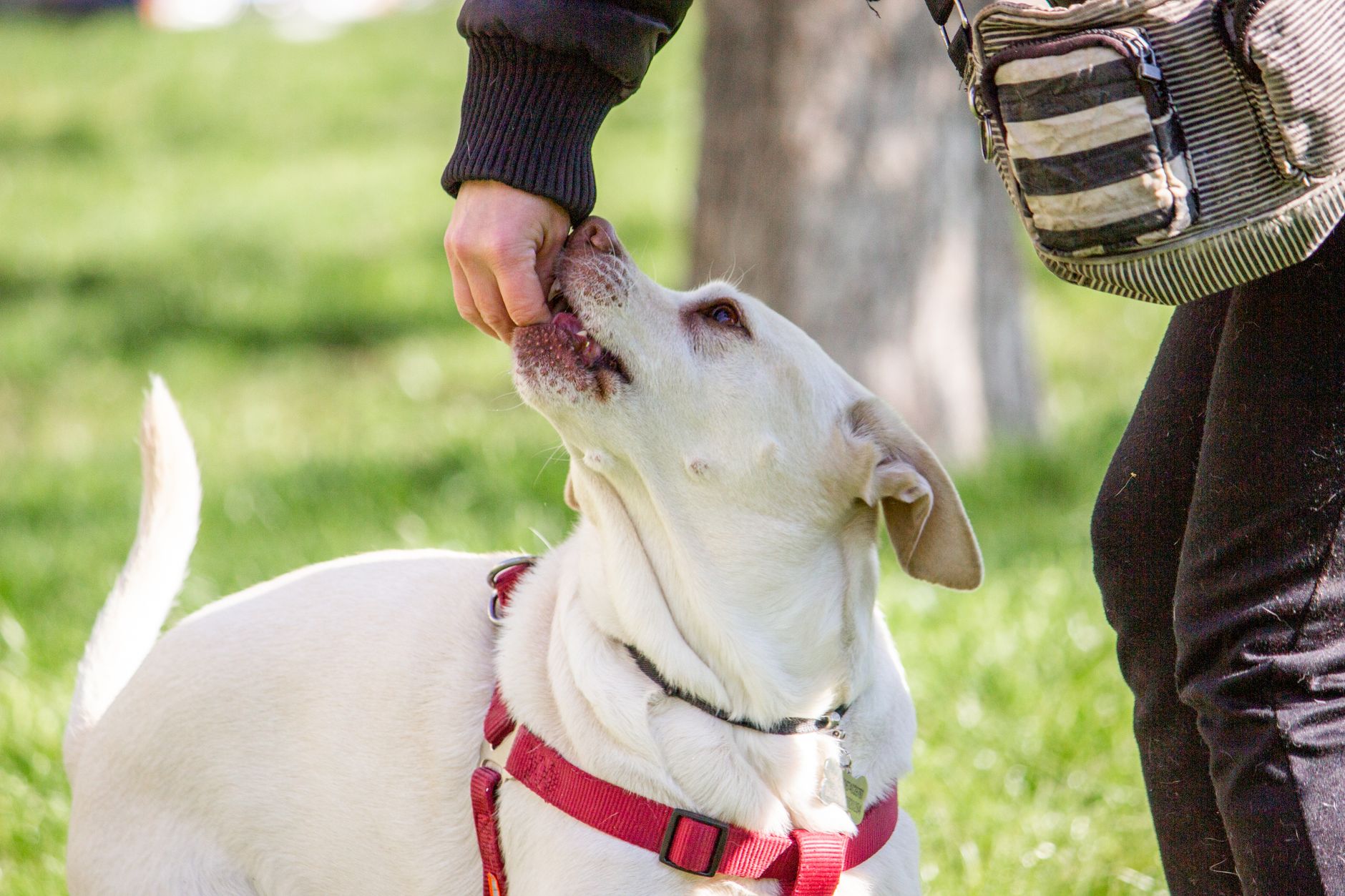
Modern veterinary medicine champions positive reinforcement because it works in harmony with the canine brain. When a dog works to earn a treat or a favorite toy, their brain releases dopamine, the feel-good neurotransmitter.
Dopamine does not just make the dog happy; it actually strengthens the neural pathways associated with learning and memory. This means reward-based behaviors are more deeply ingrained and last longer.
In my practice, I find that dogs trained this way are active, confident problem solvers. They enjoy the process of learning and look to their owners with genuine trust rather than apprehension.
Building Cognitive Flexibility
Dogs trained with positive reinforcement show greater cognitive flexibility and are much better at solving novel tasks. They are not afraid of making mistakes, which makes them highly adaptable in stressful environments.

Myth-Busting: ‘Positive Only’ Does Not Mean No Boundaries
A common misconception about reward-based training is that it allows dogs to run wild without any rules. Skeptics often claim that positive reinforcement trainers just throw treats at bad behavior.
In reality, professional positive trainers rely heavily on proactive management and environmental control. We do not ignore unwanted behaviors; instead, we prevent them from happening in the first place while teaching a better alternative.
If your dog jumps on guests, we do not let them practice it. We manage the environment with gates or leashes and reward them for keeping all four paws on the floor.
- Using baby gates, crates, and playpens to prevent dogs from practicing unwanted behaviors when unsupervised.
- Utilizing high-quality front-clip harnesses and long lines to maintain safe control outdoors.
- Applying negative punishment, like calmly walking away when a puppy starts biting your hands.
- Feeding meals exclusively through puzzle toys to naturally burn physical energy and lower frustration levels.
- Teaching a highly reliable ‘place’ cue to give the dog a specific, rewarding job during hectic times.

How to Safely Transition Away from Aversives
If you have been using balanced methods and want to switch, please know that it is never too late to make the change. Your dog’s brain is incredibly resilient, and the bond between you can absolutely be repaired.
The transition requires a shift in your own mindset from ‘how do I stop this behavior’ to ‘what do I want my dog to do instead.’ This simple reframing completely changes how you interact with your pet on a daily basis.
Start small, be patient, and prepare for a brief adjustment period as your dog learns that they are finally safe to make choices.
- Ditch the tools immediately: safely discard prong collars, slip leads, and e-collars to prevent any regression.
- Upgrade your training kit: invest in a well-fitted, Y-shaped harness and a comfortable 6-foot flat leash.
- Find high-value rewards: discover what truly motivates your dog, whether it is roast chicken, string cheese, or a tennis ball.
- Lower your criteria: start training in low-distraction environments like your living room before moving outside.
- Work with a credentialed professional: look for trainers certified by organizations like the IAABC, KPA, or CCPDT.
Related Dog Guides
Frequently Asked Questions
Is balanced training faster than positive reinforcement?
While balanced training can suppress an unwanted behavior quickly through fear or physical discomfort, it does not actually teach the dog what to do instead. Reward-based training may take more initial consistency, but it creates lasting, reliable behaviors without the high risk of behavioral fallout.
Can aggressive dogs really be rehabilitated with positive reinforcement?
Absolutely. In fact, using aversives on an aggressive dog is highly dangerous and frequently leads to severe defensive bites. Clinical veterinary behaviorists rely almost exclusively on gradual desensitization and counter-conditioning to treat aggression safely.
Are prong collars safe if they are fitted properly?
As a veterinarian, I do not consider prong collars safe. Even when fitted correctly, they rely on causing physical discomfort to control the dog, and they still pose a significant clinical risk of tracheal, laryngeal, and thyroid damage.
What should I do if my dog ignores treats when they are distracted?
If your dog ignores high-value treats, it usually means they are over threshold, meaning the environment is too stressful or exciting. You need to increase your distance from the distraction and build up their focus gradually in calmer settings.
Does positive reinforcement make a dog dependent on treats forever?
No, this is a common myth. Once a behavior is reliably learned, we transition from a continuous reward schedule to an intermittent one, turning the rewards into an exciting jackpot game that keeps the dog highly motivated.
Sources & Further Reading
Final Thoughts
Decades of clinical research and veterinary consensus point to a clear conclusion: positive reinforcement is the safest, most effective, and most humane way to train a dog. By choosing reward-based methods, you protect your dog’s physical health from the real dangers of neck trauma and chronic physiological stress.
More importantly, you foster a relationship built on trust and mutual understanding rather than a fear of punishment. When we know better, we must do better for the animals who depend on us for their safety.
I encourage you to look at your dog not as a creature to control, but as a partner to guide through life.