
Quick Summary
To stop a dog from jumping on guests, owners must consistently enforce the “four on the floor” rule, reward calm alternative behaviors, and manage the environment with physical tools like crates or gates. Consistency is key, as even negative attention—such as pushing the dog away—can reinforce the jumping behavior. Protecting your dog’s joints and your guests’ physical safety requires a unified approach from everyone in the household.
In my years treating dogs and advising their owners, I have seen countless bruised knees, torn stockings, and knocked-over toddlers. Jumping on guests is one of the most common behavioral complaints I hear about in my clinical practice.
It is not just an annoying habit; it is a significant safety hazard that can lead to orthopedic injuries for both humans and dogs. I always tell my clients that understanding why your dog jumps is the first step to curing it.
Let us dive into the clinical, step-by-step approach I use with my own patients to teach dogs that keeping their paws on the ground is the fastest way to get what they want.
Key Takeaways
- Dogs naturally jump to get closer to our faces, which is how they naturally greet and read social cues.
- Any attention—including pushing, yelling, or making eye contact—acts as a reward and reinforces the jumping behavior.
- Using physical barriers like baby gates, leashes, or crates prevents the rehearsal of bad habits while training is underway.
- Teaching an incompatible behavior, like a reliable ‘sit’ or ‘go to your mat,’ is the most effective long-term solution.
- Consistency from every family member and guest is absolutely critical to extinguishing this behavior.
- Avoid physical punishments like knee-blocking or leash-yanking, which can cause serious musculoskeletal injuries.
In This Article
- The Canine Perspective: Why Dogs Jump
- The Medical and Safety Risks of Jumping
- The “Four on the Floor” Rule: Your First Line of Defense
- Managing the Environment to Prevent Rehearsal
- Training an Incompatible Behavior: The “Go to Mat” Command
- Managing and Instructing Your Guests
- Vet Warning: Why Punishment Backfires and Causes Injury
- Special Considerations for High-Arousal and Working Breeds
The Canine Perspective: Why Dogs Jump
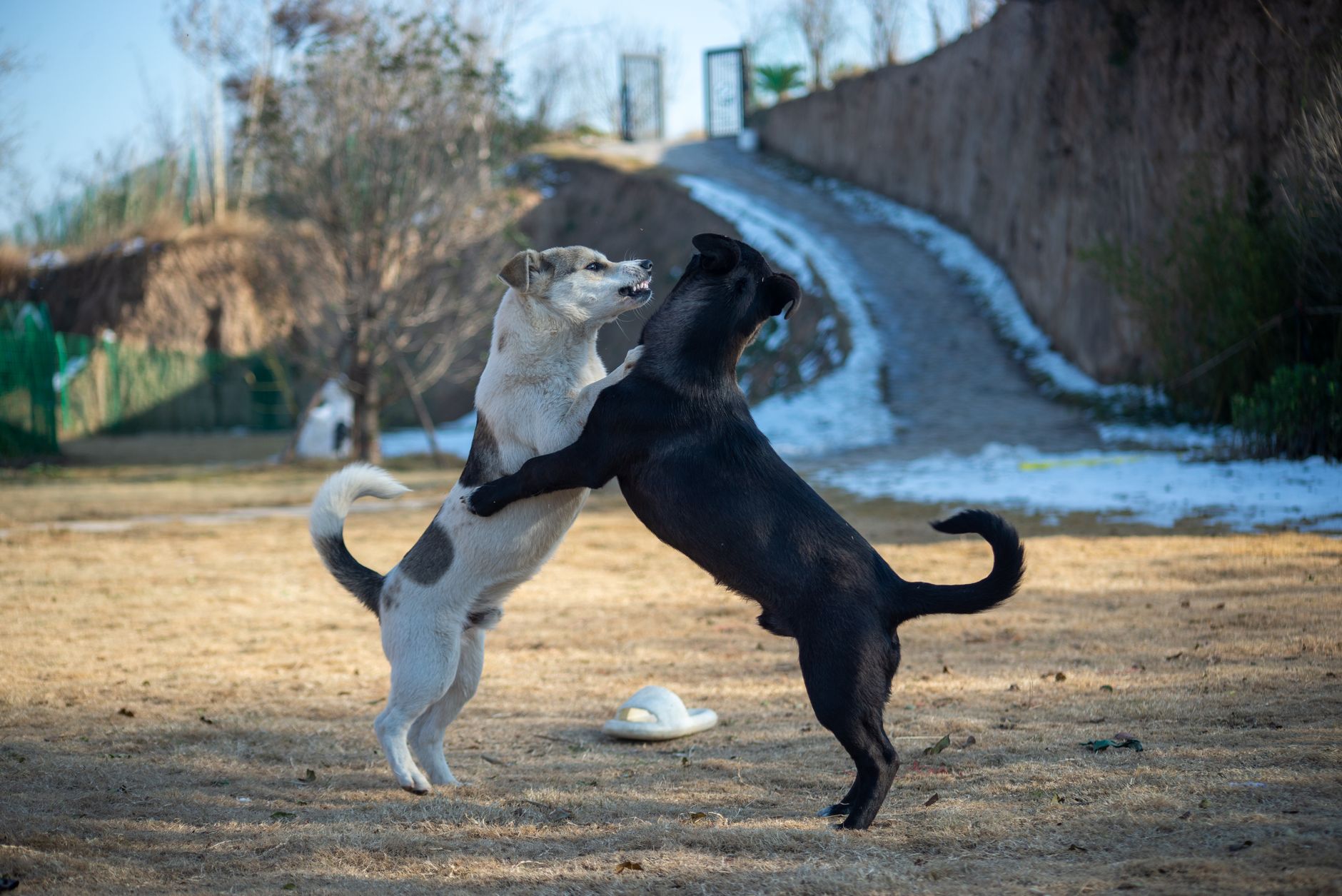
What I see most often in practice is a fundamental misunderstanding of canine body language. Dogs naturally greet each other face-to-face.
When they see humans, they naturally want to reach our faces to sniff, lick, and assess our emotional state.
From a dog’s point of view, we are towering giants. Jumping is simply their way of closing the physical gap between us.
It is an instinctual behavior driven by excitement and a desire for social connection.
Unfortunately, we often accidentally reward this behavior from the day we bring them home. When a tiny puppy jumps up, we cuddle them.
As they grow into a 70-pound adult, that same behavior suddenly becomes a problem.
The Medical and Safety Risks of Jumping
As a veterinarian, I do not just look at jumping as a training issue. I look at it as a medical risk.
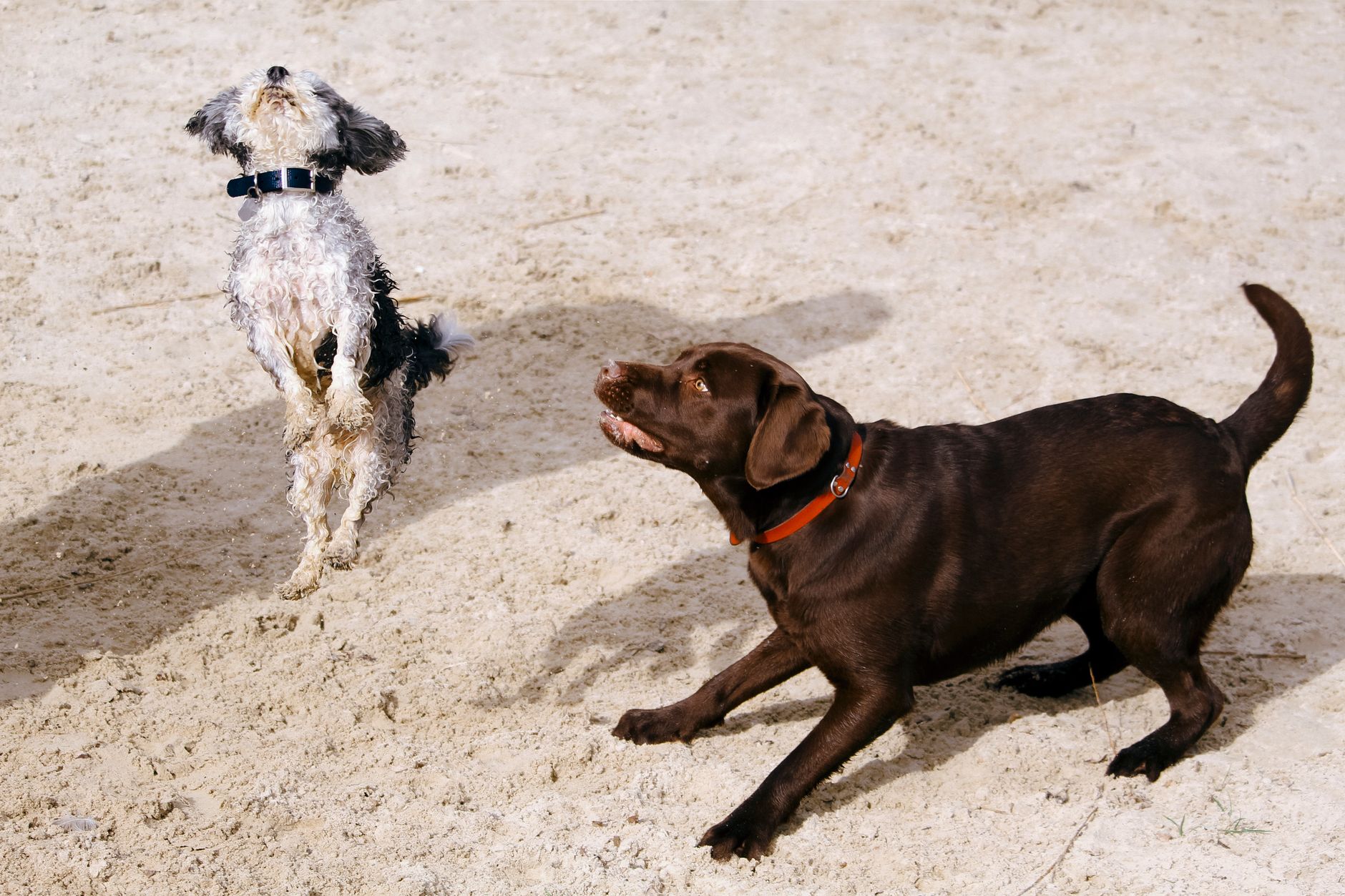
I have treated numerous injuries in both dogs and their owners resulting from a single, high-impact jump.
For dogs, especially large or senior breeds, the impact of landing repeatedly on their hind legs can exacerbate underlying joint issues. It puts immense stress on their hips, knees, and spine.
- Torn cranial cruciate ligaments (CCL) in a dog’s knees due to sudden twists upon landing.
- Exacerbation of hip dysplasia or osteoarthritis in older, large-breed dogs.
- Severe bruising, scratches, or skin tears in elderly guests with fragile skin.
- Concussions or fractures in young children or elderly relatives who are easily knocked over.
- Spinal compression or disc herniation in predisposed breeds like Dachshunds or Corgis.
The “Four on the Floor” Rule: Your First Line of Defense
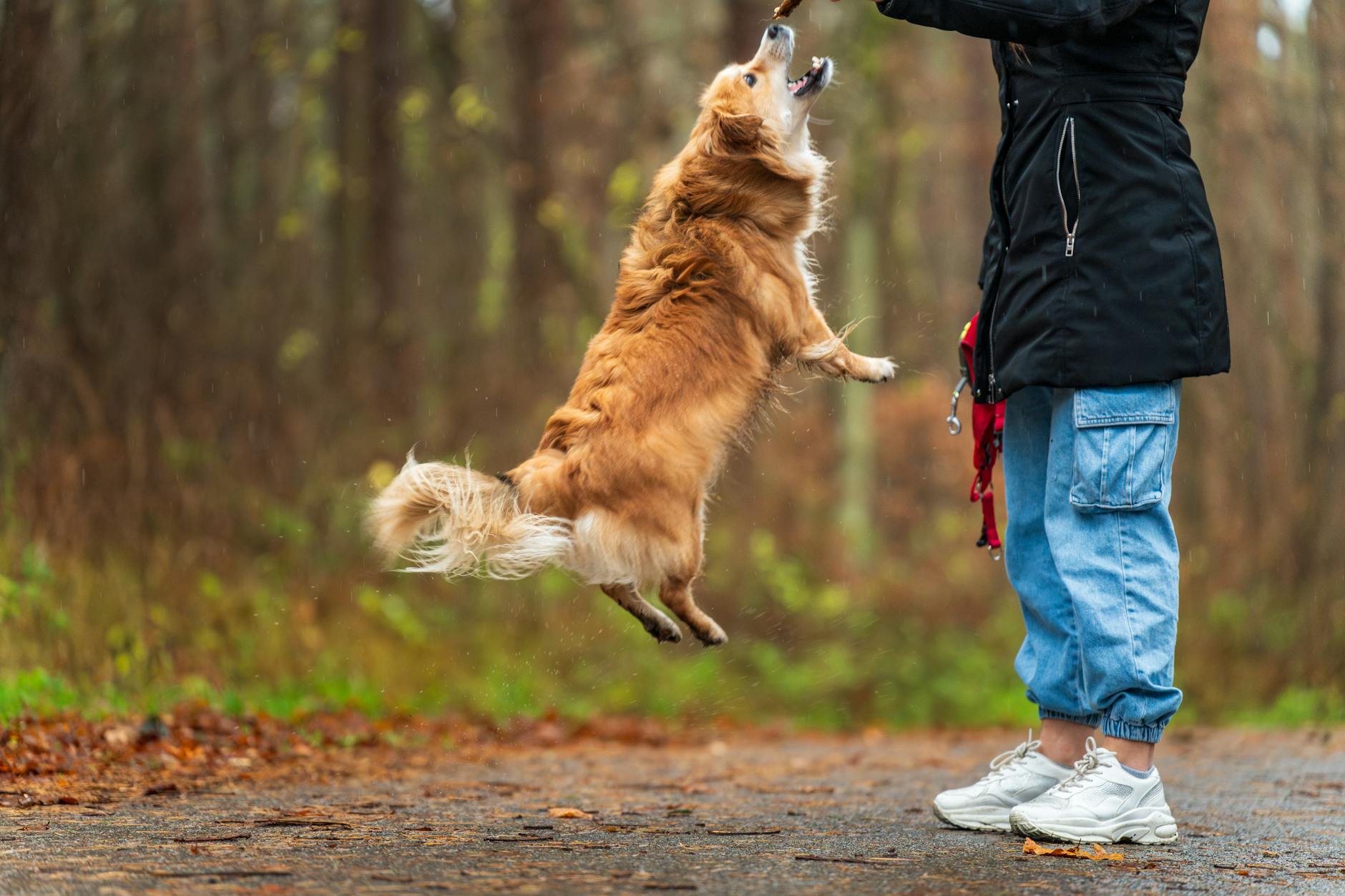
In my practice, I always advocate for the ‘Four on the Floor’ rule. This simple concept means your dog only receives attention, treats, or eye contact when all four paws are firmly planted on the ground.
This requires absolute consistency from everyone in the household. If your dog jumps, you must immediately become a boring statue.
Turn your back, cross your arms, and look at the ceiling.
Only when the dog calms down and places all four paws on the floor do you turn around and calmly reward them. If they jump again the moment you turn, immediately reset and turn your back again.
- Step 1: Turn your back completely when the dog’s front paws leave the ground.
- Step 2: Cross your arms to avoid dangling hands, which dogs view as play toys.
- Step 3: Keep completely silent; saying ‘No’ or ‘Down’ still counts as attention to an excited dog.
- Step 4: Wait for a quiet, calm moment where all four paws touch the floor.
- Step 5: Deliver a high-value treat low to the ground to keep their head down.

Managing the Environment to Prevent Rehearsal
One of the biggest mistakes my clients make is letting their dogs practice jumping while they are still in training. Every time your dog jumps on a guest, the behavior is reinforced, even if you try to stop it.
Management is about setting up physical boundaries so your dog cannot physically access guests the moment they walk through the door. This keeps everyone safe and prevents the dog from practicing the unwanted behavior.
I recommend using tools like baby gates, crates, or a simple leash during the initial stages of training. This allows you to control the environment and keep your dog below their excitement threshold.
- A sturdy tension-mounted baby gate to block off the entryway entirely.
- A standard 6-foot nylon leash to physically keep your dog at your side when guests enter.
- A designated crate stocked with a high-value stuffed chew toy to keep them occupied.
- A clear sign on your front door warning guests that a dog-in-training lives there.

Training an Incompatible Behavior: The “Go to Mat” Command
An incompatible behavior is something your dog cannot physically do while also jumping. My favorite clinical recommendation for this is teaching your dog to ‘go to their mat’ or bed when the doorbell rings.
Your dog cannot physically jump on someone at the door if they are lying down on a bed ten feet away. This redirects their excited energy into a structured, highly rewarded task.
Start by training this behavior when the house is completely quiet. Gradually add distractions, like having a family member knock on a wall, before trying it with real guests.
Choosing the Right Mat
Select a specific mat or elevated cot that is only used for this training. It should have a clear, tactile boundary so the dog knows exactly where their body belongs.
Building Value on the Mat
Feed your dog their meals on the mat and give them their favorite long-lasting chews there. You want them to view the mat as the most rewarding spot in the entire house.

Managing and Instructing Your Guests
I often joke with my clients that training the humans is much harder than training the dogs. Guests often arrive excited and immediately coo at the dog, which completely sabotages your training efforts.
You must be an advocate for your dog and set clear boundaries for your human visitors. Instruct them on exactly how to behave before they even step foot inside your home.
If a guest says, ‘Oh, I don’t mind! I love dogs!’ you must politely but firmly insist on your rules.
Explain that you are training your dog for safety reasons, not just polite manners.
- Text your guests before they arrive to explain the training protocol.
- Instruct guests to completely ignore the dog—no talking, no touching, no eye contact—for the first five minutes.
- Ask guests to drop treats on the floor only if the dog is standing calmly nearby.
- Keep a jar of high-value treats outside your front door with an instruction note for visitors.
Vet Warning: Why Punishment Backfires and Causes Injury
Over the years, I have heard of some terrible, outdated advice given to pet owners, such as kneeing a dog in the chest, pinching their paws, or using shock collars.
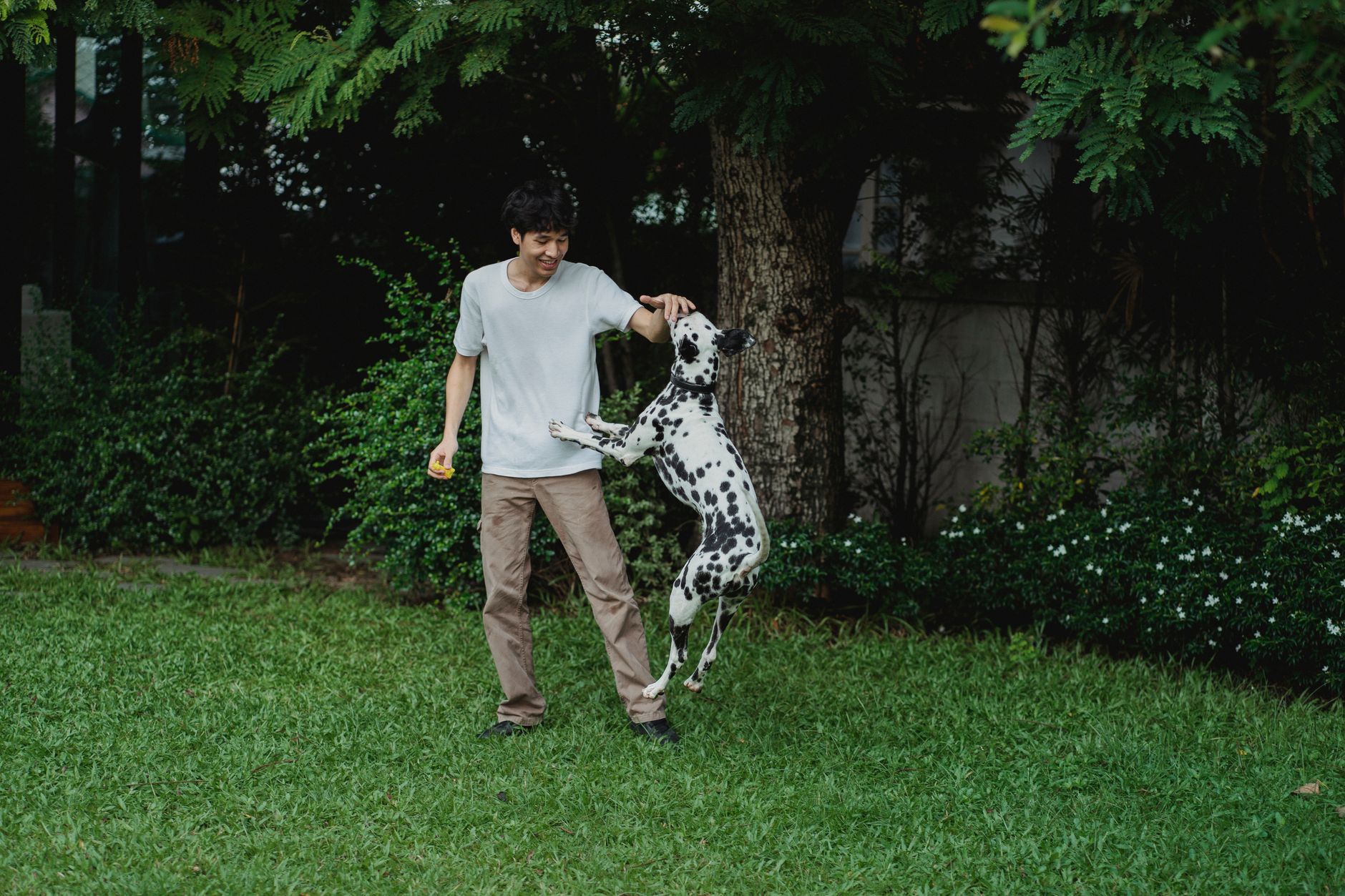
From a medical perspective, these physical punishments are highly dangerous. A knee to the chest can easily fracture ribs, cause bruising, or damage internal organs, especially in smaller or senior dogs.
Furthermore, physical punishment destroys the bond of trust between you and your pet. It can turn an overly excited greeting into a fear-based, defensive, or aggressive response.
Special Considerations for High-Arousal and Working Breeds
Certain breeds, like Golden Retrievers, Boxers, and Australian Shepherds, are naturally high-arousal dogs. They feel excitement deeply and can take a long time to calm down once triggered.
For these breeds, standard training might take longer, and you may need to focus heavily on mental stimulation and physical exercise before guests arrive. A tired dog is a much more teachable dog.
If you have a high-energy breed, try taking them on a long sniff walk or playing a game of fetch about an hour before your guests are scheduled to arrive.
- Engage your dog in a 20-minute scent-work game to mentally tire them out.
- Provide a frozen, peanut-butter-stuffed toy right as guests arrive to channel their arousal into chewing.
- Ensure your dog has had adequate physical exercise earlier in the day to burn off excess adrenaline.
- Consider using calming pheromone diffusers or natural supplements if your dog suffers from extreme barrier frustration.
Related Dog Guides
Frequently Asked Questions
How long does it take to stop a dog from jumping?
With absolute consistency, you can see significant improvement in two to four weeks. However, if family members or guests occasionally allow jumping, the process can take several months due to intermittent reinforcement.
Why does my dog only jump on certain people?
Dogs quickly learn who they can get away with jumping on. If a specific guest squeals, pets them, or allows the behavior, your dog will target them because they know a reward is guaranteed.
Is my dog jumping to show dominance?
No, this is a common myth. Dogs jump out of excitement, a desire to greet you face-to-face, or because they have been conditioned to know that jumping equals attention.
My dog jumps and nips at hands when excited. What should I do?
This is a sign of high arousal. Immediately redirect their mouth by giving them a toy to carry in their mouth during greetings, and enforce strict ‘four on the floor’ rules.
Should I use a vibration or shock collar to stop jumping?
As a veterinarian, I strongly advise against this. Aversive collars can cause fear, anxiety, and aggression, and they do not teach your dog what behavior you actually want them to perform.
Can a senior dog learn to stop jumping?
Yes, older dogs can absolutely learn new behaviors. In fact, stopping senior dogs from jumping is crucial to protect their aging joints and prevent spinal injuries.
Sources & Further Reading
Final Thoughts
Consistency is the ultimate key to changing this behavior. It can be exhausting to police your guests and manage your dog every single time the doorbell rings, but the effort is worth it.
By protecting your dog’s joints and ensuring the safety of your visitors, you are practicing responsible pet ownership.
Remember to celebrate the small victories, like a momentary sit during a greeting. With patience and positive reinforcement, your dog will learn that keeping their paws on the floor is the best way to be loved.