
Potty Training a Puppy: Schedule and Common Mistakes
Quick Summary
Potty training a puppy successfully relies on understanding their physiological limits, adhering to a strict, proactive schedule, and avoiding common errors like using ammonia-based cleaners or punishing accidents. A standard puppy can only hold their bladder for their age in months plus one hour, meaning constant supervision and positive reinforcement are vital. If house-training fails despite consistency, a veterinary evaluation is necessary to rule out urinary tract infections or parasites.
In my years running a busy veterinary practice, few things cause pet parents more stress than a puppy who keeps messing the house. I always tell my clients that potty training is not a test of your puppy’s intelligence, nor is it a battle of wills.
What I see most often in practice is a fundamental misunderstanding of canine physiology and development. If you understand how a puppy’s body works, you can easily set them up for lifetime success.
Let’s cut through the bad internet advice and look at the clinically proven, stress-free way to house-train your new companion.
Key Takeaways
- A puppy’s physical bladder control is not fully mature until they reach about six months of age.
- The maximum time a puppy can hold their urine is roughly their age in months plus one hour.
- Establish a strict, proactive schedule rather than waiting for your puppy to signal they need to go.
- Never punish a puppy for an indoor accident; doing so only teaches them to hide where they eliminate.
- Always clean indoor accidents with an enzymatic cleaner, as regular household detergents leave scent markers.
- Rule out underlying medical issues like UTIs or intestinal parasites if house-training completely stalls.
In This Article
- The Canine Physiology of Elimination: Why Puppies Can’t Hold It
- The Gold-Standard Potty Training Schedule
- Designing the Perfect Confinement Zone
- The Five Classic Mistakes Vet Clients Make
- High-Value Rewards and the Mechanics of Praise
- Recognizing Your Puppy’s Subtle ‘I Need to Go’ Signals
- Medical Roadblocks to Potty Training Success
- Dealing with Regressions and Natural Setbacks
The Canine Physiology of Elimination: Why Puppies Can’t Hold It
Many owners bring their ten-week-old puppy to my clinic, utterly exhausted, convinced their dog is being stubborn. I always start by explaining the simple anatomy of a young canine.
A puppy’s urinary sphincter and pelvic muscles are physically immature.
Expecting an eight-week-old puppy to hold their bladder for several hours is like expecting a human infant to use a toilet. Voluntary muscle control is a gradual developmental milestone, not a choice.
- The Monthly Rule: A puppy can generally hold their bladder for their age in months plus one hour (e.g., a two-month-old can hold it for three hours maximum under resting conditions).
- Toy Breed Realities: Miniature and toy breeds have significantly smaller bladder capacities and faster metabolisms, requiring far more frequent trips.
- Activity Spikes: Physical movement stimulates the kidneys and bowels. A puppy playing actively will need to eliminate much sooner than a puppy resting in a crate.
- The Gastrocolic Reflex: Eating food triggers a physiological reflex that stimulates movement in the lower digestive tract, often causing defecation within minutes of a meal.

The Gold-Standard Potty Training Schedule
Consistency is the absolute cornerstone of veterinary behavioral therapy. Puppies thrive on predictability, and their digestive tracts adapt to scheduled feeding and outdoor times.
By establishing a rigid routine, you teach your puppy’s nervous system when to expect elimination opportunities. This drastically reduces the likelihood of spontaneous indoor accidents.
- First thing in the morning: Take the puppy out the very second your feet hit the floor.
- Post-consumption: Head outside within 10 to 15 minutes of any meal or major water-drinking session.
- Post-nap: Transition directly from the crate or sleeping area to the designated outdoor spot.
- Post-play: Vigorous activity stimulates the bladder; stop play every 20 minutes for a quick outdoor break.
- Nighttime routines: Limit water intake two hours before bed and do one final potty run right before lights out.
The 8-Week to 12-Week Protocol
During this critical developmental phase, you should take your puppy out every 30 to 45 minutes during active daytime hours. Do not wait for them to ask.
The 12-Week to 16-Week Protocol
At this stage, you can typically extend the daytime intervals to every 60 to 90 minutes. However, direct supervision inside the home remains mandatory.

Designing the Perfect Confinement Zone
In my practice, I frequently see house-training fail because owners give their puppies too much freedom too early. A loose puppy will inevitably find a quiet, carpeted corner or an unused guest room to soil.
Confinement is a crucial, temporary tool. It leverages a dog’s natural wild denning instinct, as they have an innate desire to keep their immediate sleeping and resting areas clean.
- Proper Crate Sizing: The crate must only be large enough for the puppy to stand up, turn around, and lie flat. Any larger, and they will use one side as a bedroom and the other as a bathroom.
- The Playpen Setup: For longer periods when you cannot watch them, use an exercise pen with a wipeable floor, containing a bed, water, and a designated potty area.
- Umbilical Cord Training: Keep the puppy tethered to your waist with a six-foot leash while you are home to prevent them from wandering off to soil.

The Five Classic Mistakes Vet Clients Make
When a client tells me their dog is ‘un-trainable,’ we almost always trace the issue back to a few common, easily correctable human errors. Correcting these mistakes will immediately get your progress back on track.
Most of these mistakes stem from human frustration or a lack of understanding regarding how dogs learn and process associations.
- Using Ammonia-Based Cleaners: Ammonia is a natural byproduct of urine. Cleaning with it leaves a chemical scent signature that practically begs the puppy to soil the spot again.
- Punishing After the Fact: Rubbing a puppy’s nose in a mess or yelling at them hours later does not teach them they did wrong; it only teaches them to fear you.
- Relying Excessively on Puppy Pads: Pads teach your puppy that eliminating on soft, fabric-like indoor surfaces is acceptable, which confuses them when you try to transition to grass.
- Failing to Clean Thoroughly: If you do not use an enzymatic cleaner specifically formulated to break down organic proteins, the lingering microscopic scent will attract the puppy back.
- Unsupervised Freedom: Leaving a puppy alone in a room before they are fully house-trained is an open invitation for an indoor accident.

High-Value Rewards and the Mechanics of Praise
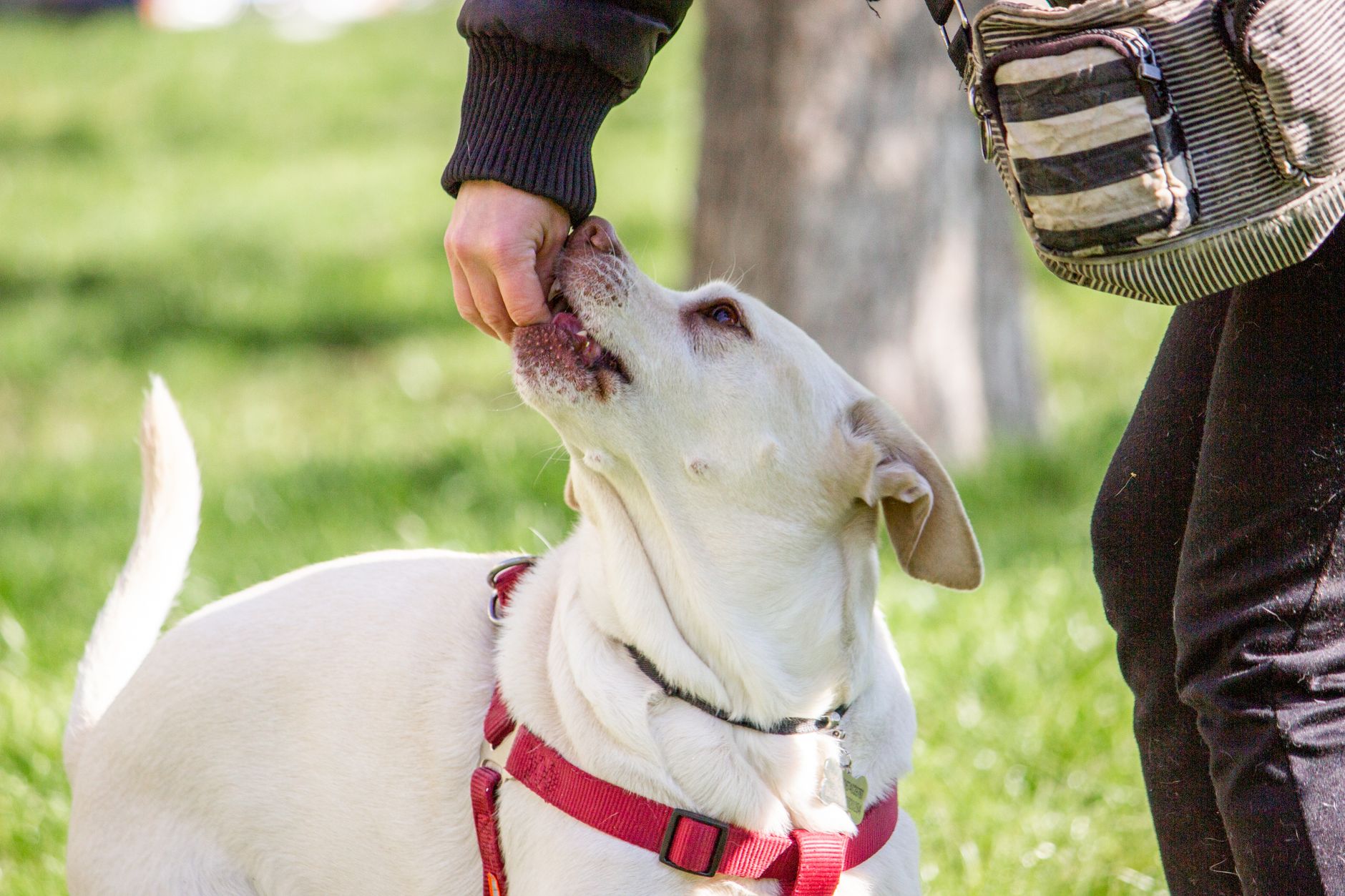
Many owners watch their puppy go potty outside, walk back indoors, and then hand them a treat. In clinical behavioral science, we know that timing is absolutely everything.
To build a strong associative pathway, the reward must occur within three seconds of the desired behavior. The puppy must connect the act of eliminating on grass with receiving a premium reward.
- Treat at the Source: Carry high-value treats in your pocket and feed them the exact second they finish urinating, while still standing on the grass.
- Use Premium Rewards: Do not use dry kibble; instead, use tiny pieces of plain boiled chicken, freeze-dried beef liver, or small bits of string cheese.
- Add a Verbal Cue: Quietly repeat a cue like ‘go potty’ while they are actively eliminating, then reward enthusiastically when they finish.
- Avoid Early Praise: Do not start cheering mid-stream, as this can startle the puppy and cause them to stop before their bladder is completely empty.
Recognizing Your Puppy’s Subtle ‘I Need to Go’ Signals
Puppies do not automatically know how to ring a bell or scratch at the door when they need to relieve themselves. Instead, they exhibit subtle behavioral shifts that owners often miss.
Learning to read these early physiological cues is the secret weapon to preventing accidents before they happen. If you see any of these signs, act immediately.
- Sudden sniffing of the floor while lowering the snout.
- Walking in tight, repetitive circles or pacing along the walls.
- Disengaging abruptly from a favorite toy, game, or chew.
- Slinking away into a quiet, dark room or behind furniture.
- Whining, sudden restlessness, or standing stiffly with a lowered tail.
Medical Roadblocks to Potty Training Success
If you are following a flawless schedule and your puppy is still having daily accidents past the four-month mark, it is time to schedule a clinical evaluation.
Several common pediatric medical conditions can make voluntary bladder or bowel control physically impossible, regardless of how well you train.
Pediatric Urinary Tract Infections (UTIs)
UTIs are incredibly common in female puppies due to their anatomy. The resulting inflammation causes urgency and burning, making them pass tiny amounts of urine constantly.
Intestinal Parasites
Parasites like Giardia, coccidia, and hookworms cause severe gastrointestinal inflammation, resulting in urgent diarrhea that a puppy physically cannot hold.
Congenital Anatomical Defects
Though rare, conditions like ectopic ureters bypass the bladder entirely, leading to continuous, involuntary urine dripping that requires surgical correction.
Dealing with Regressions and Natural Setbacks
Potty training is rarely a perfectly straight line upward. It is highly common for a six-month-old puppy who has been clean for weeks to suddenly have a series of indoor accidents.
In my clinic, I reassure owners that regression is a normal part of canine development. Understanding what triggers these phases allows you to respond calmly and effectively.
- The Teething Phase: Around 4 to 6 months, teething pain causes systemic stress, which can disrupt previously learned behaviors.
- Adolescence and Hormones: As sex hormones emerge, dogs may begin urine marking inside to claim territory or express frustration.
- Fear Periods: Puppies undergo psychological fear periods where outdoor noises can scare them, making them too anxious to potty outside.
- Schedule Changes: A sudden shift in your work hours or a move to a new home can trigger temporary anxiety-induced regression.
Related Dog Guides
Frequently Asked Questions
How long does it actually take to fully potty train a puppy?
Most puppies can be reliably house-trained within 4 to 6 months, though some toy breeds or highly sensitive dogs can take up to a year. True reliability is achieved when the puppy has gone at least four consecutive weeks without a single indoor accident.
What should I do if I catch my puppy peeing on the rug?
Clap your hands loudly once to startle them and interrupt the flow, then immediately scoop them up and carry them outside to finish. If they finish outside, reward them warmly; do not scold, yell, or react with anger, as this ruins trust.
Why does my puppy pee immediately after coming back inside from a walk?
Puppies are easily distracted by sights, sounds, and smells outdoors, which keeps their nervous system in a state of high arousal. Once they return to the quiet, safe interior of your home, their muscles relax, triggering the sudden urge to urinate.
Is it okay to use puppy training pads at night?
I generally advise against using puppy pads because they encourage indoor elimination on soft surfaces. Instead, keep the puppy in a small crate next to your bed so you can hear them whine when they need a middle-of-the-night potty trip.
My puppy keeps eating their own poop. How do I stop this?
This behavior, called coprophagia, is common in young dogs and can stem from nutritional deficiencies or boredom. The most effective solution is to clean up stools immediately while teaching a strong ‘leave it’ command, or using vet-approved taste-deterrent food additives.
Sources & Further Reading
Final Thoughts
Potty training a puppy is ultimately a test of human consistency, patience, and empathy rather than canine obedience. By understanding your puppy’s physical limitations and adhering to a proactive, structured schedule, you will set them up for a lifetime of successful habits.
Remember that accidents are simply data points telling you where the routine broke down, rather than moral failings by your dog. Keep your training positive, utilize enzymatic cleaners, and never hesitate to contact your veterinarian if you suspect a medical issue is stalling your progress.
With a little time and a lot of high-value treats, your home will soon be completely accident-free.