
Why Does My Dog Bark at Night? Causes and Solutions

Quick Summary
Nighttime barking in dogs is rarely a sign of defiance; it is typically triggered by medical issues like osteoarthritis or cognitive decline, environmental sounds, separation anxiety, or pent-up daytime energy. Identifying the root cause requires a systematic approach of veterinary evaluation, environmental management, and targeted behavioral training. Addressing these specific triggers ensures both your dog and your household get restorative sleep.
As an Amazon Associate, we earn from qualifying purchases.
Popular with dog owners: Calming Chews · Lick Mat · Orthopedic Dog Bed
In my fifteen years of veterinary practice, few issues strain the human-animal bond quite like nighttime barking. It is exhausting, frustrating, and leaves everyone in the household sleep-deprived.
When clients bring this up in my clinic, they are often at their wits’ end. They want a quick fix, but I always tell them we must first play detective.
Nighttime barking is a symptom, not a diagnosis. To stop the noise, we have to understand exactly what your dog is trying to communicate in the dark.
Key Takeaways
- Medical pain, especially from osteoarthritis, is a leading hidden cause of nighttime pacing and barking in senior dogs.
- Canine Cognitive Dysfunction (CCD), similar to dementia, often causes ‘sundowning’ behavior and disorientation at night.
- Nocturnal wildlife like raccoons or stray cats trigger alert-barking that can be mitigated with white noise machines and blackout curtains.
- Responding to attention-seeking barks with even negative attention (like yelling) reinforces the barking cycle.
- Establishing a consistent, calming bedtime routine and a dedicated, crate-trained sleeping space reduces sleep anxiety.
- Proper physical and mental stimulation during the evening hours helps naturally transition a dog’s body into sleep mode.
In This Article
- Underlying Medical Conditions: When Pain Keeps Them Awake
- Environmental Triggers: The Secret World of Nocturnal Noises
- Separation Anxiety and the Need for Reassurance
- The ‘Boredom Bark’: Pent-Up Physical and Mental Energy
- Optimizing the Sleeping Environment
- Behavioral Modification: How to Respond When They Bark
- Common Mistakes to Avoid at All Costs
Underlying Medical Conditions: When Pain Keeps Them Awake
In my clinical experience, when an older dog suddenly starts barking or pacing at night, my first suspicion is physical discomfort. Osteoarthritis is a primary culprit.
When a dog lies still for hours, their joints stiffen up, causing deep, aching pain that makes them restless.
Another major medical trigger is the need to eliminate. Conditions like urinary tract infections (UTIs), kidney disease, or gastrointestinal upset can make it impossible for a dog to hold it through the night.
I always recommend a complete veterinary exam to rule out these organic causes before assuming the behavior is purely psychological.
Calming Chews for Dogs with Melatonin, 200 Count
- ✓Soft chews to ease anxiety
- ✓Chicken flavor dogs like
- ✓Useful for storms, fireworks and travel
- Calming chews help take the edge off stressful moments like storms, fireworks and car rides
- Osteoarthritis and joint stiffness that worsens during cool night hours
- Urinary tract infections (UTIs) causing an urgent, painful need to urinate
- Gastrointestinal distress or inflammatory bowel disease flare-ups
- Endocrine disorders like Cushing’s disease, which causes excessive thirst and frequent urination
Canine Cognitive Dysfunction (CCD)
This is essentially dog dementia. Senior dogs with CCD often experience ‘sundowning,’ where they become confused, anxious, and disoriented as the sun goes down.
- Pacing or wandering aimlessly in circles at night
- Staring blankly at walls or getting stuck behind furniture
- Failing to recognize familiar family members or their own bed
- A reversal of sleep-wake cycles (sleeping all day, awake all night)

Environmental Triggers: The Secret World of Nocturnal Noises
Dogs have incredibly sensitive hearing, far exceeding our own capabilities. What sounds like a silent, peaceful night to you is actually a symphony of high-frequency sounds to your dog.
Nocturnal wildlife, passing cars, or even the subtle hum of a neighbor’s HVAC system can trigger an alert bark. Your dog feels it is their job to warn the pack of these potential ‘intruders.’
To address this, we must focus on environmental management. Reducing both visual and auditory stimuli is the fastest way to quiet an alert-barking dog.
- Raccoons, opossums, or stray cats moving through your yard
- The low-frequency vibration of heavy delivery trucks or trash collectors
- Wind whistling through window panes or rustling nearby tree branches
- Unseen headlights casting moving shadows across the bedroom walls
Creating an Auditory Buffer
I highly recommend using white noise to drown out these external triggers. A simple fan or a dedicated white noise machine can work wonders in masking outdoor sounds.

Separation Anxiety and the Need for Reassurance
If your dog barks the moment you close your bedroom door, you are likely dealing with separation anxiety. For many dogs, the dark and isolation of bedtime triggers a panic response.
They are pack animals by nature. Being separated from their human pack mates feels fundamentally unsafe to them, especially during the vulnerable nighttime hours.
ChefAide Lick Mat for Dogs, 2 Pack
- ✓Food-grade, BPA-free silicone
- ✓Freezer, microwave and dishwasher safe
- ✓49 strong suction cups
- Licking is naturally calming, so a lick mat with spread-on food helps during baths, nail trims and storms
What I see most often in practice is owners accidentally worsening this behavior. They hear the bark, feel guilty, and go comfort the dog, which teaches the dog that barking equals your presence.
- High-pitched, repetitive whining that escalates into frantic barking
- Scratching at the door, crate, or carpet near the exit of the room
- Panting, drooling, or pacing inside the sleeping area
- Destructive chewing of bedding or crate bars during the night

The ‘Boredom Bark’: Pent-Up Physical and Mental Energy
A tired dog is a quiet dog. This is a veterinary truism for a reason.
Many dogs spend their days sleeping on the couch while their owners are at work, leaving them with massive reserves of energy.
When bedtime rolls around, their bodies are simply not ready to sleep. They bark out of sheer boredom and frustration, looking for any form of stimulation.
Physical exercise is great, but mental stimulation is often the missing piece of the puzzle. Working your dog’s brain in the evening is just as exhausting as a long walk.
- Provide a stuffed, frozen puzzle toy or KONG right before bed
- Engage in a 10-minute trick training session after dinner
- Use snuffle mats to feed them their evening meal instead of a bowl
- Incorporate a scent-work game in the living room before winding down
Timing Your Evening Walks
Avoid high-intensity aerobic exercise right before sleep, as this can spike cortisol and adrenaline. Instead, opt for a long, slow ‘sniffari’ walk 1-2 hours before bed to relax their mind.
Optimizing the Sleeping Environment
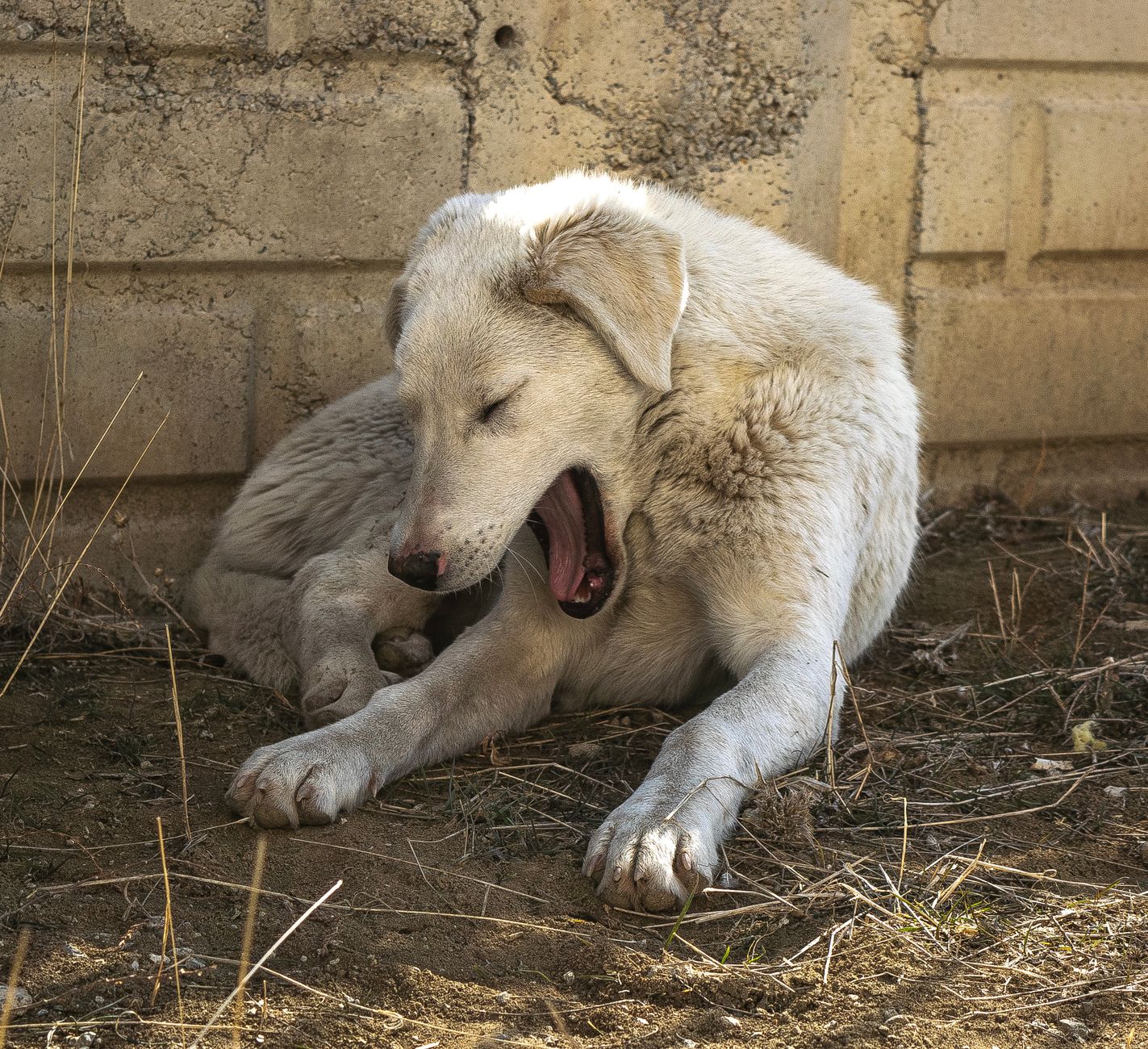
Where your dog sleeps plays a massive role in their nighttime behavior. A drafty corner, an uncomfortable bed, or a room that is too hot can keep them awake and vocal.
I always tell my clients to evaluate the sleeping space from their dog’s perspective. If you wouldn’t want to sleep there, your dog probably doesn’t either.
Consider crate placement carefully. For anxious dogs, having the crate inside your bedroom rather than downstairs can instantly resolve nighttime crying.
- Keep the room temperature between 65 and 72 degrees Fahrenheit
- Use orthopedic memory foam beds for senior or arthritic dogs
- Cover wire crates with a breathable sheet or specialized crate cover
- Ensure the sleeping area is completely dark using blackout curtains

Behavioral Modification: How to Respond When They Bark
How you react to the barking determines whether it will continue tomorrow night. Yelling ‘Quiet!’ or ‘Stop!’ from down the hall is still a form of attention.
To your dog, you are just ‘barking’ along with them. Instead, you must practice systematic desensitization and reward calm, quiet behavior.
If the barking is attention-seeking, you must completely ignore it. This means no eye contact, no speaking, and no physical contact until they have been quiet for at least 30 seconds.
- Wait for a brief pause in barking before offering a calm reward
- Teach the ‘Quiet’ command during the daytime when they are calm
- Avoid releasing a barking dog from their crate or room while they are vocal
- Keep your interactions boring and low-energy if you must let them out to potty
The Boring Potty Trip
If you suspect your dog actually needs to relieve themselves, carry out a ‘boring’ trip. Keep them on a short leash, do not speak to them, go straight to the potty spot, and return immediately to bed.

Common Mistakes to Avoid at All Costs
When people are sleep-deprived, they make desperate decisions. Unfortunately, many of the quick-fix solutions sold online can severely damage your relationship with your dog.
Using punishment-based tools like shock collars or citronella sprayers might stop the barking temporarily, but they do not address the root emotional cause.
In fact, they often increase your dog’s nighttime anxiety, leading to worse behavioral issues like aggression or destructive chewing down the line.
- Never use electronic shock collars or physical punishment for nighttime barking
- Do not let them out of the crate while they are actively vocalizing
- Avoid dramatic, high-energy greetings when you check on them
- Never skip the veterinary checkup to assume it is just a behavioral phase
-
Bedsure Orthopedic Dog Bed, Egg-Crate FoamCushions hips and joints in large, senior or dysplasia-prone dogs
-
Earth Rated Dog Poop Bags, Refill RollsLeak-proof poop bags with a leash dispenser are the everyday basic for clean, considerate walks
-
MidWest iCrate Single Door Folding Dog Crate, 36-InchGives your dog a safe den and speeds up house training
Related Dog Guides
Frequently Asked Questions
Should I let my dog cry it out at night?
I do not recommend the ‘cry it out’ method for dogs experiencing fear or anxiety. If the barking is caused by separation anxiety or panic, leaving them to cry can escalate their stress and lead to self-injury. However, if you are certain it is mild attention-seeking behavior, ignoring it is necessary to avoid reinforcing it.
Why does my senior dog suddenly start barking at 3 AM?
A sudden onset of 3 AM barking in an older dog is a classic indicator of Canine Cognitive Dysfunction (dementia) or physical pain like osteoarthritis. As joint stiffness peaks in the early morning hours, the pain can wake them up. Schedule a visit with your veterinarian to assess them for chronic pain or cognitive decline.
Can a white noise machine really help stop my dog’s barking?
Yes, white noise machines are highly effective tools for dogs that bark at environmental triggers. They mask sudden, high-frequency outdoor noises like wildlife or passing cars that normally provoke an alert bark. Place the machine close to your dog’s sleeping area to create an optimal acoustic barrier.
Is it okay to let my barking dog sleep in my bed?
If your dog is healthy and you do not mind sharing your bed, allowing them to sleep with you can immediately resolve anxiety-induced barking. However, if they have resource-guarding tendencies or joint pain, this may not be the safest option. Be consistent with whatever sleeping arrangement you choose.
How long does it take to train a dog to stop barking at night?
The timeline depends entirely on the root cause and how consistently you apply the solutions. Medical issues can resolve within days of starting targeted treatment. For behavioral issues like separation anxiety or attention-seeking, you should expect to see gradual improvement over three to six weeks of consistent training.
Could my dog’s nighttime barking be caused by a medical emergency?
Yes, sudden, frantic, and uncharacteristic barking accompanied by pacing, panting, or vomiting can indicate acute pain or a medical emergency like gastric dilatation-volvulus (bloat). If your dog seems highly distressed, cannot get comfortable, and does not stop barking, seek emergency veterinary care immediately.
Sources & Further Reading
Final Thoughts
Addressing nighttime barking requires patience, consistency, and a healthy dose of veterinary detective work. By systematically ruling out pain and discomfort first, you ensure your pet is not suffering in silence.
Once medical clearance is achieved, implementing environmental changes and gentle behavioral modification will guide your dog toward peaceful nights. Remember that your dog isn’t trying to make your life difficult; they are simply having a difficult time themselves.
With the right support, both you and your canine companion will soon be enjoying quiet, restorative sleep.