

Quick Summary
Dogs communicate their distress, fear, and discomfort long before they resort to growling or biting. By recognizing subtle micro-expressions like ‘whale eye,’ appeasement yawning, and dry shake-offs, owners can prevent behavioral escalation and keep their pets safe. Understanding these twelve often-overlooked signals is crucial for building a trusting, safe relationship with your canine companion.
As an Amazon Associate, we earn from qualifying purchases.
Popular with dog owners: Calming Chews · Lick Mat · Dog Boots
As a practicing veterinarian, I spend just as much time reading my canine patients as I do diagnosing their physical ailments. Over the last fifteen years of treating thousands of dogs, I have noticed a frustrating, highly repetitive trend.
Well-meaning owners frequently misinterpret their dogs’ silent, subtle cries for space or comfort.
We tend to think of growling, snarling, or snapping as the primary signs of a dog in distress. However, by the time a dog resorts to those overt behaviors, they have already tried communicating their discomfort in dozens of subtle ways.
In my practice, I always tell my clients that preventing behavioral issues starts with observing these quiet signals. Let’s explore twelve of the most common dog body language cues that owners completely miss, drawing directly from the micro-behaviors I watch for during every physical exam.
Key Takeaways
- A wagging tail indicates emotional arousal, not happiness; high, stiff, vibrating wags can indicate imminent defensive action.
- Whale eye (showing the white sclera) is a major warning signal of high anxiety, fear, or resource guarding that requires immediate intervention.
- Lip licking and yawning in active, non-food and non-sleep contexts are pacifying gestures used to signal discomfort and internal stress.
- A sudden ‘freeze’ in movement is a dog bracing their muscles and represents the final warning before a potential bite.
- Dry shake-offs and out-of-context sniffing are displacement behaviors that help dogs transition away from stressful situations.
- A lifted front paw in a non-hunting context indicates emotional conflict, hesitation, and mild anxiety.
In This Article
1. The Sclera ‘Whale Eye’ and Ocular Tension
When a dog enters my exam room, the very first place I look is their eyes. A relaxed dog has soft, round, or almond-shaped eyes that blink occasionally and do not fixate intensely.
What I see most often in practice is a phenomenon called ‘whale eye.’ This occurs when a dog holds their head still but tracks a perceived threat with their eyes, exposing the white sclera in a crescent shape.
This is not a cute, goofy side-glance. It is a clear warning sign of high anxiety, fear, or active resource guarding.
Calming Chews for Dogs with Melatonin, 200 Count
- ✓Soft chews to ease anxiety
- ✓Chicken flavor dogs like
- ✓Useful for storms, fireworks and travel
- Calming chews help take the edge off stressful moments like storms, fireworks and car rides
If you reach for your dog’s chew bone and see the whites of their eyes flash, they are warning you to back off before they resort to growling.
- A crescent of white sclera visible at the outer or inner corners of the eye
- A wide, unblinking stare that tracks your hand or movements
- Tight, rounded skin around the eyelids indicating high facial tension
- A rigid head posture held completely still while the eyes move independently

2. The ‘Appeasement’ Lip Lick
I cannot tell you how many times I have watched a client pet their dog on the head while the dog rapidly licks its lips. The owner usually laughs and says, ‘Oh, look, she is giving me kisses!’ or ‘She must want a treat!’
Unless there is peanut butter actively present on your dog’s nose, rapid lip licking is almost never about food or affection. In clinical veterinary behavior, we classify this as a classic appeasement gesture.
Your dog is sending a polite but urgent signal to say, ‘I am uncomfortable with this interaction, please stop.’ In my practice, I see this constantly when children hug dogs or when owners lean over them to take a photo.
- A flick of the tongue that barely exits the front of the mouth
- Repetitive, rapid licking when a person or animal approaches their space
- Licking that occurs without any food, treats, or water nearby
- Accompanied by slightly lowered head carriage or squinting eyes

3. The Yawn of Apprehension
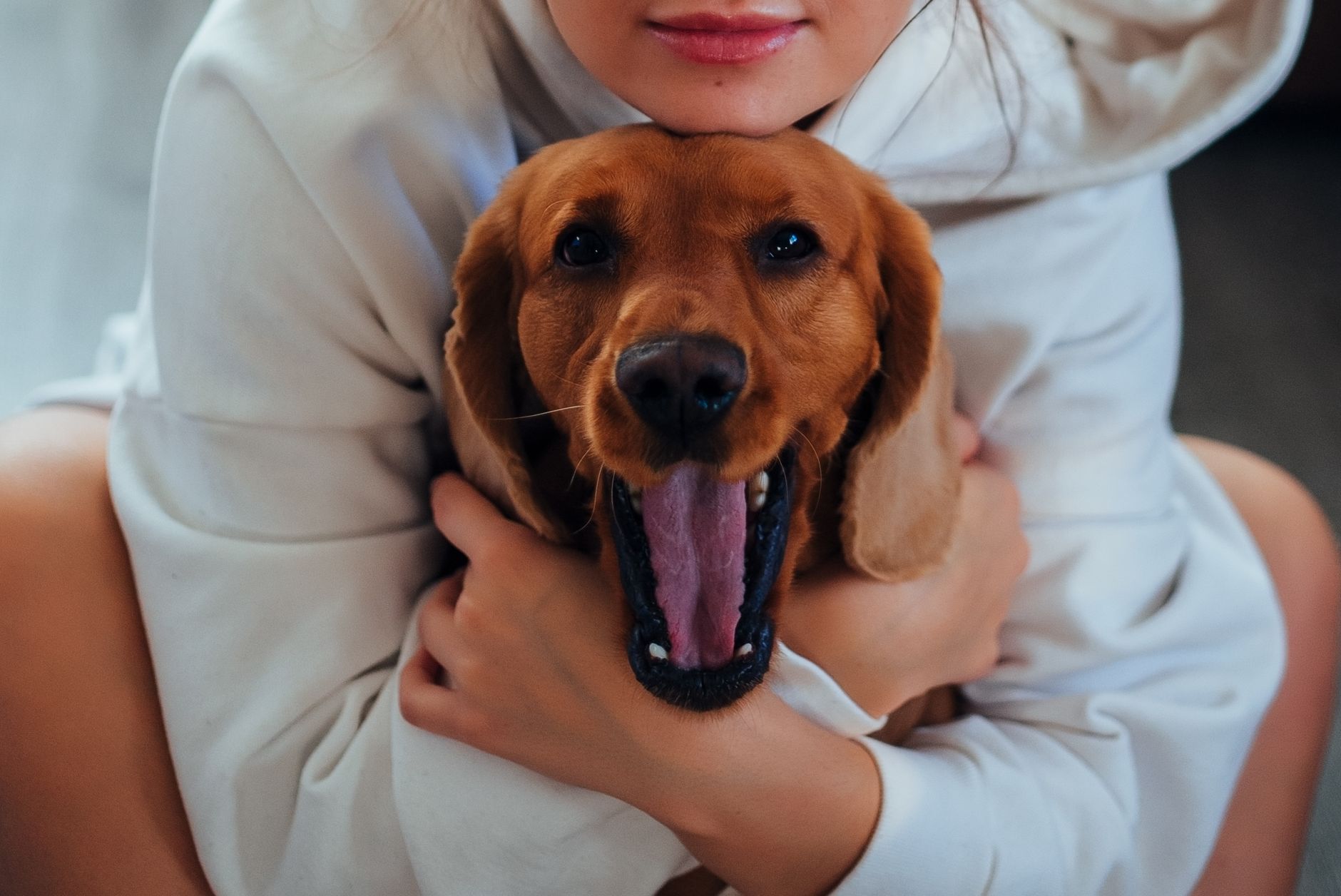
Yes, dogs yawn when they first wake up from a deep nap on the living room rug. However, context is absolutely everything when it comes to analyzing canine communication.
If your dog yawns during a veterinary exam, during a training session, or when a stranger reaches out to pet them, they are not sleepy. They are experiencing significant internal conflict and anxiety.
A stress yawn is a physiological mechanism dogs use to release internal pressure and self-soothe. It is typically much wider, more abrupt, and accompanied by a slight whining sound or tense facial muscles compared to a sleepy yawn.
- An abrupt, wide-mouthed yawn during an active, non-sleep situation
- A high-pitched squeak or whine emitted mid-yawn
- Stiff facial muscles around the jaw and eyes during the movement
- Immediately followed by lip licking or a quick shake-off
4. The Stiff, High-Arousal Tail Wag
This is perhaps the single most dangerous misunderstanding in pet ownership: the belief that a wagging tail always equals a happy dog. I have treated many avoidable bite wounds where the victim swore, ‘But his tail was wagging!’
LUKITO Lick Mat for Dogs & Cats, 2 Pack
- ✓77 suction cups stick to tubs and walls
- ✓Four textured surfaces for spreads
- ✓Calms pets during baths and grooming
- Licking is naturally calming, so a lick mat with spread-on food helps during baths, nail trims and storms
A wagging tail simply indicates emotional arousal and a readiness to act; it does not indicate the emotional state itself. To read a tail accurately, you must look at its height, speed, and overall tension.
A truly happy wag is loose, fluid, and often starts at the shoulders, making the dog’s entire rear end wiggle. A dangerous wag is set high, vibrates rapidly like a stiff flag in the wind, and is accompanied by a rigid spine.
- A high, vertical tail carriage that vibrates rather than sweeps
- A slow, hesitant, low-to-the-ground wag indicating high uncertainty
- A rigid, stiff tail tip with no fluid movement in the base
- The ‘helicopter’ wag (wide circular motion), which is the only true indicator of pure joy

5. The Dry ‘Shake-Off’ Transition
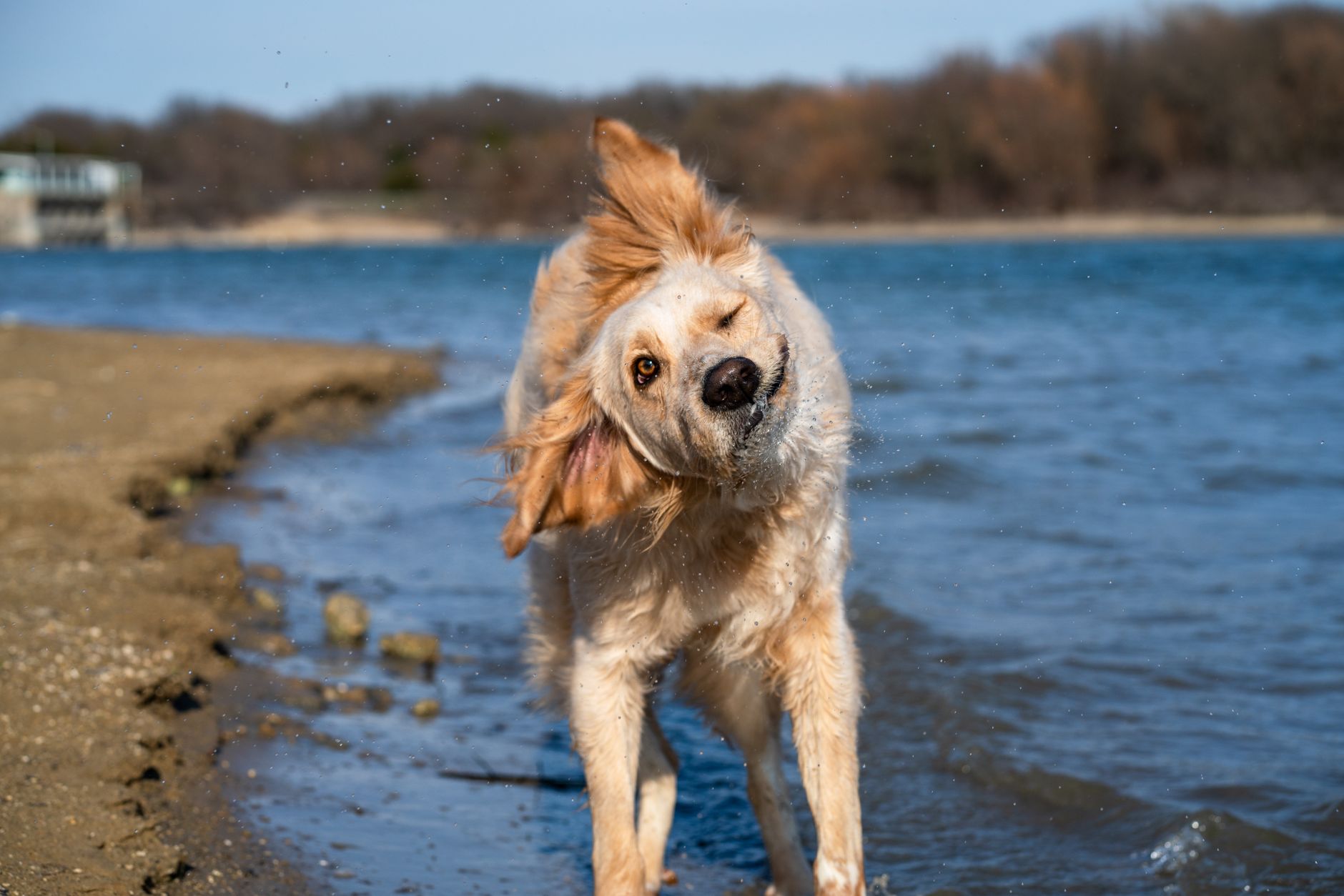
You are likely familiar with your dog shaking their entire body to dry off after a bath or a swim. But pay close attention the next time your dog does this when they are completely dry.
In my years treating dogs, I have noticed that dry ‘shake-offs’ almost always occur immediately after a stressful event has concluded. It is the canine equivalent of a human taking a deep, ragged sigh of relief.
Your dog is literally shaking off the excess adrenaline and resetting their nervous system. You will often see this after a veterinary exam, a tense encounter with another dog on a leash, or after you finish brushing their coat.
- A full-body shake starting at the muzzle and ending at the tail when the coat is dry
- Occurs immediately after a stressful or uncomfortable physical boundary is released
- Accompanied by a sudden loosening of the facial muscles and a deep exhale
- Acts as an emotional reset transition from a high-stress state back to baseline
6. The Subtle Front Paw Lift
When a pointing breed lifts a front paw in the field, it is a genetically programmed hunting behavior. However, when a dog of any breed lifts a single front paw in a non-hunting context, it signals something entirely different.
A lifted paw is a classic sign of hesitation, mild anxiety, and emotional conflict. The dog is literally frozen mid-step because they are unsure of whether it is safe to approach or if they should retreat.
I see this behavior constantly during physical examinations. If I reach for a dog’s paw to clip their nails and they slightly elevate the opposite paw, I know I must stop and reassess my approach to prevent escalating their fear.
- A single front paw raised slightly off the ground, often curled inward
- Occurs during introductions to new people, strange dogs, or unfamiliar objects
- Accompanied by a closed mouth, forward-facing ears, and a slightly lowered head
- Indicates a state of ‘paws-ing’ to gather information before making a decision

7. The ‘Freeze’ and Muscle Bracing
One of the most critical moments during a clinical assessment is the ‘freeze.’ Many owners mistake a quiet, perfectly still dog for a calm and cooperative patient.
In reality, a sudden cessation of movement is the ultimate warning sign before a bite. The dog has stopped moving because they are bracing their muscles, preparing to fight, flee, or defend themselves.
A truly relaxed dog has loose, fluid muscles and a soft, curving body posture. A stressed dog will look rigid, as if their muscles are carved out of stone.
If your dog freezes while you are brushing them, stop immediately.
Identifying the ‘Hard Look’
The freeze is almost always accompanied by a hard, unblinking stare directed at the trigger. The eyes will appear wide, and the jaw will be clamped shut.
8. Avoidance, Look-Aways, and the ‘Sniff-Away’
Dogs are incredibly polite social animals by nature. When they want to defuse a tense situation or signal that they mean no harm, they will actively avoid direct eye contact.
If you lean over your dog to kiss their head and they turn their chin away from you, they are politely asking you for space. If you ignore this subtle look-away, you are pushing them to use more obvious warning signals.
Another fascinating avoidance tactic I see is the ‘sniff-away.’ This is when a dog suddenly pretends to be intensely interested in a random blade of grass or a speck of dust on the floor to avoid interacting with an approaching stranger.
I always advise my clients to watch for these avoidance patterns during veterinary visits. If your dog is sniffing the door seam intensely, they are not sniffing for treats; they are trying to escape the social pressure of the room.
-
QUMY Dog Boots for Hot PavementBoots protect paws from hot pavement, ice, salt and rough trails
-
gonicc Professional Pet Nail ClippersRegular trims keep paws comfortable and prevent painful splitting, and a safety guard makes home trims easier
-
EHEYCIGA Foam Dog Stairs for Bed, 18 inPet stairs save small, senior and long-backed dogs from jumping on and off beds and sofas
Related Dog Guides
Frequently Asked Questions
Why does my dog yawn when I scold them?
When a dog yawns after being scolded, they are not showing boredom or defiance. This is a stress yawn, which is a classic appeasement gesture. Your dog is trying to defuse the tension and signal to you that they are not a threat.
Is a dog always happy if their tail is wagging?
No, a wagging tail simply indicates emotional arousal and excitement, not necessarily happiness. A stiff, high-vibrating wag can indicate threat or high tension, whereas a low, loose, sweeping wag usually suggests a relaxed state. Always look at the rest of the body before assuming a dog is friendly.
What does it mean when a dog’s ears are pinned back?
While fully pinned-back ears are a clear sign of fear or defense, subtle backwards ear tilts also indicate apprehension. In my practice, I often see dogs shift their ears slightly back when they are assessing a new environment. This shows they are vigilant and feeling uncertain about what might happen next.
Why does my dog lick my face when I am trying to correct them?
Face licking in this context is a submissive appeasement behavior, not a sign of affection. Your dog is reading your angry tone or body language and is attempting to pacify you to de-escalate the situation. It is an instinctual way of saying, ‘Please don’t hurt me, I am submissive.’
What should I do if my dog shows ‘whale eye’?
If you notice your dog showing ‘whale eye’ (the whites of their eyes), stop whatever you are doing immediately. Step back, give them space, and remove the trigger, whether it is a child hugging them, a brush, or another dog. Forcing the interaction can push them past their threshold, leading to a growl or a bite.
Why does my dog shake their body when they aren’t wet?
A dry shake-off is an emotional ‘reset’ button. Dogs use this physical movement to shake off excess adrenaline and tension after a stressful event has ended. It is a highly positive sign that they are actively trying to return to their baseline emotional state.
Sources & Further Reading
Final Thoughts
As pet owners, we have a duty of care to understand the species we share our homes with. Dogs are incredibly communicative, but they rely on us to learn their silent language rather than forcing them to speak louder.
When you learn to spot these twelve subtle signals, you will catch discomfort before it transforms into fear or aggression. I always tell my clients that a dog who feels understood is a dog who feels safe.
Start watching your companion’s eyes, ears, and posture today; they are telling you more than you ever realized.