
Himalayan Cat Eye Care: Cleaning Tear Stains on Flat-Faced Cats
 Himalayan Cat Eye Care: Cleaning Tear Stains on Flat-Faced Cats” loading=”lazy”>
Quick Summary
Himalayan cats are highly prone to tear staining because their flat, brachycephalic facial structure compresses their natural tear drainage pathways, forcing tears to overflow onto their face. Without proper daily hygiene using sterile, cat-safe solutions, this chronic moisture can lead to painful yeast and bacterial infections in their deep skin folds. Maintaining their eye health requires a gentle daily cleaning protocol, key environmental adjustments, and careful monitoring for signs of painful corneal ulcers.
As an Amazon Associate, we earn from qualifying purchases.
Popular with cat owners: Dog Harness · Cat Food · Scratching Post
In my twenty years of clinical practice, few breeds capture my heart quite like the gentle, blue-eyed Himalayan. These beautiful cats are famous for their sweet temperaments, but their unique brachycephalic facial anatomy presents a real challenge for their owners: chronic tear staining.
Every single week, clients bring their Himalayans to my clinic asking how to clean those stubborn, rusty tracks beneath their eyes. Today, I want to share the exact clinical protocols and daily hygiene routines I recommend to keep your Himalayan’s eyes healthy, clean, and completely pain-free.
Key Takeaways
- Himalayan tear staining is primarily caused by compressed tear ducts (epiphora) due to their flat facial structure.
- The reddish-brown color of tear stains comes from porphyrins, which are iron-rich molecules excreted in tears and saliva.
- Daily eye cleaning is a medical necessity, not just a cosmetic choice, to prevent painful yeast and bacterial dermatitis.
- Never use human makeup removers, hydrogen peroxide, or products containing tylosin tartrate on your cat’s face.
- Squinting, redness, or thick yellow discharge are warning signs of a corneal ulcer and require immediate veterinary attention.
- Simple environmental changes, like switching to ceramic bowls and reducing airborne dust, can significantly decrease tearing.
In This Article
- The Anatomy of Brachycephaly in Himalayans
- Why Do Tear Stains Turn Red and Smell Bad?
- Dr. Heller’s Step-by-Step Daily Eye Cleaning Protocol
- Choosing Safe Products (And What to Avoid)
- When is Tear Staining a Sign of a Serious Medical Issue?
- Preventative Environmental and Diet Tweaks
- Medical Interventions: What Your Vet Can Do
The Anatomy of Brachycephaly in Himalayans
When breeders selected for the flat-faced ‘extreme’ or ‘peke-face’ look in Himalayans, it fundamentally rearranged their skull anatomy. As a veterinarian, I look at these cats and see a complex anatomical puzzle.
Their eye sockets are remarkably shallow, which causes their large, expressive eyes to bulge slightly.
This shallow design means the eyelids cannot close fully over the eye during a normal blink, leading to rapid tear evaporation. To compensate, the lacrimal glands overproduce tears to keep the cornea lubricated.
This continuous overproduction overwhelms the eye’s natural capacity to contain fluids.
Furthermore, the natural drainage system—the nasolacrimal ducts—is kinked, compressed, or completely closed off by the shortened nasal bones. Instead of draining internally down the nose, the tears have nowhere to go but out, spilling directly onto the facial fur.
- Shallow eye sockets (exophthalmos) that prevent complete eyelid closure.
- Compromised nasolacrimal ducts that fail to drain tears to the nasal cavity.
- Abnormal eyelid margins (entropion) where the eyelashes rub against the cornea, causing irritation.
- Overactive lacrimal glands reacting to chronic wind exposure and dust.
Matilor Step-In Harness & Leash Set
- ✓Lightweight breathable air mesh
- ✓Step-in design, on in three steps
- ✓Leash included; machine washable
- Spreads pressure across the chest instead of the neck, which is safer for small and flat-faced breeds
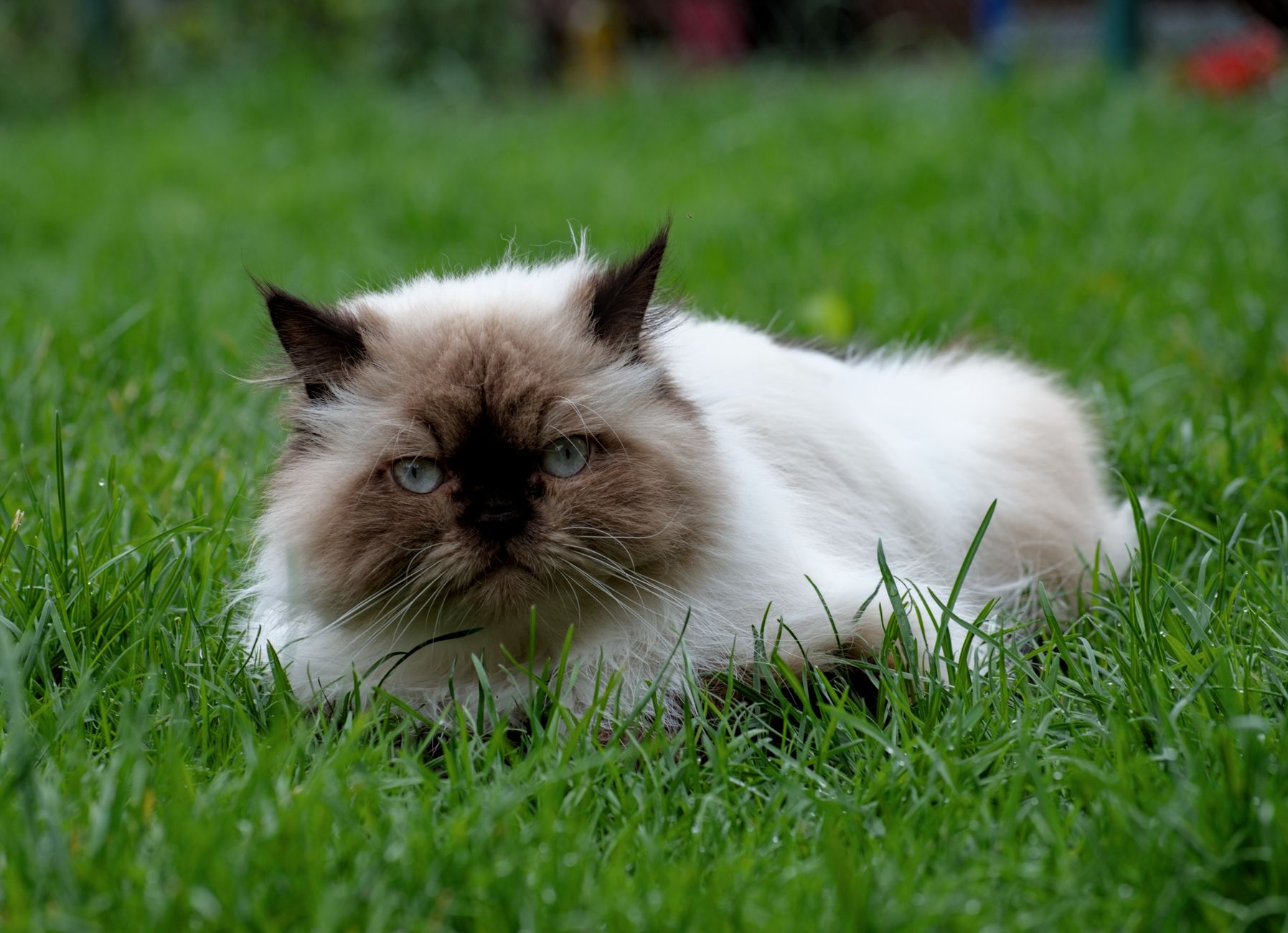
Why Do Tear Stains Turn Red and Smell Bad?
Many owners ask me why their Himalayan’s tears leave a dark, rust-colored stain on their pristine cream or white coats. The culprit is a group of naturally occurring, iron-containing molecules called porphyrins.
When these porphyrins are excreted in tears and saliva, they break down in the presence of light and oxygen, leaving a rusty iron stain behind.
But the color is only half of the problem. When facial fur is constantly damp from overflowing tears, it creates a warm, dark, and anaerobic microclimate.
This damp environment is a perfect breeding ground for opportunistic pathogens. Specifically, yeast (Malassezia) and bacteria thrive in these facial folds, producing a distinct, sour odor and causing painful skin irritation.
- Porphyrins break down into iron-rich pigments when exposed to air and sunlight.
- Constant moisture causes the skin under the fur to macerate, losing its protective barrier.
- Yeast infections (Malassezia) produce a characteristic musty or sour smell.
- Secondary bacterial infections can lead to painful, ulcerative dermatitis in the skin folds.

Dr. Heller’s Step-by-Step Daily Eye Cleaning Protocol
Cleaning a Himalayan’s eyes should be a gentle, daily ritual, not a stressful battle. I always tell my clients to perform this cleaning when their cat is calm and sleepy, perhaps after a meal.
Never rush this process, as a sudden jerk of the head can lead to accidental eye injury.
To start, gather your supplies before you bring your cat to the grooming area. You will need sterile gauze pads or cotton rounds, a high-quality veterinary eyewash, and a dry microfiber cloth.
Avoid loose cotton balls, as their fibers can easily shed and stick to the moist eyeball, causing further irritation.
Moisten your pad thoroughly with the eyewash, and gently press it against the crusty build-up around the tear ducts for about ten seconds to soften it. Then, wipe outward and downward, away from the eye itself.
- Preparation: Wash your hands and assemble sterile gauze pads, veterinary eye wash (isotonic saline), and a dry cloth.
- Softening: Hold a damp gauze pad against the crusty buildup for 10-15 seconds to soften the debris without rubbing.
- Wiping: Gently sweep the pad outward, away from the nose and eye. Never wipe across the eyeball itself.
- Drying: Use a clean, dry cloth or dry gauze to gently pat the skin folds dry, as moisture encourages bacterial growth.
- Rewarding: Immediately offer a high-value treat to build a positive association with the cleaning routine.
Purina Friskies Pate Wet Cat Food Variety Pack
- ✓Smooth pate texture
- ✓Seafood and chicken recipes
- ✓Complete and balanced adult nutrition
- A high-protein, complete diet suits cats’ needs as obligate carnivores

Choosing Safe Products (And What to Avoid)
The pet care market is flooded with ‘miracle’ tear stain removers, but many of these are dangerous for flat-faced cats. In my clinic, I have treated severe corneal ulcers caused by owners using harsh chemical removers too close to the eye.
You must be incredibly selective about what you apply to your Himalayan’s face.
I highly recommend sticking to sterile, isotonic saline solutions or veterinary-approved wipes containing mild, non-irritating cleansers. Look for ingredients like hyaluronic acid or chamomile, which soothe the skin without causing stinging if they accidentally contact the eye.
Historically, some products contained tylosin tartrate, an antibiotic. I strongly advise against using any tear stain removers containing antibiotics, as this contributes to global antimicrobial resistance and is completely unnecessary for cosmetic stains.
- DO USE: Sterile saline eyewash (0.9% sodium chloride) or veterinary-labeled ophthalmic wipes.
- DO USE: Mild, hypoallergenic products containing soothing agents like chamomile or coconut oil derivatives.
- AVOID: Hydrogen peroxide, bleach, or makeup removers, which can blind a cat if splashed in the eye.
- AVOID: Products containing tylosin tartrate or other antibiotics, unless explicitly prescribed by your vet for an active infection.

When is Tear Staining a Sign of a Serious Medical Issue?
While some level of tearing is normal for Himalayans, sudden changes in the volume, color, or consistency of the discharge are not. I often see owners assume that a squinting cat just has ‘bad allergies,’ when in reality, they are suffering from a painful corneal ulcer.
A corneal ulcer is a scratch on the surface of the eye. Because flat-faced cats have compromised blinking reflexes, they are highly susceptible to these painful injuries.
If you notice your cat squinting, keeping one eye closed, or if the discharge turns from clear to thick, yellow, or green, you must seek veterinary care immediately.
- Squinting, blinking excessively, or keeping one eye tightly shut (signs of pain).
- Thick, yellow, or greenish discharge, which indicates an active bacterial infection.
- Cloudiness or a bluish haze over the surface of the cornea.
- Swelling, intense redness, or inflammation of the conjunctiva (the pink tissue surrounding the eye).
The Danger of Corneal Ulcers
Because Himalayan eyes protrude, they easily get scratched by carpet fibers, toys, or claws. If left untreated, a simple scratch can quickly turn into a deep, melting ulcer that risks the entire eye.

Preventative Environmental and Diet Tweaks
Cleaning the eyes is a reactive measure, but we can also take proactive steps to reduce the volume of tears your Himalayan produces. In my practice, I find that simple changes to a cat’s immediate environment and diet can dramatically decrease tear staining.
For instance, switching your cat’s food and water bowls from plastic to ceramic, stainless steel, or glass is highly effective. Plastic bowls easily develop microscopic scratches that harbor bacteria, which transfer to your cat’s face during eating and drinking, causing localized inflammation.
Additionally, high levels of dust and airborne allergens can irritate a brachycephalic cat’s eyes, prompting excessive tearing. Switching to a low-dust, unscented clay litter or a natural paper-based litter can work wonders.
- Switch to stainless steel, glass, or ceramic food and water bowls.
- Use high-efficiency particulate air (HEPA) filters in rooms where your cat spends the most time.
- Select low-dust, unscented cat litters to minimize airborne dust particles.
- Provide filtered or distilled water, which can reduce the intake of excess minerals like iron that contribute to staining.

Medical Interventions: What Your Vet Can Do
Sometimes, home cleaning and environmental adjustments are not enough. If your Himalayan is struggling with chronic skin infections or severe epiphora, it is time to discuss medical options with your veterinarian.
We have several clinical tools at our disposal to help these unique cats.
In cases of severe, chronic skin fold dermatitis, we can prescribe topical antimicrobial ointments or specialized wipes that target both yeast and bacteria. If the facial folds are extremely deep and constantly infected, a surgical procedure called a medial canthoplasty can be performed to reshape the eyelids and reduce tear overflow.
We can also perform a fluorescein stain test to check for corneal scratches and evaluate if the nasolacrimal ducts are completely blocked. Occasionally, we can flush these ducts under light sedation to clear out debris and improve drainage.
-
MECOOL Sisal Cat Scratching PostA tall, sturdy post satisfies the urge to scratch and saves your furniture
-
Veken 95oz Pet Water FountainMoving, filtered water encourages pets to drink more, which supports kidney and urinary health
-
Rocco & Roxie Enzyme Stain & Odor EliminatorEnzyme cleaners break down urine and odour completely, which stops pets re-marking the same spot
Related Cat Guides
Frequently Asked Questions
How often should I clean my Himalayan cat’s eyes?
For most Himalayans, daily cleaning is necessary to prevent the accumulation of crust and bacteria. If your cat has excessive tearing (epiphora), you may need to wipe their eyes twice a day, especially in the morning and evening.
Is it safe to use baby wipes on my cat’s eyes?
No, you should never use human baby wipes on your cat’s face. Baby wipes often contain fragrances, alcohol, and cleansers that can cause severe corneal irritation or chemical burns if they contact the eyeball.
Why do my Himalayan’s tears turn rusty-red?
The reddish color is caused by porphyrins, which are naturally occurring iron-containing molecules excreted in feline tears, saliva, and urine. When these molecules sit on the fur and react with oxygen, they oxidize, leaving a rust-colored stain.
Can changing my cat’s diet reduce tear staining?
Yes, a high-quality, grain-free diet with limited fillers can sometimes reduce tearing by minimizing systemic inflammation and allergies. Feeding a diet low in iron and using purified water can also reduce the chemical compounds that cause the red staining.
What should I do if my Himalayan keeps one eye closed?
Keeping an eye squinted or closed is a sign of acute ocular pain and should be treated as a veterinary emergency. Your cat may have a corneal scratch, ulcer, or foreign body, which requires immediate medical treatment to prevent permanent vision loss.
Can I use human eye drops, like Visine, on my cat?
Absolutely not. Human redness-relief drops contain vasoconstrictors that are unsafe for cats and can mask serious underlying conditions while causing adverse systemic effects. Only use ophthalmic medications prescribed by your veterinarian.
Sources & Further Reading
- The Cat Fanciers’ Association (CFA)
- Cornell University College of Veterinary Medicine
- Merck Veterinary Manual
- International Cat Care
Final Thoughts
Caring for a Himalayan’s eyes requires consistency, patience, and a gentle touch, but the reward is a happy, healthy, and stunning companion. By implementing a daily cleaning routine with safe products and optimizing their living environment, you can easily manage the challenges of their flat-faced anatomy.
Remember to closely monitor their eyes for any subtle signs of pain, squinting, or unusual discharge. When in doubt, always reach out to your veterinarian to ensure your sweet pet’s eyes remain bright and comfortable.