
 Dachshund Back Health: Preventing Intervertebral Disc Disease” loading=”lazy”>
Quick Summary
Intervertebral Disc Disease (IVDD) is a common genetic condition in Dachshunds that causes the spinal cushioning discs to degenerate, bulge, or rupture suddenly. Protecting your Dachshund requires strict weight management, using ramps to eliminate high-impact jumping, and recognizing the early warning signs of back pain to seek immediate veterinary care.
In my years treating dogs with spinal issues, few sights are as heartbreaking as a paralyzed Dachshund. I have seen hundreds of these brave little dogs in my clinical practice, facing the sudden and painful onset of Intervertebral Disc Disease (IVDD).
Many owners come to me feeling utterly blindsided when their vibrant dog suddenly loses the use of their hind legs. I always tell my clients that IVDD is not a random stroke of bad luck; it is a genetically driven condition that we can proactively fight.
By understanding the anatomy of your Dachshund and implementing specific lifestyle changes, you can dramatically reduce their risk of a spinal crisis. Let’s walk through exactly what you need to do to protect your dog’s back.
Key Takeaways
- Dachshunds are genetically predisposed to premature spinal disc degeneration due to chondrodystrophy.
- Keeping your Dachshund at a lean Body Condition Score of 4 out of 9 is the single most effective preventative measure.
- Eliminate high-impact jumping entirely by installing ramps next to couches, beds, and blocking staircases.
- Learn to recognize the five grades of IVDD severity to determine when emergency surgery is required.
- Conservative medical management requires a non-negotiable, strict 8-week crate rest protocol.
- Never pull on your Dachshund’s neck; always use a Y-shaped chest harness instead of a collar for leash walks.
In This Article
- The Genetics of the Long and Low Build
- Understanding IVDD: Type I vs. Type II
- Spotting the Signs: The Neurological Grading Scale
- Weight Control: Your Most Powerful Preventative Tool
- Re-Engineering Your Home Environment
- Safe Exercise and Core Muscle Conditioning
- Medical Management: The Strict Crate Rest Protocol
- Surgical Intervention: When and Why It Is Necessary
The Genetics of the Long and Low Build
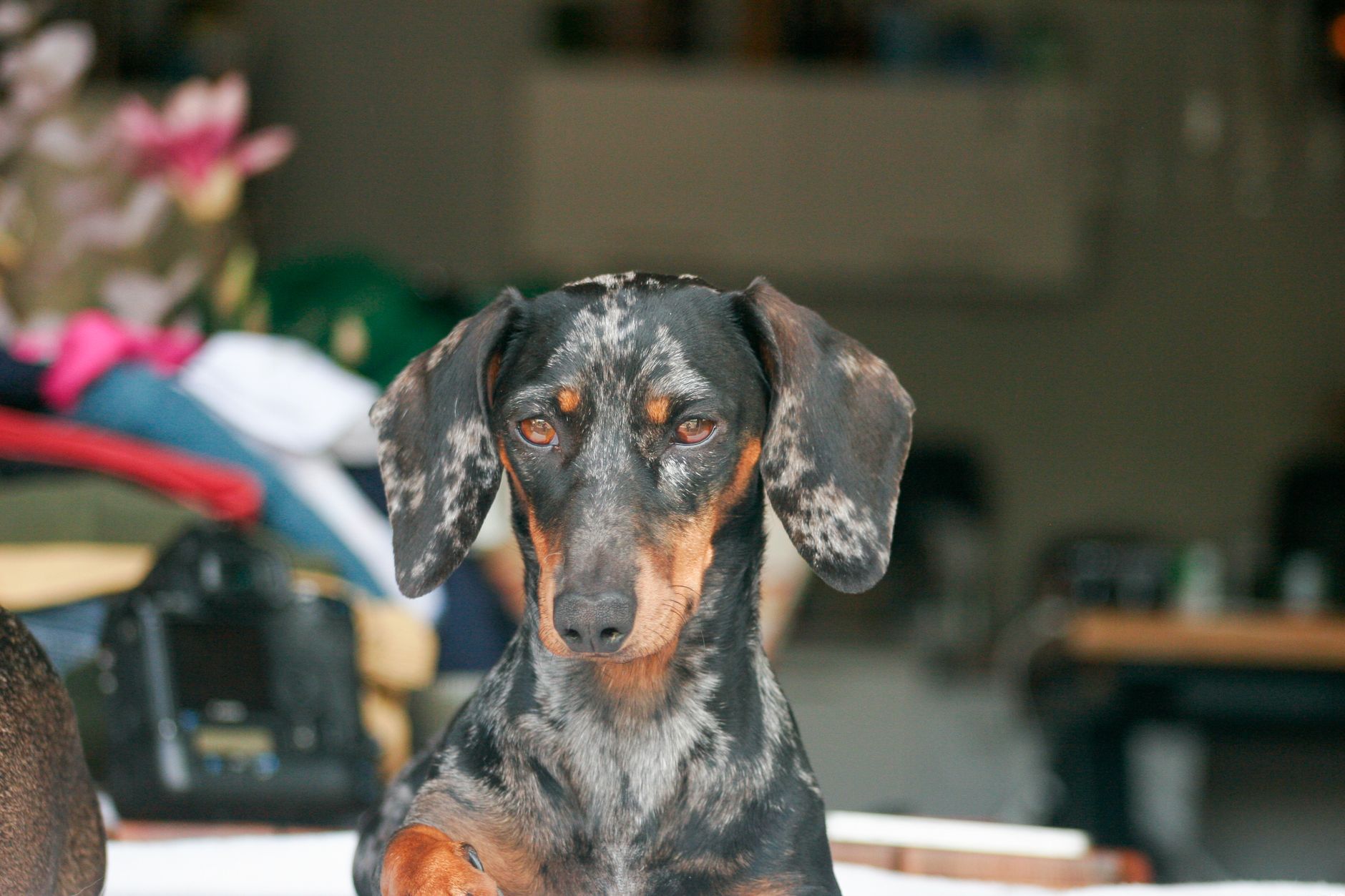
The charming, elongated shape of the Dachshund is beloved worldwide, but medically, it is classified as chondrodystrophy. In my clinic, I explain to clients that this breed’s dwarfism is caused by a specific genetic mutation.
This mutation causes the cartilage in their long bones to stop growing early, resulting in short, stubby legs. Crucially, this same genetic trait causes the cartilage in their spinal discs to age and degenerate prematurely.
The FGF4 Retrogene
Modern veterinary research has mapped this condition to an FGF4 retrogene insertion on chromosome 12. This gene is responsible for both the short limbs and the rapid calcification of intervertebral discs.
Brittle Discs
In normal dogs, spinal discs remain soft and gel-like throughout life. In Dachshunds, these discs can begin turning into brittle, chalky structures before the dog even reaches their first birthday.
Understanding IVDD: Type I vs. Type II
To effectively protect your dog, you must understand how Intervertebral Disc Disease (IVDD) actually damages the spinal cord. I often compare the spinal disc to a jelly donut.
The outer fibrous ring holds a soft, gel-like center that absorbs shocks as your dog moves. When a disc degenerates, this outer ring tears, allowing the inner material to escape or bulge outward.
The space inside the spinal canal is incredibly tight. Any misplaced disc material presses directly onto the sensitive spinal cord, causing intense pain, nerve damage, or paralysis.
- Hansen Type I (Acute Herniation): This is the most common form in Dachshunds, characterized by a sudden, explosive rupture of a calcified disc, often triggered by a jump.
- Hansen Type II (Chronic Protrusion): This is a slower, progressive bulging of the disc over months or years, more commonly seen in older dogs of non-dwarf breeds.
- The Inflammatory Cascade: The physical compression is only half the problem; the chemical irritation from the leaked disc material causes severe localized swelling.
Spotting the Signs: The Neurological Grading Scale
What I see most often in practice is owners missing the earliest, subtle signs of spinal pain. By the time they bring their dog to my clinic, the condition has often progressed to a severe neurological deficit.
To help veterinarians and owners assess severity, we use a grading scale from one to five. Recognizing where your dog falls on this scale determines whether they need conservative care or immediate, emergency surgery.
- Grade 1 (Mild to Severe Pain): The dog arches their back, trembles, holds their head down, or cries out when picked up, but walks normally.
- Grade 2 (Mild Ataxia): The dog is wobbly in their hind legs, crosses their paws when walking, but can still stand and support their weight.
- Grade 3 (Severe Ataxia/Paresis): The dog can still move their hind limbs but cannot support their weight or walk without assistance.
- Grade 4 (Paralysis with Deep Pain Sensation): The dog is completely paralyzed in the hind end but still has deep pain sensation when their toes are pinched.
- Grade 5 (Paralysis without Deep Pain): The dog is paralyzed and has lost all deep pain sensation, representing a catastrophic veterinary emergency.
Weight Control: Your Most Powerful Preventative Tool
If you only implement one preventative strategy from this guide, make it weight management. I tell my clients that every single extra ounce on a Dachshund acts as a heavy anchor on their long spine.
Overweight Dachshunds have a significantly higher rate of spinal disc ruptures than lean ones. Keeping your dog at their ideal weight is the cheapest and most effective way to avoid the surgery table.
The Target Body Condition Score
Your Dachshund should maintain a Body Condition Score (BCS) of 4 out of 9. You should easily feel their ribs with light pressure and see a distinct, upward-sloping waistline.
The Danger of Treats
A single commercial dog treat can equal ten percent of a miniature Dachshund’s daily caloric limit. Swap processed treats for low-calorie alternatives like green beans or raw baby carrots.
Re-Engineering Your Home Environment
Your home is full of structural hazards that put your Dachshund’s spine at risk every day. High sofas, tall beds, and steep stairs force these dogs to make high-impact landings that their spines cannot absorb.
In my years treating this breed, I have seen countless herniations triggered by a single leap off a living room couch. You must modify your home to eliminate these high-impact forces.
- Incorporate Sturdy Ramps: Place high-traction, gently sloped ramps next to all furniture your dog is allowed on, and train them to use them exclusively.
- Block Staircases Entirely: Install baby gates at both the top and bottom of all staircases to prevent repetitive, high-stress climbing.
- Lay Down Non-Slip Runners: Slick hardwood, laminate, or tile floors cause slipping, which hyperextends the spine and causes acute disc tears.
- Use a Y-Shaped Chest Harness: Never attach a leash to a collar, which concentrates pull forces on the neck. Use a supportive harness to distribute weight evenly.
Safe Exercise and Core Muscle Conditioning
Some owners are so terrified of IVDD that they keep their Dachshunds completely sedentary. I always explain that this is a dangerous mistake.
Without regular, safe exercise, your dog’s core muscles will atrophy and weaken. Strong abdominal and spinal muscles act as a natural, protective brace for their long back.
- Controlled Leash Walking: Walk your dog at a steady, moderate pace on flat surfaces to build muscle without twisting the spine.
- Gentle Passive Exercises: Perform ‘cookie stretches’ by holding a treat near their hip, encouraging them to bend their neck and spine gently without moving their feet.
- Avoid Torsional Activities: Do not play fetch with sharp turns, and avoid high-intensity tug-of-war games that cause violent head-shaking.
- Hydrotherapy Options: If available, underwater treadmill therapy is fantastic for building symmetrical muscle mass with zero concussive impact on the joints.

Medical Management: The Strict Crate Rest Protocol
When a Dachshund presents with Grade 1 or 2 IVDD, we often recommend conservative, non-surgical medical management. But let me be crystal clear: conservative does not mean easy.
This protocol requires absolute, uncompromised confinement to allow the torn disc to heal and scar over. If you cheat on this protocol even once, you risk a complete and permanent spinal rupture.
The 8-Week Crate Rule
Your dog must remain in a crate or a tiny playpen 24 hours a day for a full eight weeks. They are only allowed out on a short leash to eliminate, and must be immediately put back.
The Medical Regime
We prescribe anti-inflammatory medications, muscle relaxants, and nerve pain modulators like gabapentin. Never administer human pain medications or combine steroids with veterinary NSAIDs.
Surgical Intervention: When and Why It Is Necessary
For dogs with Grade 3, 4, or 5 IVDD, or those who fail conservative therapy, surgery is the gold standard treatment. We refer these patients to a board-certified veterinary neurosurgeon for a procedure called a hemilaminectomy.
This surgery involves removing a small piece of the vertebra to gain access to the spinal canal. The surgeon then meticulously removes the ruptured disc material to relieve the pressure on the compressed spinal cord.
- The 24-Hour Rule for Grade 5: If a dog loses deep pain sensation, surgery must be performed within 24 hours for the best chance of recovery.
- Post-Operative Confinement: Following surgery, dogs still require four to six weeks of strict crate rest to allow the surgical site to heal.
- Physical Rehabilitation: Under the guidance of a professional, safe post-op exercises like underwater treadmills and laser therapy speed up nerve regeneration.
Frequently Asked Questions
How long does a Dachshund need to rest after an IVDD flare-up?
For mild flare-ups treated conservatively, a minimum of 6 to 8 weeks of strict crate rest is required. This time is necessary for the damaged outer ring of the disc to form strong scar tissue. Resting for any less time significantly increases the risk of a severe re-rupture.
Can my Dachshund use stairs if they are carpeted?
No, carpeted stairs are still incredibly stressful on a Dachshund’s spine. The repetitive motion of climbing up and down puts extreme torsional forces on their lower back. It is always safest to block stairs off completely with baby gates.
Are male or female Dachshunds more prone to IVDD?
Research shows no significant statistical difference in IVDD rates between male and female Dachshunds. Both sexes carry the same FGF4 retrogene that causes early disc degeneration. Preventative lifestyle habits are equally crucial for both males and females.
What should I do if my Dachshund suddenly cannot walk?
This is an absolute veterinary emergency. Keep your dog completely still, place them in a secure carrier, and transport them immediately to the nearest veterinary emergency hospital. Do not wait to see if they improve overnight, as hours can make the difference between walking again or permanent paralysis.
Is a joint supplement helpful for preventing IVDD?
While joint supplements like glucosamine and chondroitin are excellent for arthritis, they do not prevent IVDD. IVDD is a genetic condition affecting the spinal discs, not the joint cartilage of the limbs. However, they are still highly beneficial for general mobility and supporting overall musculoskeletal health.
Can a dog lead a happy life in a wheelchair after IVDD?
Yes, absolutely. Many Dachshunds who do not regain deep pain sensation or mobility adapt beautifully to custom rear-support wheelchairs. They can run, play, and live incredibly happy, active lives as long as their owners manage their bladder care properly.
Sources & Further Reading
- American Veterinary Medical Association (AVMA)
- Cornell University College of Veterinary Medicine
- Merck Veterinary Manual
Final Thoughts
Caring for a Dachshund means accepting the responsibility of protecting their delicate, elongated spine from the day you bring them home. In my clinical experience, the dogs who avoid the surgery table are those whose owners made non-negotiable lifestyle changes early on.
Keep your dog lean, block the high surfaces, and never skip their core-strengthening walks. If you do notice any signs of back pain or wobbliness, remember that hours count—get to your veterinarian immediately.
With the right preventative measures and quick action, you can help your long-bodied companion live a long, pain-free, and active life.