
German Shepherd Hip Dysplasia: Early Signs and Prevention
 German Shepherd Hip Dysplasia: Early Signs and Prevention” loading=”lazy”>
Quick Summary
German Shepherd hip dysplasia is a hereditary, developmental skeletal condition where the hip’s ball-and-socket joint does not fit together smoothly, leading to progressive wear, pain, and arthritis. Early identification through subtle gait changes and proactive management—such as strictly controlled puppy growth rates, joint-supporting nutrition, and non-impact exercise—can dramatically preserve a dog’s mobility and quality of life.
As an Amazon Associate, we earn from qualifying purchases.
Popular with dog owners: Hip & Joint Supplement · Orthopedic Dog Bed · Pet Gate
In my fifteen years as a practicing veterinarian, few things are as heartbreaking as watching a noble, high-drive German Shepherd struggle to stand up from their orthopedic bed. Hip dysplasia is a diagnosis that strikes fear into the hearts of German Shepherd owners, and for good reason.
It is one of the most common skeletal conditions I diagnose in my clinic, affecting countless dogs of this magnificent breed. But a diagnosis does not mean a life of misery.
With early detection and a proactive, multi-layered prevention plan, we can keep these active dogs running, playing, and thriving for many years.
Key Takeaways
- Hip dysplasia is primarily genetic but heavily influenced by rapid growth, weight, and high-impact exercise during puppyhood.
- Early warning signs like the ‘bunny hop’ gait or hesitancy to climb stairs can appear as early as four months of age.
- Radiographs (X-rays) under sedation remain the gold standard for diagnosing joint laxity before severe arthritis sets in.
- Strict weight management is the single most effective non-surgical way to protect a dysplastic dog’s joints from painful wear.
- Veterinary-strength joint supplements (Glucosamine, Chondroitin, and Omega-3 fatty acids) should be started early under medical guidance.
- Modern surgical options range from preventative juvenile procedures to total hip replacements in mature dogs.
In This Article
- The Anatomy of a Loose Joint
- Spotting the Early Signs in German Shepherd Puppies
- Recognizing Symptoms in Mature and Adult Dogs
- The Veterinary Diagnostic Toolkit
- Prevention Strategy 1: Pediatric Nutrition and Slow Growth
- Prevention Strategy 2: Safe Exercise and Activity Modification
- Medical and Joint Support Interventions
- Surgical Options: When Prevention Isn’t Enough
The Anatomy of a Loose Joint
To understand how to prevent this condition, we first have to look at what is happening inside the pelvic region of your dog. A healthy canine hip is a tight, smoothly operating ball-and-socket joint.
The femoral head (the ball) should sit deeply and snugly within the acetabulum (the socket) of the pelvis.
In a German Shepherd with hip dysplasia, this fit is inherently loose. This structural laxity causes the bones to rub, grind, and slip against one another instead of sliding smoothly.
Over time, this constant mechanical friction destroys the protective articular cartilage, leading to bone spurs, chronic inflammation, and painful osteoarthritis.
What I see most often in practice is that owners assume this is strictly an old dog’s disease. In reality, the structural joint laxity begins when they are young puppies, even if the painful arthritis doesn’t manifest until later in life.
Nutramax Cosequin Joint Supplement for Dogs
- ✓#1 vet-recommended retail joint supplement brand
- ✓Glucosamine and chondroitin sulfate
- ✓For young and senior dogs, small and large breeds
- Glucosamine and chondroitin chews support cartilage and mobility, especially in large, senior and dysplasia-prone dogs
Spotting the Early Signs in German Shepherd Puppies
Puppies can begin showing the first structural signs of hip dysplasia between the ages of four and twelve months. Because puppies are naturally clumsy, many owners overlook these warning signs, attributing them to normal developmental awkwardness.
I always tell my clients to watch their puppy’s rear-end mechanics closely during daily play. Early detection during this rapid growth phase opens the door to juvenile surgical interventions that are no longer options once the growth plates close.
- The ‘bunny hopping’ gait, where the puppy moves both hind legs together simultaneously instead of in an alternating stride.
- Sudden reluctance to jump onto the couch, climb stairs, or play with other energetic dogs.
- A noticeable ‘swaying’ or ‘wobbling’ motion of the hips when walking slowly.
- Hind limbs that sit unusually close together (a narrow stance) when standing still.
- Audible clicking or popping sounds coming from the pelvic area during movement.

Recognizing Symptoms in Mature and Adult Dogs
In adult German Shepherds, the clinical signs shift from joint laxity to the manifestations of chronic pain and osteoarthritis. This is where I see dogs beginning to lose their working-dog spark.
Adult dogs are masters at hiding chronic discomfort. They do not always whine or limp; instead, they slowly withdraw from activities they once loved or display subtle behavioral shifts that owners might misinterpret as ‘mellowing out’ with age.
- Severe stiffness in the hindquarters after resting, which may improve slightly once the dog warms up.
- Loss of muscle mass (atrophy) in the thighs, paired with overly developed shoulder muscles from shifting weight forward.
- A flat-backed or roached-back posture as the dog arches their spine to relieve pressure on the pelvis.
- Irritability or uncharacteristic growling when touched near the lower back, hips, or hind legs.
- Difficulty rising from a lying position, often requiring them to pull themselves up using their front legs first.

The Veterinary Diagnostic Toolkit
When a client brings me a German Shepherd showing signs of hind limb weakness, a physical exam is only the first step. I will perform a complete orthopedic assessment, manually checking the range of motion and feeling for joint crepitus (grinding).
VetIQ Glucosamine Hip & Joint Chews
- ✓Soft chews dogs take like a treat
- ✓Glucosamine to support mobility
- ✓Good for senior dogs
- Glucosamine and chondroitin chews support cartilage and mobility, especially in large, senior and dysplasia-prone dogs
However, a definitive diagnosis requires specialized imaging. We cannot accurately grade the severity of hip dysplasia or plan a treatment path based on a physical exam alone.
PennHIP vs. OFA Evaluations
The Orthopedic Foundation for Animals (OFA) and PennHIP are the two primary screening methods we use. OFA provides a subjective grade based on X-rays taken after two years of age, while PennHIP measures actual joint laxity and can be performed as early as 16 weeks, which is invaluable for early intervention.
The Value of Sedated Radiographs
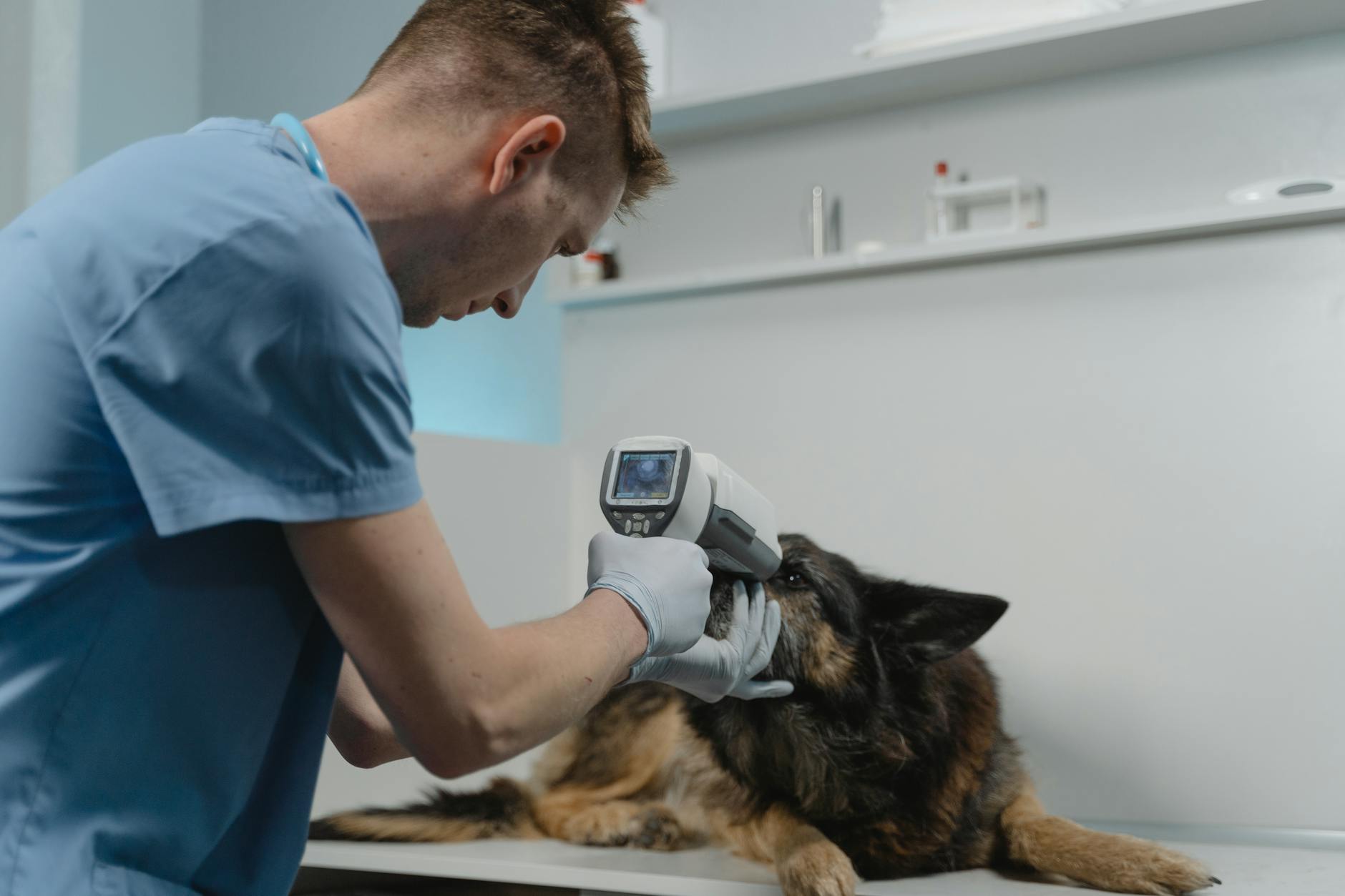
To get clear, diagnostic X-rays of a dog’s pelvis, deep sedation or light anesthesia is highly recommended. This allows us to fully relax the dog’s powerful hip muscles, ensuring we can position the joints properly without causing pain or stress to the patient.
Prevention Strategy 1: Pediatric Nutrition and Slow Growth
If you take only one thing away from this post, let it be this: keep your German Shepherd puppy lean and grow them slowly. Feeding a large breed puppy too many calories triggers rapid skeletal growth, but their muscles and ligaments cannot keep pace to support the heavy bone structure.
This developmental mismatch is a primary driver of joint laxity. I advise my clients to completely skip standard ‘all-life-stages’ kibbles and stick strictly to premium, scientifically formulated large-breed puppy foods.
- Target a slow, steady growth curve rather than aiming for the largest, heaviest puppy in the litter.
- Maintain a strict body condition score of 4 out of 9, where you can easily feel the ribs and see a defined waistline.
- Keep the dietary calcium-to-phosphorus ratio precisely balanced between 1.1:1 and 1.3:1 to prevent abnormal bone development.
- Avoid free-feeding; instead, use measured, scheduled meals twice or thrice daily to tightly monitor caloric intake.
- Never supplement a balanced large-breed puppy food with extra calcium pills, as this can severely disrupt skeletal maturation.

Prevention Strategy 2: Safe Exercise and Activity Modification
German Shepherds are high-energy dogs that love to run, fetch, and jump. However, high-impact activities during their first 12 to 18 months of life can do irreversible damage to their developing growth plates and joints.
We must find a balance between fulfilling their high drive and protecting their fragile musculoskeletal system. I recommend focusing on low-impact mental stimulation and controlled physical exercise until their growth plates have completely fused.
- Avoid repetitive, high-impact activities like fetching frisbees, agility jumping, or long runs on hard pavement.
- Focus on swimming or underwater treadmill therapy, which builds excellent cardiovascular fitness and muscle strength without joint stress.
- Use long-line scent work or nose work to tire them out mentally without putting physical strain on their hips.
- Cover slick tile or hardwood floors with non-slip runner rugs to prevent painful slip-and-slide injuries that strain the hip joints.

Medical and Joint Support Interventions
When we diagnose joint laxity early, or when we are managing an adult dog with mild-to-moderate dysplasia, non-surgical medical management is incredibly effective. The goal is simple: reduce inflammation, protect remaining cartilage, and control pain.
In my practice, I utilize a multi-modal approach. We combine dietary supplements with targeted veterinary pharmaceuticals to tackle the problem from multiple biological pathways simultaneously.
- High-quality Omega-3 fatty acids (specifically EPA and DHA) to naturally block the inflammatory cascade in the joints.
- Glucosamine and chondroitin sulfate to provide the essential cellular building blocks for cartilage repair.
- Adequan (polysulfated glycosaminoglycan) injections to help inhibit the enzymes that degrade joint fluid and cartilage.
- Non-steroidal anti-inflammatory drugs (NSAIDs) prescribed by your vet for targeted pain relief during flare-ups.
- Cold laser therapy and canine acupuncture to stimulate blood flow and reduce localized muscle tension around the hips.
Surgical Options: When Prevention Isn’t Enough
Sometimes, despite our best preventative efforts, a German Shepherd’s hip dysplasia is simply too severe for medical management alone. Fortunately, veterinary medicine has made incredible advancements in orthopedic surgery.
The ideal surgical procedure depends heavily on the dog’s age, weight, and whether osteoarthritis has already developed in the joint.
Juvenile Surgical Procedures
For young puppies under five months, a minimally invasive procedure called Juvenile Pubic Symphysiodesis (JPS) can alter pelvic growth to improve hip coverage. For puppies under ten months without arthritis, a Double or Triple Pelvic Osteotomy (DPO/TPO) can rotate the socket over the ball.
Salvage Procedures for Mature Dogs
In adult dogs with severe, painful arthritis, we look at salvage surgeries. A Femoral Head Ostectomy (FHO) removes the painful ball joint entirely, while a Total Hip Replacement (THR) replaces the entire joint with prosthetic implants, restoring near-normal, pain-free function.
-
CWAWZ Orthopedic Cooling Gel Memory Foam Dog Bed, XLSupportive foam cushions hips and joints, ideal for large, senior or dysplasia-prone dogs
-
Regalo Easy Step Walk-Through Gate, 29-38.5 inA pet gate keeps a new puppy safe and out of rooms they’re not ready for
-
Diamond Naturals Large Breed Puppy Food, Lamb & RiceControlled calcium and calories help big puppies grow at a steady pace, which protects their developing joints
Related Dog Guides
Frequently Asked Questions
Can I prevent hip dysplasia if my German Shepherd has the genetics for it?
You cannot change their DNA, but you can alter how those genes express themselves. Proper weight management, slow puppy growth, and low-impact exercise can prevent or significantly delay the onset of clinical symptoms and arthritis.
At what age does hip dysplasia usually show up in German Shepherds?
Early structural signs can be detected via PennHIP X-rays as early as 16 weeks, while physical symptoms like bunny hopping often appear between 4 to 12 months. In other dogs, the condition remains silent until arthritis develops in their mature adult years.
Is walking good for a German Shepherd with hip dysplasia?
Yes, controlled, low-impact walking on a leash is highly beneficial for maintaining the supporting hind limb muscle mass. Avoid letting them run excessively on hard surfaces or chase toys at high speeds, which places sudden rotational stress on the hips.
What is the life expectancy of a German Shepherd with hip dysplasia?
With modern veterinary care, weight management, and pain control, most dogs with hip dysplasia live a full, normal lifespan. The condition affects their mobility and comfort rather than their lifespan itself, provided their pain is actively managed.
Should I breed my German Shepherd if they have mild hip dysplasia?
Absolutely not. Hip dysplasia is a highly heritable genetic trait, and breeding affected dogs—even those with mild cases—perpetuates the disease in future generations. All breeding stock should clear OFA or PennHIP testing first.
Are there natural alternatives to NSAIDs for managing hip pain?
While natural options like high-dose marine-derived Omega-3s, green-lipped mussel, and turmeric can help reduce inflammation, they are rarely enough on their own for severe cases. They should be used to complement, not completely replace, veterinary-prescribed pain management.
Sources & Further Reading
- American Veterinary Medical Association (AVMA)
- Merck Veterinary Manual
- Cornell University College of Veterinary Medicine
Final Thoughts
Managing German Shepherd hip dysplasia is a marathon, not a sprint, but it is a race you can absolutely win. As a veterinarian, I have seen hundreds of dysplastic dogs live incredibly happy, active, and long lives because their owners took action early.
By focusing on keeping your dog lean, feeding them for slow growth, and pursuing an early veterinary diagnosis, you are giving them the best gift possible. Never hesitate to advocate for your dog’s joint health, starting from the very first puppy exam.
Together with your family vet, you can build a customized plan that keeps your noble companion walking comfortably by your side for years to come.