
Dog Separation Anxiety: Signs, Causes and a Step-by-Step Fix
Quick Summary
Dog separation anxiety is a serious clinical panic disorder, not a behavioral act of spite or poor training. Successfully treating it requires a structured combination of systematic desensitization, environmental modification, and often temporary veterinary-prescribed pharmaceutical support. As a clinical veterinarian, I have found that a patient, step-by-step approach focusing on sub-threshold training yields the most reliable, permanent recovery for affected dogs.
As an Amazon Associate, we earn from qualifying purchases.
Popular with dog owners: Pet Camera · Calming Chews · Lick Mat
In my years treating dogs with this heartbreaking condition, I have seen countless exhausted owners at their wits’ end. They often come to my clinic believing their dog is acting out or destroying the house out of anger.
I always tell my clients right away: your dog is not seeking revenge. They are experiencing a profound, biological panic attack.
Understanding this distinction is the first step toward healing. Let’s look at how we can identify the true clinical signs, target the root causes, and implement a medical-grade plan to help your dog feel safe alone.
Key Takeaways
- Separation anxiety is a clinical panic disorder, not spiteful or destructive behavior.
- True separation anxiety signs include hypersalivation, self-inflicted injury, and escape attempts.
- Desensitization training must keep the dog below their panic threshold at all times.
- Simple departure cues like picking up keys must be uncoupled from the actual departure.
- Veterinary-prescribed medications are often crucial tools to lower panic and facilitate learning.
- Punishing a dog for separation-related destruction will severely worsen their anxiety.
- Remote cameras are essential tools for accurately tracking your dog’s behavioral progress.
In This Article
- The True Face of Separation Anxiety: Signs vs. Normal Boredom
- The Underlying Triggers: Why This Panic Happens
- The Step-by-Step Fix: Systematic Desensitization
- Setting Up the Environment: Creating a Safe Space
- The Medical Toolbox: Medication and Supplements
- Critical Pitfalls: What You Must Avoid
- Tracking and Measuring Progress
The True Face of Separation Anxiety: Signs vs. Normal Boredom
What I see most often in practice is a misunderstanding of what separation anxiety actually looks like. Many owners confuse a young, bored dog who chews a shoe with a dog suffering from clinical panic.
When a dog is bored, they usually destroy items scattered around the house. When a dog has separation anxiety, their focus is almost entirely on barriers like doors, window frames, and crates as they attempt to escape and find you.
In my clinic, I ask owners to look for physiological markers of stress. These markers represent a real fight-or-flight response that the dog cannot control.
- Heavy drooling or pooling saliva, especially around doors and crates.
- Frantic, destructive chewing specifically focused on exit pathways like door frames.
- Continuous howling, whining, or high-pitched barking that begins immediately after you leave.
- Dilated pupils and rapid, shallow panting even in a cool room.
- House-soiling in an otherwise perfectly potty-trained adult dog.
TKENPRO 2K Pet Camera with Treat Dispenser
- ✓2K video
- ✓Treat dispenser with 0.5L capacity
- ✓Auto-generated highlight videos
- Lets you check in, talk to your pet and spot problems while you’re out
The Velcro Dog Distinction
Many people ask me if their shadow-like ‘Velcro’ dog has separation anxiety. A Velcro dog follows you everywhere but can still settle when you leave.
A dog with true separation anxiety lacks the ability to self-soothe once the primary attachment figure is gone.

The Underlying Triggers: Why This Panic Happens
In my clinical experience, separation anxiety rarely stems from a single isolated event. Instead, it is typically a complex mix of genetic predisposition, early developmental factors, and sudden environmental changes.
We see high rates of this condition in shelter dogs who have experienced multiple rehoming events. The loss of a stable attachment figure sensitizes their nervous system to future losses.
However, even dogs with stable puppyhoods can develop the condition. A sudden change in your household routine is often the tipping point.
- A sudden shift in owner work schedules, such as returning to the office after working from home.
- A recent move to a new, unfamiliar house or apartment.
- The loss of a family member, whether a human or another household pet.
- Early maternal separation or poor socialization during the critical window before 16 weeks of age.

The Step-by-Step Fix: Systematic Desensitization
The golden rule of treating separation anxiety is systematic desensitization. This means gradually exposing your dog to short periods of separation, always staying below their threshold of panic.
If your dog starts whining at three minutes, your starting training limit is one minute. We must rewrite the brain’s association with being alone from terrifying to boring.
This process takes time and consistency. I tell my clients to treat this like physical therapy for a severe injury: shortcutting the recovery process will only cause a painful relapse.
- Step 1: Identify the exact time marker when your dog begins to show subtle stress signs.
- Step 2: Practice leaving the house for mere seconds, returning before any anxiety begins.
- Step 3: Gradually increase the time you stand outside the door, advancing by only 10 to 30 seconds per session.
- Step 4: Use a remote pet camera to monitor body language in real-time during training.
- Step 5: Keep your exits and entries completely boring; do not hug or talk to your dog for 10 minutes before leaving or after returning.
Purina Pro Plan Calming Care Dog Supplement
- ✓Probiotic powder that supports calm behavior
- ✓Helps with separation, noises and new places
- ✓Sprinkle on food once a day
- Calming chews help take the edge off stressful moments like storms, fireworks and car rides
Deconstructing Departure Cues
Your dog is highly observant and recognizes pre-departure cues like picking up keys, putting on shoes, or applying makeup. I advise owners to perform these actions repeatedly throughout the day without actually leaving the house to break the association.

Setting Up the Environment: Creating a Safe Space
The physical environment plays a major role in how your dog copes when alone. However, many owners unknowingly make the environment more stressful by confining a panicking dog.
In my practice, I frequently see dogs break teeth or tear claws trying to escape from metal wire crates. If your dog exhibits crate claustrophobia, a secure, puppy-proofed room is often a much safer alternative.
We want to saturate the environment with sensory signals that promote safety and relaxation.
- Plug-in canine pheromone diffusers (like Adaptil) placed near your dog’s primary resting area.
- White noise machines or classical music played at a moderate volume to mask external triggers.
- Providing high-value interactive toys, like a Kong stuffed with frozen wet food, only when you are leaving.
- Blocking visual access to windows to prevent external stimuli from keeping your dog in an elevated state of alert.

The Medical Toolbox: Medication and Supplements
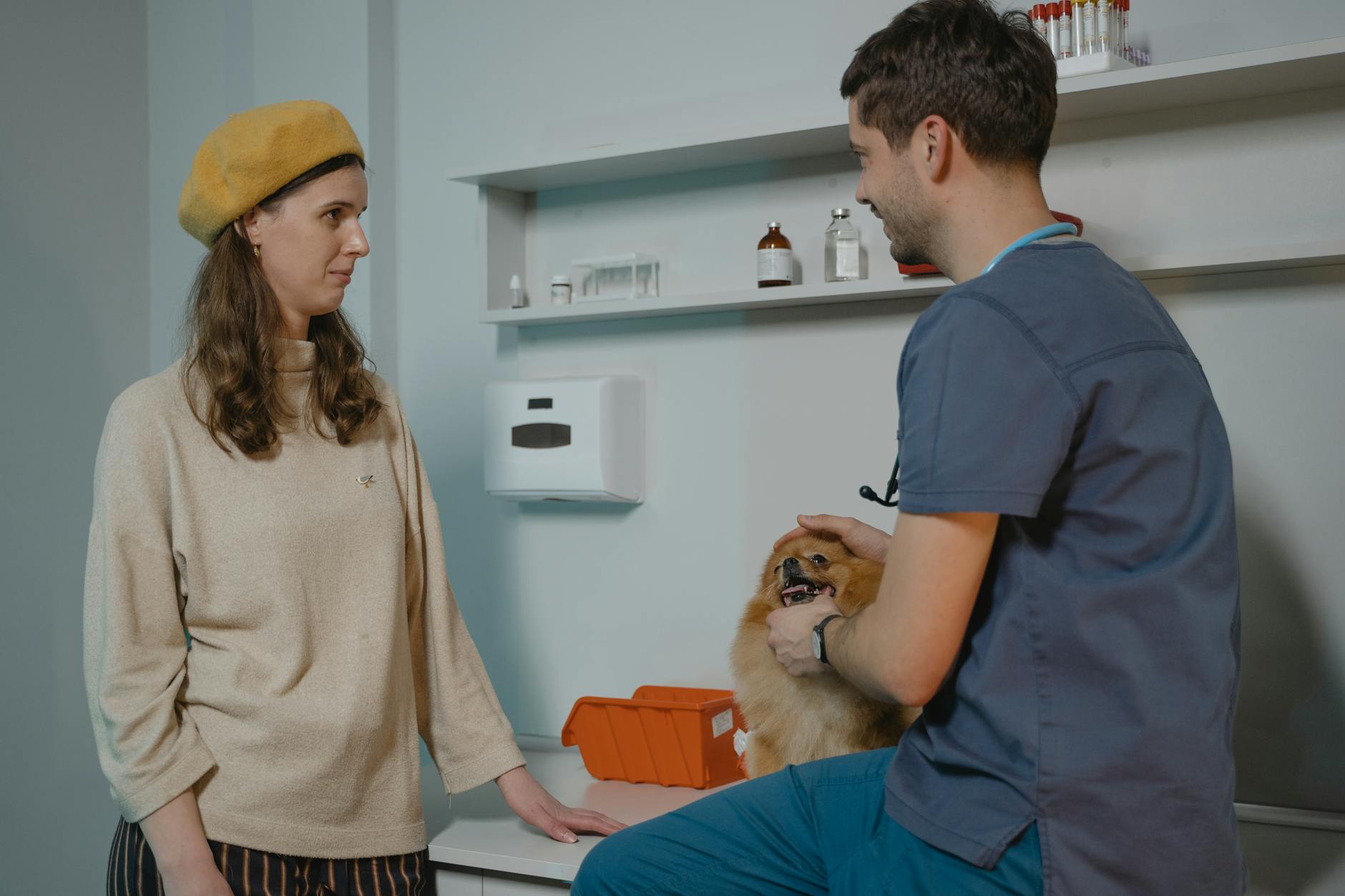
There is a common misconception that using behavioral medication is a cop-out or a way to sedate a dog. I fight this myth daily in my clinic.
When a dog is in a state of clinical panic, their brain cannot learn. Medication is not used to sedate them, but rather to lower their baseline anxiety so that behavioral training can actually take root.
In veterinary medicine, we divide these medical tools into two main categories: daily maintenance medications and short-acting situational aids.
- Daily SSRIs (like Fluoxetine) or TCAs (like Clomipramine) to stabilize brain chemistry over several weeks.
- Situational gabapentin, trazodone, or clonidine given two hours before departures to block acute panic.
- High-quality daily calming supplements containing L-theanine, Alpha-Casozepine, or clinically-backed probiotics.
- Regular veterinary bloodwork checks to monitor liver and kidney function while your dog is on daily medications.
Medication is a Bridge, Not a Cure
I always emphasize that medication alone will not cure separation anxiety. It must be paired with the desensitization exercises described above to build lasting, positive neural pathways in your dog’s brain.
Critical Pitfalls: What You Must Avoid
When dealing with separation anxiety, well-meaning actions can easily backfire and worsen the problem. Avoid trying to solve the problem with quick fixes that do not address the core emotional state of your dog.
One of the most damaging mistakes I see is the use of punishment. Punishing a dog for urinating or chewing while you were away is not only cruel, it is counterproductive.
Your dog will associate your return with fear and punishment, which will dramatically increase their overall anxiety levels next time you prepare to leave.
- Never use bark collars, shock collars, or physical punishment for separation-related behaviors.
- Avoid leaving your dog alone for long stretches while you are in the initial, fragile stages of training.
- Do not buy a second dog solely to solve the problem; separation anxiety is about attachment to you, not a general fear of being alone.
- Never make a grand show of your departures or homecomings, as this highlights the transition from safe to unsafe.

Tracking and Measuring Progress
Because behavior modification happens in tiny increments, it is easy to feel like you are not making progress. I recommend my clients keep a digital or physical training log to track daily success.
Measuring the exact duration of calm departures helps you spot patterns. You might notice your dog struggles more on Monday mornings or rainy days, allowing you to adjust your training setup.
Remember that recovery is never a straight line. Relapses are normal, and having a log helps you see how far you have actually come.
- Record the day, time of departure, duration of the absence, and your dog’s peak anxiety score from 1 to 5.
- Note physical indicators, such as whether your dog ate their high-value treat while you were gone.
- Track environmental variables like weather, exercise levels prior to the departure, and background noise.
- Review your logs weekly with your veterinarian or a certified veterinary behaviorist to fine-tune your approach.
-
ChefAide Lick Mat for Dogs, 2 PackLicking is naturally calming, so a lick mat with spread-on food helps during baths, nail trims and storms
-
Blue Buffalo Life Protection Senior 7+ Dog Food, ChickenFewer calories and added joint support help older dogs stay lean and mobile
-
Zuke’s Mini Naturals Training Treats, Peanut Butter & OatsSmall, soft treats are quick to eat, so you can reward the right moment and keep training sessions moving
Related Dog Guides
Frequently Asked Questions
Can dog separation anxiety develop suddenly in older dogs?
Yes, older dogs can suddenly develop separation-related distress. In senior pets, this is frequently linked to cognitive decline, vision or hearing loss, or underlying systemic pain that makes them feel more vulnerable when left alone. A full physical exam and blood panel are essential first steps for senior dogs.
Will getting another dog help my dog’s separation anxiety?
Rarely. True separation anxiety is an attachment panic focused specifically on the human guardian, not a general dislike of being alone. Adding another pet usually results in you having two dogs in the house, one of whom is still panicking because you are not there.
How long does it take to resolve separation anxiety?
This is a marathon, not a sprint. Depending on the severity, it can take anywhere from a few weeks to several months of daily, consistent training to see significant, reliable progress. Consistency and staying below the dog’s panic threshold are the keys to long-term success.
Should I let my dog ‘cry it out’ when I leave?
Absolutely not. Letting a dog cry it out will flood their nervous system with stress hormones, worsening their panic and cementing the idea that your departure is a life-threatening crisis. Always intervene or return before your dog reaches a state of full-blown panic.
Are certain dog breeds more prone to separation anxiety?
While any breed can suffer from this condition, we do see higher rates in highly social working, herding, and toy breeds. Breeds like Border Collies, German Shepherds, Toy Poodles, and Labrador Retrievers can be more susceptible, as well as dogs rescued from shelter situations.
Sources & Further Reading
Final Thoughts
Managing a dog with separation anxiety is undeniably challenging, but I want you to know that recovery is entirely possible. In my clinical career, I have seen dogs go from self-injuring panic to sleeping peacefully on the sofa for hours while their owners are away.
The secret lies in patience, recognizing that your dog is suffering from a medical condition, and utilizing a structured, step-by-step approach. Please do not hesitate to reach out to your veterinarian to discuss behavior therapy and supportive medications.
Together, we can restore peace of mind to both you and your beloved companion.