

Quick Summary
Leash pulling is more than just an annoying habit; it is a major clinical risk factor for tracheal collapse, cervical spinal injury, and chronic thyroid inflammation in dogs. Successfully stopping this behavior requires understanding canine biomechanics, switching to non-restrictive front-clip harnesses, and consistently applying positive reinforcement training like the ‘Red Light, Green Light’ method. By addressing the root causes of pulling, you protect your dog’s physical health while strengthening your mutual bond.
As an Amazon Associate, we earn from qualifying purchases.
Popular with dog owners: Treat Pouch · No-Pull Harness · Dog Stairs
In my years treating dogs of all shapes and sizes, I have seen countless patients walk into my clinic with hacking coughs, sore necks, and strained shoulders. More often than not, these issues do not stem from infectious diseases or congenital defects, but rather from a daily, physical battle on the leash.
Every time your dog lunges or pulls against their collar, they apply concentrated, high-impact pressure directly to their trachea, larynx, and thyroid gland. This constant strain can cause permanent, irreversible anatomical damage over time.
Learning how to stop your dog from pulling on the leash is not merely a matter of good manners. As a veterinarian, I view loose-leash walking as a critical preventative medicine strategy that protects your dog’s airway, spine, and long-term joint health.
Key Takeaways
- Chronic leash pulling can lead to severe medical issues, including tracheal collapse, cervical disc herniation, and increased intraocular pressure.
- Traditional flat collars and choke chains concentrate damaging force directly onto the sensitive structures of your dog’s neck.
- Dogs pull due to a natural ‘opposition reflex’ (thigmotaxis) and a naturally faster walking pace than humans.
- A high-quality, front-clip harness is the safest and most anatomically appropriate tool to reduce pulling without causing pain.
- The ‘Red Light, Green Light’ training method teaches dogs that tension on the leash immediately halts all forward progress.
- Reward-based training using high-value, species-appropriate treats is vastly more effective than physical corrections or punishment.
In This Article
- The Hidden Medical Risks of Leash Pulling
- Why Do Dogs Pull? Understanding the Canine Mind
- Choosing the Right Gear: Prioritizing Anatomy and Safety
- The ‘Red Light, Green Light’ Method
- The ‘About Face’ Turnaround Technique
- Managing Thresholds and Environmental Distractions
- Clinical Secrets to Calming an Over-Aroused Dog Before the Walk
- When to Seek Professional Behavioral Guidance
The Hidden Medical Risks of Leash Pulling
When a dog pulls on a standard neck collar, they apply massive pressure to a highly vulnerable anatomical zone. The canine neck contains the trachea, esophagus, thyroid gland, jugular veins, and the cervical spine.
Unlike our sturdy collarbones, a dog’s neck has very little skeletal protection against external crushing forces.
In my practice, I frequently treat toy and brachycephalic breeds for tracheal collapse, a condition where the cartilaginous rings of the windpipe weaken and flatten. Constant pulling accelerates this degenerative process, leading to a chronic, honking cough and respiratory distress.
Additionally, the sudden jerking motions can herniate cervical discs, requiring emergency spinal surgery.
Furthermore, chronic pressure on the jugular veins restricts blood flow from the head, which spike intraocular pressure. This is incredibly dangerous for breeds already predisposed to glaucoma, such as Boston Terriers and Pugs.
- Tracheomalacia (weakening of the tracheal cartilage rings)
- Hypothyroidism caused by chronic mechanical trauma to the thyroid gland
- Cervical disc disease and acute neck muscle spasms
- Elevated intraocular pressure, increasing the risk of glaucoma
- Laryngeal nerve damage, leading to swallowing difficulties
heouvo Magnetic Silicone Treat Pouch with Clicker
- ✓Magnetic closure opens and shuts one-handed
- ✓Food-grade, BPA-free silicone
- ✓Training clicker included
- A clip-on treat pouch keeps rewards at hand so you can mark good behaviour instantly

Why Do Dogs Pull? Understanding the Canine Mind
To solve leash pulling, we must first understand why dogs do it from a behavioral and physiological perspective. First, your dog’s natural walking speed is roughly double yours.
A human’s average walking pace is a leisurely two miles per hour, whereas a medium-sized dog naturally trots at about four to five miles per hour. This simple speed mismatch creates natural tension.
Second, dogs possess an innate biological response called the ‘opposition reflex,’ or thigmotaxis. When physical pressure is applied to a dog’s body, their natural instinct is to push or pull directly against that pressure rather than yield to it.
When you pull back on the leash, your dog’s brain automatically signals their muscles to pull harder in the opposite direction.
Finally, the outdoor environment is a sensory wonderland. Dogs are highly motivated by scent, novel sights, and social opportunities, making the urge to reach these stimuli highly reinforcing.
- Natural pace mismatch (dogs naturally move much faster than humans)
- Thigmotaxis (the instinctive physical drive to pull against resistance)
- High environmental arousal and sensory stimulation
- Accidental reinforcement (the dog learns that pulling eventually gets them to their target)
Choosing the Right Gear: Prioritizing Anatomy and Safety
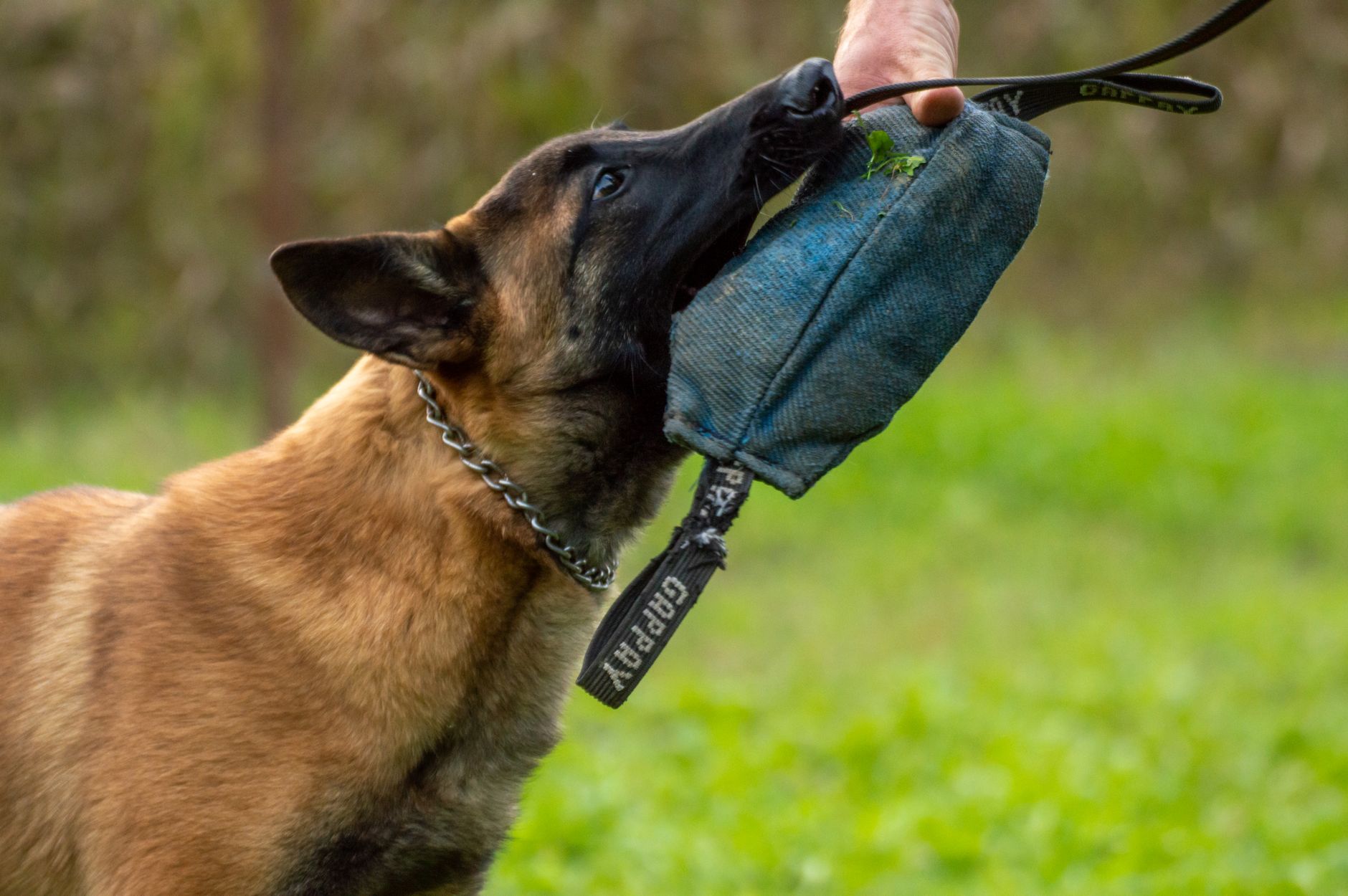
I always tell my clients that the right gear is not a magic fix, but it is an essential safety foundation. You must retire the standard flat collar for training purposes and completely avoid choke collars, prong collars, or electronic slip leads.
These punitive tools rely on pain and airway restriction to function, which can damage delicate tissues and cause leash-reactivity.
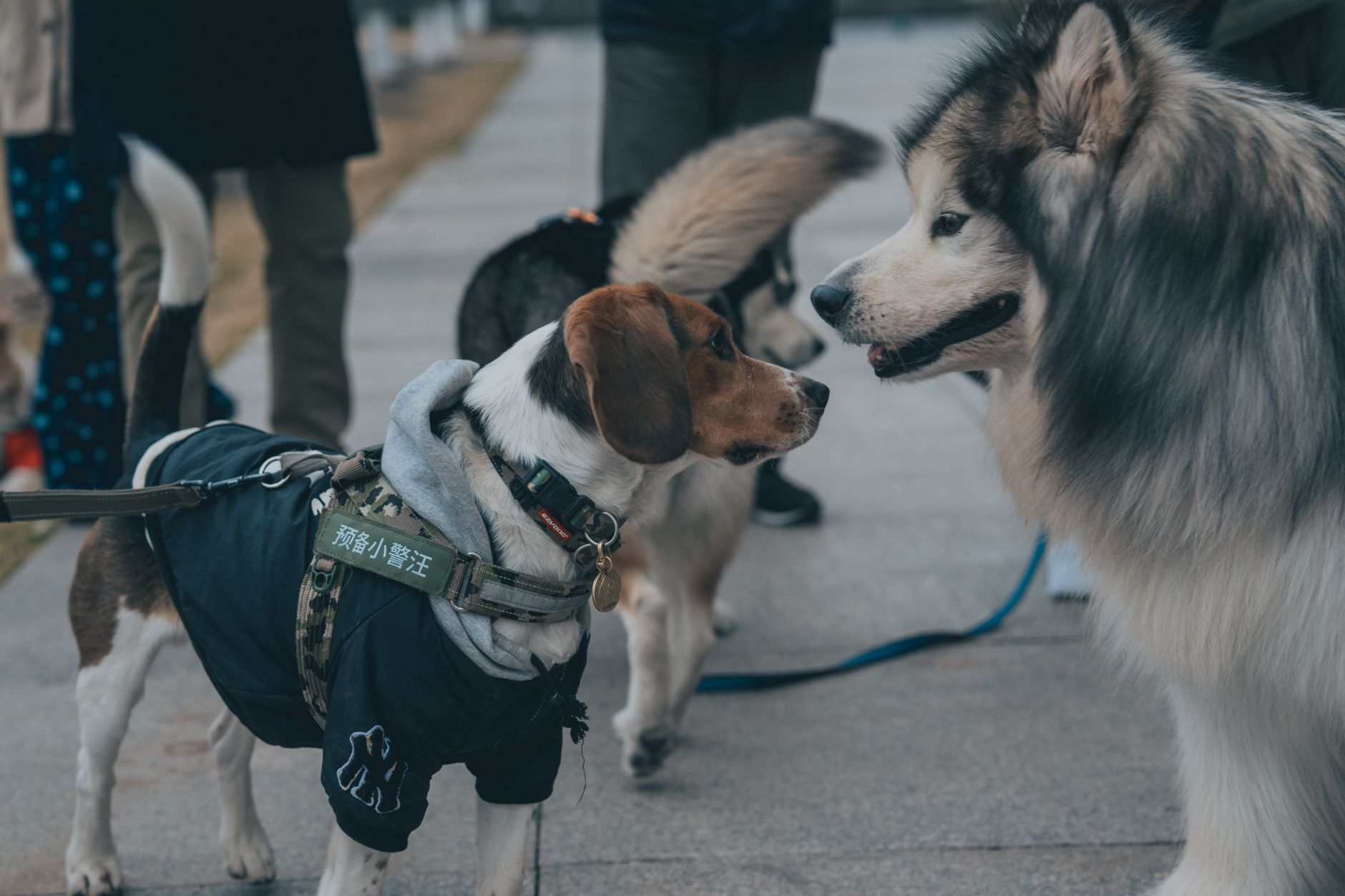
Instead, I recommend a high-quality, Y-shaped, front-clip harness. This design sits flat across the dog’s chest, completely bypassing the neck and protecting the trachea.
When the dog pulls, the front-clip attachment gently redirects their forward momentum back toward you, neutralizing their leverage without causing discomfort.
For exceptionally large or powerful pullers, a head halter can be an excellent veterinary-approved transition tool. It fits similarly to a horse’s halter, allowing you to guide the dog’s head gently, though it requires a slow, positive acclimation period.
- Y-Shaped Front-Clip Harness: Distributes force across the sternum and shoulders.
- Fixed-Length Leash (4 to 6 feet): Provides optimal control and clear boundaries.
- Head Halter (e.g., Gentle Leader): Useful for giant breeds, steering from the nose.
- High-Value Treats: Soft, smelly rewards like freeze-dried liver or cooked chicken.
The Dangers of Retractable Leashes
I strongly advise against retractable leashes for any dog undergoing training. These devices maintain constant, light tension on the dog’s neck or harness, which actively teaches them that pulling is necessary to move forward.
rabbitgoo No-Pull Dog Harness with 2 Leash Clips
- ✓Front clip gently redirects pulling
- ✓Padded breathable mesh, no choking
- ✓Reflective strips and a top handle
- A front clip gently turns your dog back toward you when they pull, giving you control without pressure on the throat
They also present severe risks of rope burns, finger amputations, and sudden bolting accidents.
The ‘Red Light, Green Light’ Method
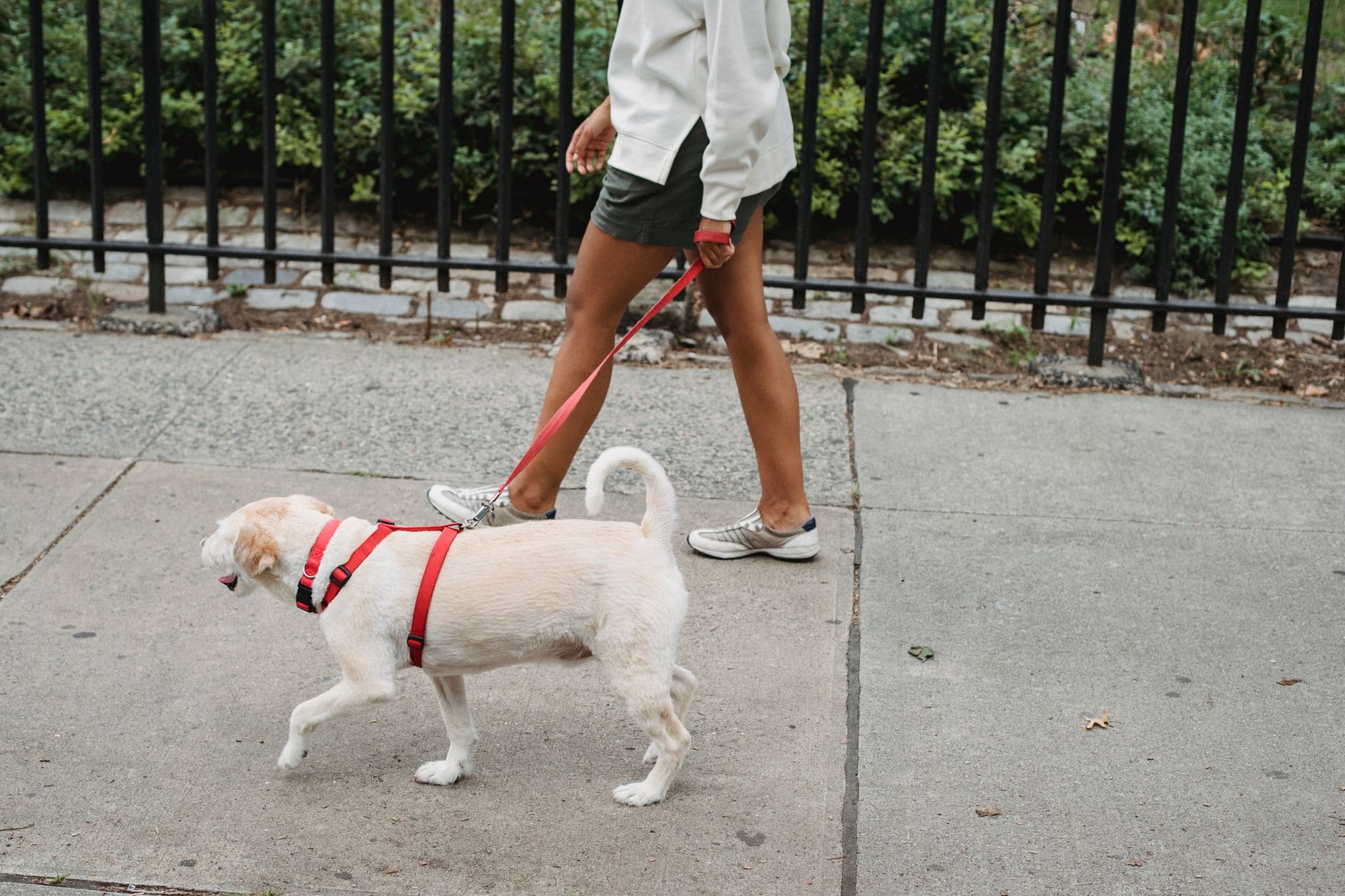
The most reliable training technique I recommend to my clients is the ‘Red Light, Green Light’ method, also known as the stop-and-go technique. This method relies on operant conditioning to teach your dog a simple rule: tension on the leash equals a complete halt in forward progress, while a loose leash is the only key that unlocks movement.
To begin, start training in a low-distraction environment, like your hallway or living room, before moving outside. Walk forward confidently.
The very instant you feel the leash tighten, stop walking immediately and freeze in place like a statue.
Do not jerk the leash or yell at your dog. Simply wait patiently.
Eventually, your dog will wonder why you stopped, look back at you, or take a step backward to relieve the tension. The moment the leash goes slack, praise them warmly, offer a high-value treat, and immediately resume walking.
- Step 1: Start walking in a quiet, distraction-free environment.
- Step 2: Stop instantly the moment you feel any tension on the leash.
- Step 3: Stand completely still and silent; do not yank or pull back.
- Step 4: Wait for your dog to turn around, step back, or look at you.
- Step 5: Mark the loose leash with a word like ‘Yes!’, reward with a treat, and walk forward again.
The ‘About Face’ Turnaround Technique
If you have a highly driven, high-energy dog who ignores you when you stop moving, the ‘Red Light, Green Light’ method can sometimes result in frustrating standoffs. For these dogs, I recommend the ‘About Face’ technique.
This active method keeps the dog moving while keeping them guessing about your direction.
Instead of stopping when the leash gets tight, you will immediately execute a smooth 180-degree turn and walk in the exact opposite direction. You do not need to yank the dog; simply turn and walk away.
Your dog will suddenly find themselves behind you. As they rush to catch up and pass you, mark the moment they align with your leg with a treat.
Repeat this turn every single time they attempt to forge ahead of you, which teaches them that they must pay constant attention to your hips to know where they are going.
- Walk forward and wait for the dog to begin pulling ahead.
- Just before the leash goes completely taut, turn 180 degrees away from your dog.
- Walk in the opposite direction without jerking or calling out aggressively.
- Allow the dog to naturally turn to catch up to your new path.
- Reward the dog generously when they walk calmly by your side.

Managing Thresholds and Environmental Distractions
Many owners struggle because their dogs are perfectly behaved inside the house but lose all self-control the moment they step outside. In the clinical world, we refer to this as exceeding the dog’s stimulation threshold.
If your dog’s brain is flooded with adrenaline and cortisol from the sights and sounds of the street, they physically cannot learn.
You must build up environmental distractions systematically. Start your training in the house, then move to your backyard, then to your empty driveway, and eventually to a quiet sidewalk.
If your dog starts pulling frantically, you have pushed them too far, too fast. Move back to a simpler environment where they can succeed and gradually rebuild their focus.
Clinical Secrets to Calming an Over-Aroused Dog Before the Walk
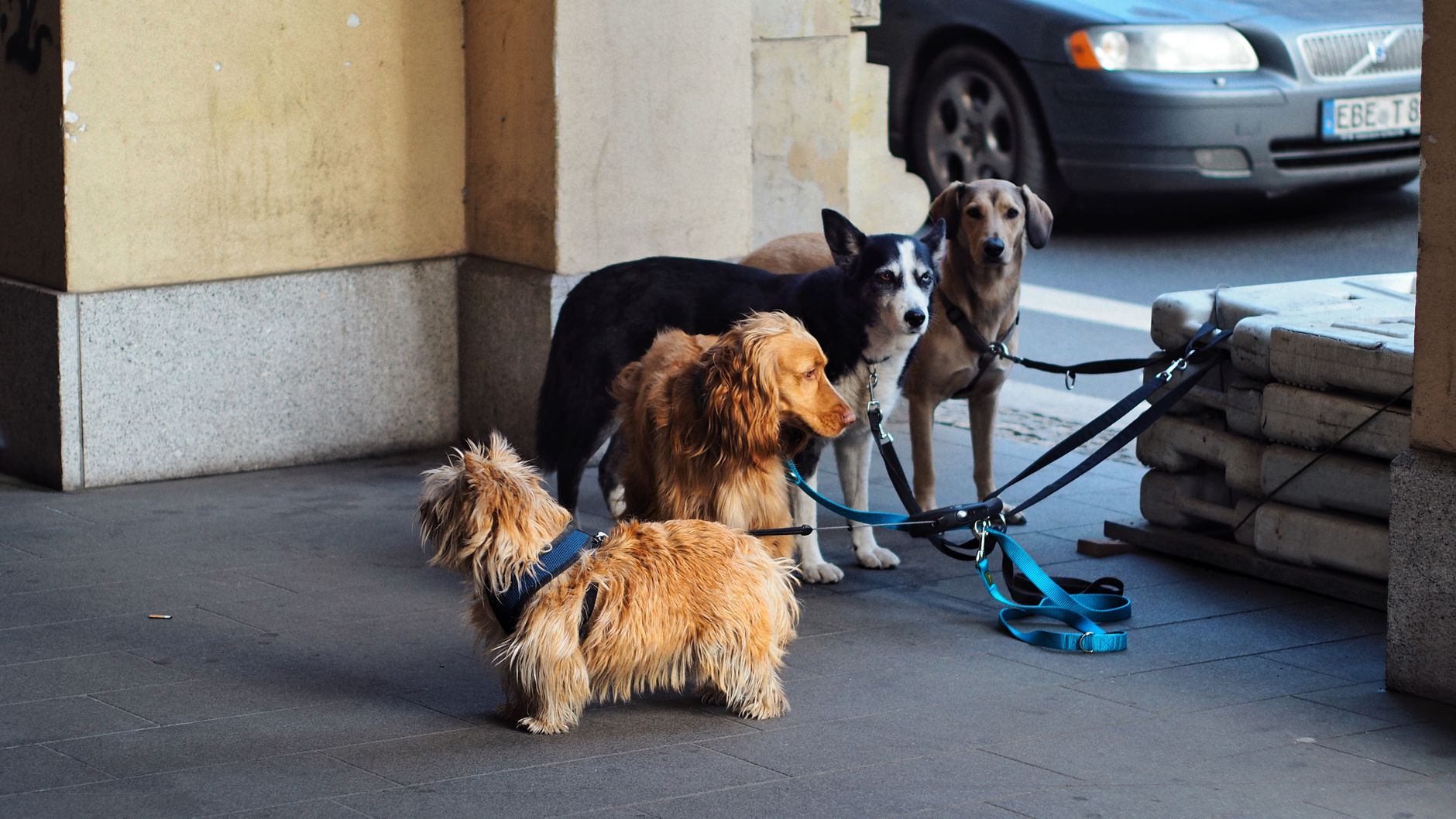
A common mistake I see in my veterinary practice is starting a walk when a dog is already at a level ten on the excitement scale. If your dog is spinning, whining, and barking the moment you pick up the leash, they are already in a state of hyper-arousal.
Starting a walk in this state guarantees a frantic, pulling experience.
You must establish a calm pre-walk ritual. Pick up the leash, and if your dog explodes with excitement, calmly put it back down and walk away.
Sit on the couch and read a book or do chores. Repeat this until your dog remains calm when the leash is handled.
Only attach the leash when all four of your dog’s paws are on the floor and their breathing is steady. By lowering their baseline arousal before you even open the front door, you set them up for cognitive success.
- Desensitize the leash: Pick it up throughout the day without actually going for a walk.
- Require a stable sit-stay before attaching the collar or harness.
- Wait at the front door: Only open it when your dog looks at you calmly.
- Burn off excess energy first with a quick game of indoor tug or fetch before stepping outside.
When to Seek Professional Behavioral Guidance
While most leash pulling is a basic training deficit, there are times when it points to deeper psychological issues. If your dog is lunging, growling, or showing signs of intense fear or aggression toward other dogs, people, or vehicles, this is not simple pulling.
This is reactive behavior.
In these clinical cases, pulling is fueled by underlying anxiety, fear, or frustration. Punishing a reactive dog on the leash will only confirm their fears and worsen their behavior.
If you observe these symptoms, it is time to consult a veterinary behaviorist or a certified professional dog trainer (CPDT-KA) who can design a systematic desensitization program.
-
EHEYCIGA Foam Dog Stairs for Bed, 18 inPet stairs save small, senior and long-backed dogs from jumping on and off beds and sofas
-
LickiMat Classic Buddy Lick MatLicking is naturally calming during baths, grooming and storms
-
QUMY Dog Boots for Hot PavementBoots protect paws from hot pavement, ice, salt and rough trails
Related Dog Guides
Frequently Asked Questions
Will a prong or pinch collar stop my dog from pulling safely?
No, I do not recommend prong or pinch collars. These devices work by causing localized physical pain and constriction around sensitive cervical structures, which can damage the trachea, thyroid gland, and laryngeal nerves, while also causing your dog to associate walks with pain.
How long does it take to train a dog to stop pulling on the leash?
It varies by dog, but most owners see noticeable progress within two to four weeks of daily, consistent training. Consistently applying the rules of loose-leash walking on every single walk is the absolute key to fast results.
Can I use a retractable leash for training?
Absolutely not. Retractable leashes maintain a constant, light tension that teaches your dog that pulling is required to move forward, while also presenting significant physical safety hazards to both you and your pet.
Why does my dog only pull when they see another dog?
This is typically caused by over-excitement, frustrated social arousal, or barrier reactivity. It requires focused counter-conditioning training to change your dog’s emotional response to seeing other dogs from a distance.
Is a head halter painful or uncomfortable for a dog?
A head halter is not inherently painful, but because it fits across the sensitive muzzle, many dogs find it highly unusual at first. It requires a gradual, positive acclimation process using treats to help your dog feel comfortable wearing it.
What should I do if my dog is too strong for me to control during training?
If your dog’s size and strength pose a safety risk, you should immediately switch to a high-quality front-clip harness or a head halter, which mechanically minimizes their pulling power while you work on positive reinforcement training.
Sources & Further Reading
- American Kennel Club (AKC)
- ASPCA
- Merck Veterinary Manual
- American Veterinary Medical Association (AVMA)
Final Thoughts
Teaching your dog to walk calmly on a loose leash is one of the greatest gifts you can give to their physical health and your peace of mind. By transitioning to anatomically safe gear like a front-clip harness and remaining perfectly consistent with training methods like ‘Red Light, Green Light,’ you protect your dog from devastating neck and spinal injuries.
Remember to be patient, keep your training sessions short and positive, and celebrate the small victories along the way. Your dog’s long-term health is well worth the investment of time, and every step taken on a loose leash is a step toward a happier, pain-free life together.